Australia’s fertility rate is at a record low, putting those who have made the personal choice to be childfree in the centre of a political battleground whether they like it or not.
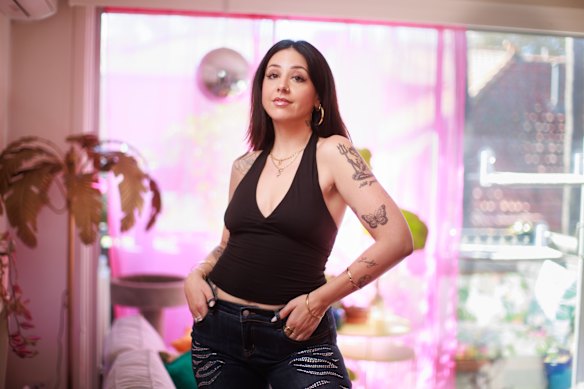
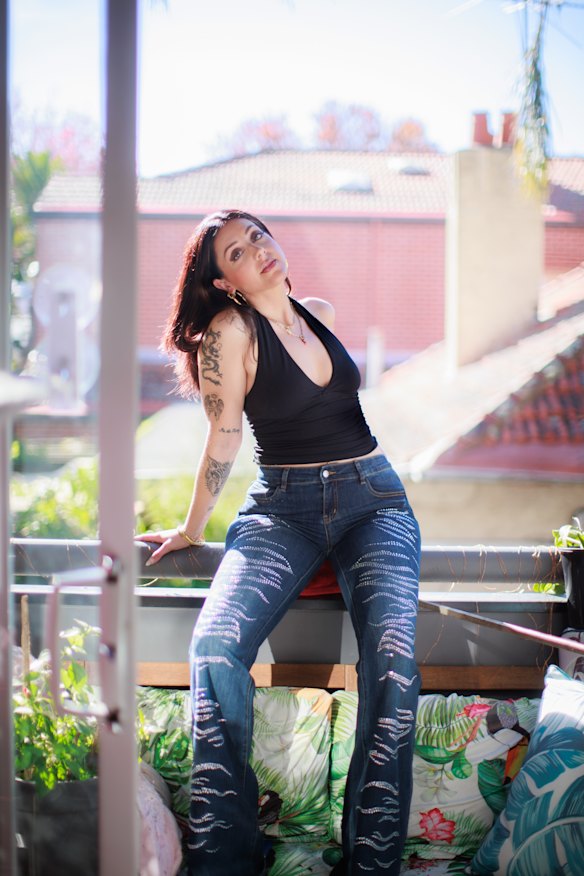
A few months ago, Bianka Ismailovski was seated at what would have been a forgettable dinner party in Melbourne had she not spent 40 minutes being called selfish by a table of people she had just met.
“It was just so crazy,” says the 36-year-old comedian and writer. “So crazy and rude.”
At issue was a choice Ismailovski had made more than five years prior, following the breakdown of her marriage.
She does not want to have children.
“It was the first decision I’d made where my whole body relaxed and was like, ‘Yeah, actually, that isn’t something that I want,’” she says.
“If I was a man, I would have a kid tomorrow … but as a woman, it’s too much pressure on me specifically. It’s such a strain on my body … on everything, on my identity. It’s not something I’m interested in. Sorry.”
A growing number of Australians agree with her.
“WE ARE THE MAJORITY,” a jubilant Abigail Porter exclaimed in a video shared to TikTok in March.
The American reproductive rights advocate – whose global notoriety stems from keeping a public list of reasons why women shouldn’t have children – was celebrating the statistic that 52 per cent of women aged 20 to 39 in the United States “are childfree”. The soundtrack was Beethoven’s Ode to Joy.
“The men are going to crash out about this because they are so worried about the birth rate, and let me be clear: I don’t care! … I couldn’t be happier that women are choosing themselves.”
The sentiment is supported by more than 1.5 million likes, but the reality is more complicated than the soundbite.
While the United States’ fertility rate is at a record low – 1.6 births per woman, below the 2.1 replacement rate – the statistic Porter cited encompasses women who are childfree (no children by choice), childless (unable to have children despite wanting them), and those who are yet to give birth.
Australia’s fertility rate is lower than the US. It fell in October to 1.48 births per woman, the lowest since records began in 1921. That cannot be blamed solely on people without children.
“The standard family group of people that form their relationships in their 20s, and you may have expected them three decades ago to have three to four children, they are now having one to two children,” says Professor Amanda Davies, a social scientist and demographer at the University of Western Australia.
“That group is an absolute driver of change … they just cannot afford to have the size of family that they would wish to have.”
But the cohort of Australian women who have no children by the end of their childbearing years is increasing.
Between the 2006 and 2021 censuses, the number of women aged 45 and above without children rose by more than 22 per cent.
How much of that group are willing participants is difficult to determine from Australian Bureau of Statistics data alone.
“How many babies has she ever given birth to?” is asked to women and girls aged 15 and above once a decade. There is no question asking those who enter zero if they are childfree (no children by choice), childless (unable to have children despite wanting them), or in between.
Fatherhood, meanwhile, is measured indirectly by the ABS through the amount of dependent or non-dependent children living in the household.
A 45-year-old man who has three biological children living out of home is indistinguishable in census data from a 45-year-old man with no children.
The most we can go on is intention. In 2005, according to the Household, Income and Labour Dynamics in Australia (HILDA) Survey Report released in September, less than 8 per cent of women and about 11 per cent of men desired zero children.
By 2023, that increased to about 14 per cent of women and close to 15 per cent of men.
Exclusive polling conducted for this masthead this year by the Resolve Political Monitor found that 23 per cent of women aged 18 to 44, and 21 per cent of men, intended to have no children.
Those respondents might, of course, change their minds.
As part of our series exploring Australia’s declining fertility, this masthead spent weeks speaking with childfree Australians from across the country.
Many see the vitriol commented on the more than 126,000 TikTok and 400,000 Instagram posts tagged #childfree, and some did not want to speak on the record due to potential backlash.
All said they have spent years thinking about every possible scenario with and without children, and would not be changing their minds.
“The worst kinds of people are online,” says 40-year-old Kristie Demos, from Noosa. She adores children but has never felt “that instinct” kick in. Plus, getting pregnant was her biggest fear, and she prefers a lot of “me-time” to offset the fact she’s prone to overstimulation.
Most people who know Demos, including her mother and brother, are supportive or neutral. She finds it’s those whom she encounters casually who feel most entitled to criticise her choice. Men in particular, says Demos, “get quite mean”.
“I think they feel unwanted or like they’re unnecessary,” she says. “They’re triggered by childfree women because we’re saying, ‘Oh, I don’t want your sperm. I don’t need your sperm. I don’t need you unless I want you.’”
Women, however, were also part of the group that berated Ismailovski at dinner all those months ago.
Even though her boyfriend, who is also childfree, was angrily defending Ismailovski, she says it felt like the guests – of all genders – “didn’t care” about his part in their shared lifestyle.
That is unsurprising to Dr Imogene Smith. She is a clinical psychologist and researcher at The Cairnmillar Institute. Her 2019 paper found that most childfree men do not face backlash, and if they do, they are not worried about it.
“When something runs counter to our culture, then I think it upsets people in a way they can’t quite put words to,” she says.
“In this case, it’s not just counter-culture, it’s counter-evolution … framed by hundreds of years of patriarchal oppression of women’s bodies, right? So then it … gives people permission to hold these strong views of what women should or shouldn’t do.”
Why are more Australians choosing not to have children?
Heightening the tension is the rise of the “manosphere”, which sees childfree women as an existential threat but sours the gender relations required for procreation.
South Korea’s radical “4B Movement” (boycotting marriage, childbirth, dating, sex) trended in rebellion after US President Donald Trump’s second election victory. That came after campaign remarks by US Vice President JD Vance offended “Childless Cat Lady” and notorious apoliticist Taylor Swift enough to endorse Democratic candidate Kamala Harris.
As pronatalist “tradwives” solidify their rule over reality shows and social media algorithms, pregnant content creators are being unfollowed en masse. Chanté Joseph’s October Vogue think piece “Is Having a Boyfriend Embarrassing Now?” spurred a months-long volley of personal essays, culminating with the British writer receiving a standing ovation from a packed room of young women at the Sydney Opera House in March.
While father of 14 Elon Musk publicly lamented Australians becoming “an endangered species” in April, exclusive polling for this masthead by the Resolve Political Monitor asked childfree Australians why they resisted the well-trodden path.*
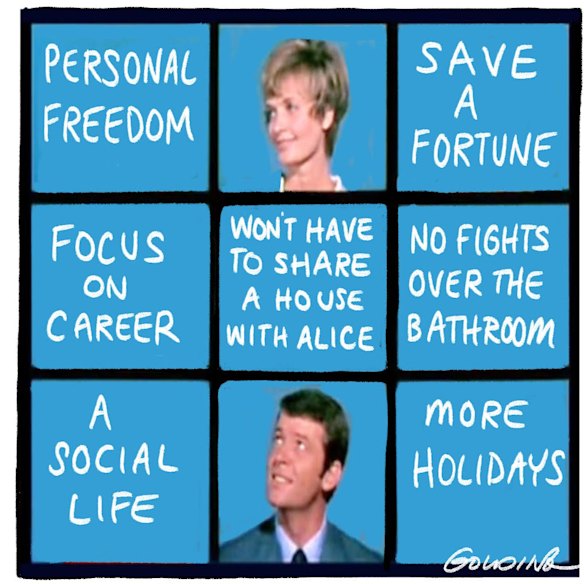
Although 32 per cent cited climate change, crime or conflict as why they would not feel comfortable having a child, the most popular reason – 2 per cent above the financial cost of raising a child – was not political: “I enjoy my freedom”.
That is true for 35-year-old Lisa Wagstaff, who was certain she did not want children when she started dating Luke Sullivan, 37, a decade ago.
Early on, she would subtly tell those close to her, but does not bother telling acquaintances any more after hearing “you’ll probably regret it” too many times.
Sullivan was on the fence “leaning towards no” because he did not want to give up his hobbies. To Sullivan’s relief, a series of casual conversations revealed the couple was on the same page.
Climate stress was a significant motive for Wagstaff, but so was silence, reading, and enjoying the great outdoors where the couple, and their cat, live on Sydney’s Northern Beaches.
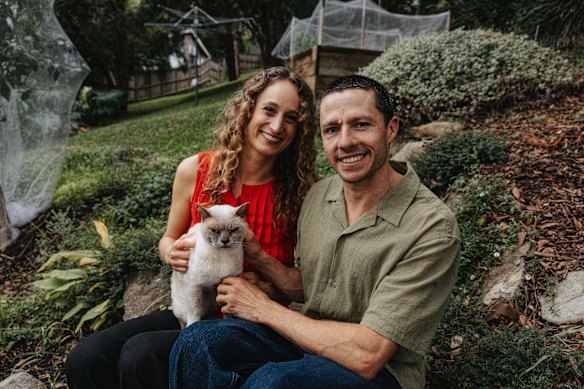
“I feel like I would be a really good mum, but I would lose so much of myself because I know that I would put a child way before my own priorities,” says Wagstaff en route to a weekend camping trip with Sullivan.
While Sullivan has never felt a paternal instinct, he takes issue with the implication that being childfree means he dislikes kids.
When we spoke, he was expecting his nephew for a sleepover in the coming weeks. Wagstaff, meanwhile, had done daycare drop-off with her sister’s children that morning.
“It takes a village,” says Wagstaff. “Because we’re not having kids, we have so much more bandwidth to support our siblings and nieces and nephews. I like that we’re able to contribute that way to enriching another person’s child’s life.”
‘Parents don’t get questioned when someone says, “I want to have kids.” No one says, “Why do you want to have kids? Don’t you know those things are permanent? What if you change your mind?” ’Chris McMullen
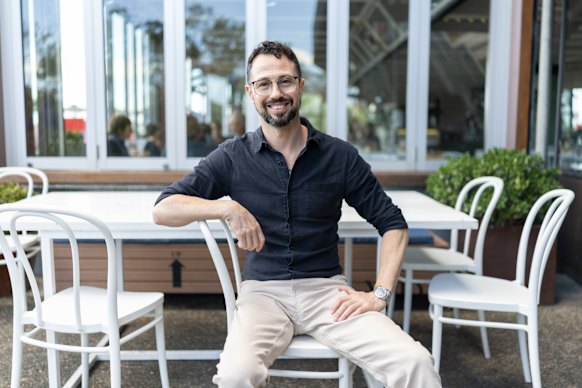
This is a particular sore point for Chris McMullen from Brisbane. The 47-year-old did not explicitly speak about being childfree for 20 years because he did not want to deal with the backlash.
He is now estranged from his “traditional” family, including his nine nieces and nephews, because they couldn’t accept his choice.
“I liked being an uncle, and I love my nieces and nephews,” says McMullen. “There’s something so wonderful about spending time with a small child … their joy is such a simple, pure thing.”
While specific reasons for being childfree differed among those this masthead spoke with – some did not want to trigger or pass on physical or mental health conditions, others prefer pets or their careers – what underpinned them all was a lack of feeling a parental instinct.
At points, every conversation for this article echoed each other. Some repeated the same criticisms they’ve received – and their rebuttals – almost word-for-word.
“Just because you have kids, doesn’t mean you’re going to have people to look after you when you’re older, you know? Nothing is guaranteed in this world,” says Amber, a 38-year-old marriage celebrant from Sydney’s Newtown. (Surname withheld for privacy).
Days earlier, a stranger in Melbourne finished Amber’s sentence.
“If that’s why you’re having kids, then that is a very selfish reason to have kids,” says 32-year-old Ally Burnie. “That’s a big expectation to put on your kids.”
Being selfish – what Ismailovski’s table mates accused her of during that fateful dinner party, and what, in 2022, the late Pope Francis called people who choose pets over children – is the label that’s most insulting of all.
“I would argue that whatever decision you make for yourself, if you want to do it, that’s a selfish decision,” says Ismailovski.
“If you’re having children because you want them, that’s you being selfish. It’s you doing what is best for you. I’m just doing what’s best for me.”
With Nigel Gladstone and Matthew Absalom-Wong
*The sample size for this particular question was small. The unweighted base was 121, and weighted base was 127.
Start the day with a summary of the day’s most important and interesting stories, analysis and insights. Sign up for our Morning Edition newsletter.
Disclaimer : This story is auto aggregated by a computer programme and has not been created or edited by DOWNTHENEWS. Publisher: www.smh.com.au