

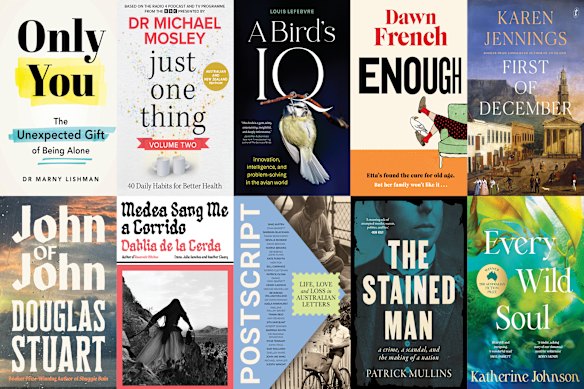
This week’s books take readers from cartel-ravaged Mexico and windswept Scottish islands to the wilds of Tasmania and the grubby backstreets of colonial Sydney. Our critics cast their eyes over the latest fiction and non-fiction releases to hit our shelves.
Fiction
Medea Sang Me A Corrido by Dahlia de la Cerda
Scribe, $27.99
Femicide in Mexico has received significant literary attention: Roberto Bolano’s masterpiece 2666 devotes large sections to the killing of women in Ciudad Juarez in the 1990s. Dahlia de la Cerda writes into the bitter truth that the murders haven’t ceased. Medea Sang Me A Corrido shows the human face of a long-running conflict between cartels and government forces. Each chapter features a character touched by the violence – from the desperate trophy wife of a narco to a doomed boy inducted into a street gang – and each episode culminates with the arrival of Medea, the defiant murderess of Greek myth, who appears, often in a modern gothic incarnation, sporting snake tatts to offer assistance or vengeance or closure of some kind. De la Cerda creates a sense of pace and peril in a way that resembles Bolano’s The Savage Detectives more than it does 2666. It’s largely composed in a vernacular that obeys rules of spoken rather than written language, and thrums with immediacy as it engages with and subverts patriarchal culture. Anyone interested in Mexican literature should be drawn to this one.
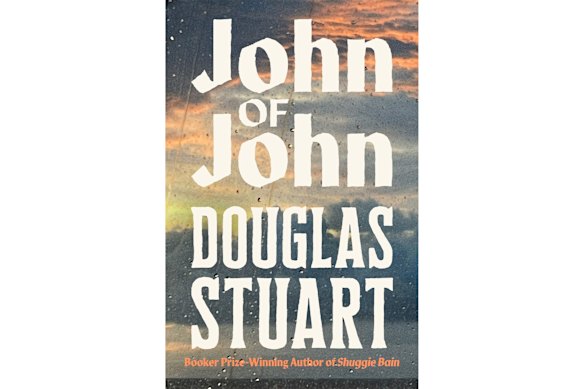
John of John by Douglas Stuart
Picador, $35
Scottish writer Douglas Stuart won the 2020 Booker Prize for Shuggie Bain, and his second novel Young Mungo was just as impressive. Both novels foreground parental dysfunction, closeted homosexuality, and the effects of class in a hard-edged Glaswegian neighbourhood. While queerness, and cultural hostility to it, remain integral to John of John, this book charts a freer course and doesn’t feel like it’s banging the same drum. Young Cal is skint, forced back to his ancestral home on the isle of Harris after finishing art school. His father, John, a sheep farmer, is a devoutly religious Presbyterian, confused by his son’s long hair and refusal to believe. John is blithe, too, to the stirrings that led Cal to seek out other lonely men like himself, if there are any, on his return to the fold. Keeping a fragile peace is Cal’s Glaswegian grandmother Ella, who doesn’t see eye to eye with her son-in-law. As time passes, tensions in the community will force a reckoning, in another bleak but sensitive and engaging novel from one of Scotland’s finest contemporary writers.
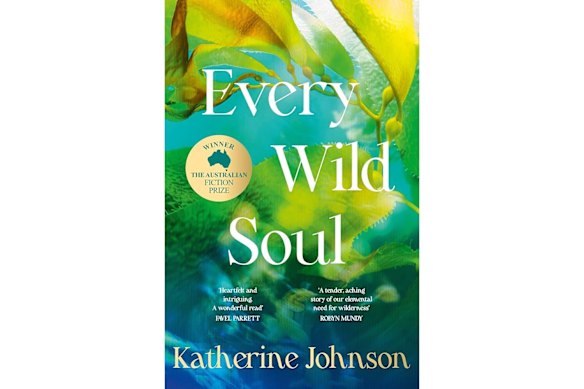
Every Wild Soul by Katherine Johnson
HarperCollins, $35
The inaugural HarperCollins Australian Fiction Prize went to Tasmanian biologist and writer Katherine Johnson for Every Wild Soul. It’s partly a coming-of-age tale, pitting an 18-year-old woman, Min, against her father, head ranger of the remote Maria Island. Min yearns for independence from her overprotective dad, finding a friend in an eccentric biologist, Werner, and his passion for conservation. Meanwhile, a journalist from London arrives. Lucie is haunted by a family connection to the extinction of the thylacine, and she’s travelled Down Under to investigate a project to save the imperilled Tasmanian devil. When a storm delivers a stranger to the island – another nod to Shakespeare’s The Tempest – the spectre of mortality looms. Johnson writes rich ecological fiction attuned to the beauty and interdependence of nature. Yet she brings as intricate a vision to the emotional architecture of this coming-of-age narrative. Although I have an allergy to tales that lean too heavily on the healing power of the natural world, this novel didn’t trigger it. Rather, Johnson gently insists on its mystery and power to inspire.
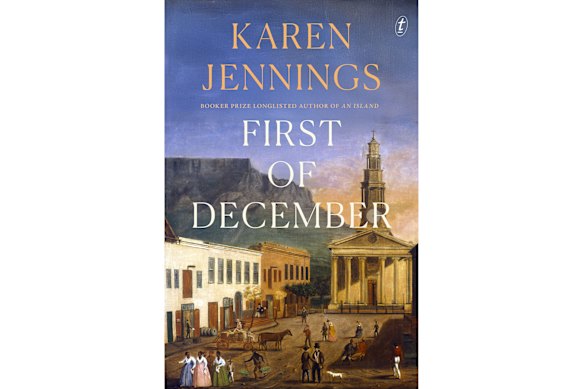
First of December by Karen Jennings
Text, $35
From South African writer Karen Jennings (author of the Booker longlisted The Island) comes a deeply engaging historical novel set around a momentous event in that nation’s history -the abolition of slavery at midnight on December 1, 1838. One strand follows a runaway slave, a mother to a stillborn child who flees in the week before the emancipation and embarks on a journey to Cape Town searching for her lover. Another follows a troubled marriage. English bride Caroline detests her husband James, and the backward colonial hole in which she now lives, while James, on the verge of exhausting Caroline’s dowry, has an urgent desire to quickly make his fortune. A useful synopsis of historical events precedes this novel, and of course, the reader knows that slavery will be replaced by a system just as racist and destructive and unfair for well over a century. Jennings brings empathy and psychological complexity to characters living through drastic social change, each striving for freedom in a colonial environment that seems to warp even the idea of what liberty might mean.
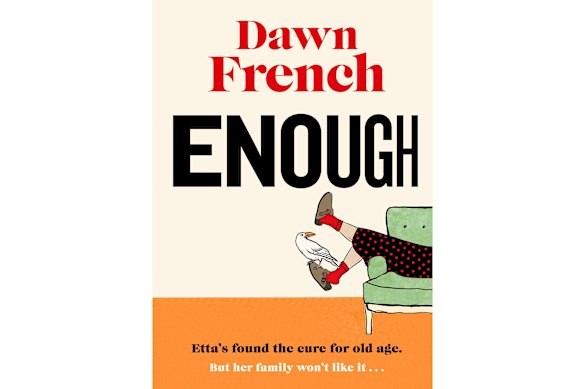
Enough by Dawn French
Michael Joseph, $35
Comedian Dawn French moonlights as a novelist, and I’ve read a few of her books. Her sarcastic wit doesn’t fail her in long-form fiction, and she’s no stranger to dark themes. In Enough, French tackles end-of-life issues with a twist. Etta, 68, is living her best life, a happy and healthy member of a small village. When she gathers her family and friends to share dawn on the beach with her, it’s a pleasant surprise. Less pleasant to her loved ones is Etta’s announcement afterwards that she intends to kill herself. Not because she’s in terminal decline but because she wants to avoid the difficulties and distress of old age. Is Etta to be celebrated for choosing to end her life this way? Or is hers an immature response to adversity that anyone who lives long enough must face? Her relatives and friends have strong opinions, but what really motivates Etta, what will she do with the time that remains to her, and can anything change her mind? French has written a surprisingly tender novel on the theme of suicide and ageing, with fun comic set pieces, larger-than-life characters, and plenty of sharp-witted dialogue.
Non-fiction
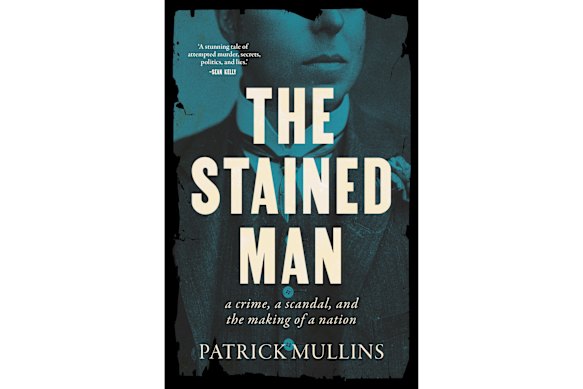
The Stained Man by Patrick Mullins
Scribe, $40
The rise and fall rhythms that shaped the life of solicitor/politician Richard Meagher (1866-1931) might well be described as being like something from the pages of a Balzac novel – which, revealingly, is how Meagher described himself. Much of his story, vividly recreated and scrupulously researched by biographer Patrick Mullins, revolves around the year 1895 and Meagher’s ultimately successful defence of George Dean, accused of the attempted murder of his wife with arsenic. In the glow of this, Meagher became a NSW MPand his star was rising. But, and this is where hubris enters the tale. Meagher, casually and rather pleased with himself, told – of all people – the chief justice of NSW, that Dean was actually guilty and that he had conned him into confessing. His star fell to earth, he was barred from practising law and became a “stained man” – the rest of his life devoted to removing the stain. With a distinct touch of the comédie humain, it’s a sweeping story that takes us from the grubby backstreets of Sydney to parliament, yet is also a portrait of an unfolding nation. Balzacian, indeed.
Only You by Dr Marny Lishman
Wiley, $34.95
German philosopher Arthur Schopenhauer contended that someone was only truly free in solitude. As psychologist Marny Lishman says in this guide to the art of being alone, we have grown accustomed to equating “alone” with “loneliness”. A relationship ends and the impulse of well-meaning friends is to fix you up with someone, and therefore, be happy again. But Lishman, who has not been in a long-term relationship recently,enjoys being alone and her book is about the “gift” of being alone. She argues that there is a lot to be gained from accepting the stillness, unease and silence of being single and that it can be the basis of a personal transformation, a pathway to finding out what you really want from life. But there’s nothing glib about any of her advice. She doesn’t shrink from looking at the grim side of grief and heartbreak, informed by case studies and experience. This is a combination of guidebook and memoir. Whether she’s describing the “exhilarating anonymity” of her first time in London, or remembering her grandfather navigating life after his wife died, the writing has immediacy as well as being practical.
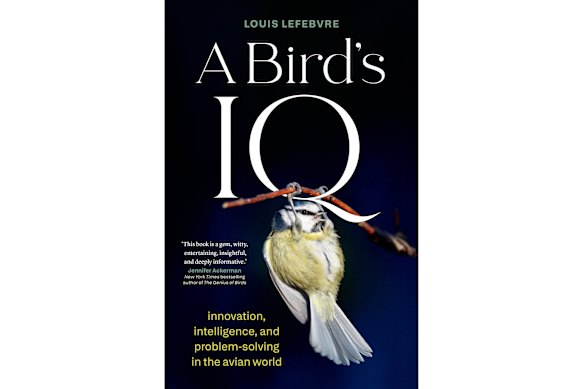
A Bird’s IQ by Louis Lefebvre
Scribe, $37
There are various ways of measuring a bird’s intelligence. One is the string test, the most spectacular example of which took place in Sweden when a group of hooded black crows pulled a fisherman’s line out of a hole in an icy lake. One group dragged the line up while another stood on the retrieved line to stop it sliding back. The process was repeated until the crows took off with the fisherman’s catch. It’s just one of the amazing stories in this study of avian intelligence and innovation by biologist Louis Lefebvre. In another example, from 1921 in England, blue tits learnt how to open milk bottles and drink the cream. They are non-migratory, but soon tits in the north of the country were helping themselves to the cream, leading to questions of the possibility of these birds, in different parts of the country, simultaneously making feeding discoveries. He takes us around the world searching for answers, and though it can get a bit technical, he has a light, often amused and amusing touch. So, next time someone calls you a bird-brain, take it as a compliment.
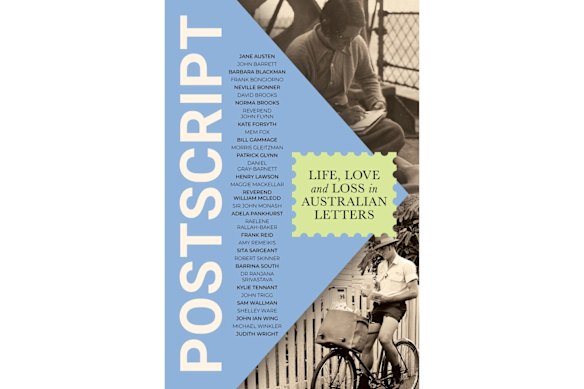
Postcript: Life, Love and Loss in Australian Letters
National Library of Australia Publishing, $27
In an age of email, text messaging and emojis, it’s easy to forget that letter writing was once an art form. This collection from the NLA, covering the 19th and 20th centuries, is a timely reminder of the pleasures of this fading form. Alongside these letters are responses from contemporary writers, historians and commentators. In 1936, for example, British-born suffragist Edela Pankhurst (later resident in Australia) writes to former comrades in the suffragette movement reflecting on the struggle in the UK. Journalist Amy Remeikis writes to her on the contemporary situation, “pushback” and the reactionary sub-culture of the “trad wife”. Likewise, poet and novelist David Brooks responds to a letter by Norma Brooks (no relation) on the death of her mother, with a deeply moving letter to his own mother who died 46 years ago. At first, I thought the concept was a confection. However, the more I read, the more I became convinced it worked; one age connecting with another.
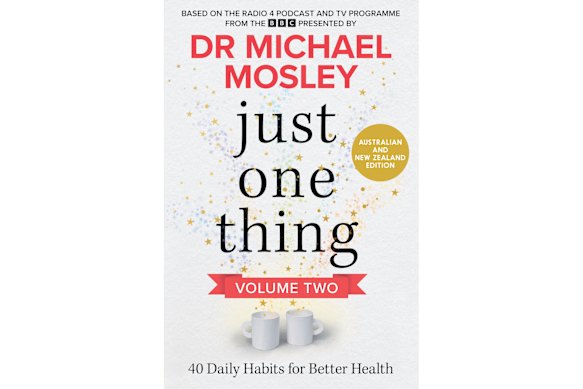
Just One Thing: Forty Daily Habits for Better Health by Dr Michael Mosley
Hachette, $35
It’s not difficult to see why the eponymous BBC podcast is such a popular success. Dr Michael Mosley, its former presenter who died of suspected heat-stroke while walking in Greece in 2024, is adept at making the complex simple and delivering healthy tips in bite-sized portions. Some of them, such as eating nuts and the all-round benefits of extra virgin olive oil, are familiar, but many aren’t. Breathing through your nose, for example, calms the body and reduces blood pressure. Likewise, reading a poem a day out loud as the rhythm of the words slows breathing and reduces stress. There’s also some quite unconventional advice, such as walking backwards to strengthen stability and boost memory and brainpower. From the many benefits of re-heating pasta, taking up a musical instrument and reducing the time you spend on the mobile phone, Mosley outlines easily executed habits in an informed, light and entertaining way.
What else is happening in the book world?
The Booklist is a weekly newsletter for book lovers from Jason Steger. Get it delivered every Friday.
Disclaimer : This story is auto aggregated by a computer programme and has not been created or edited by DOWNTHENEWS. Publisher: www.smh.com.au


