
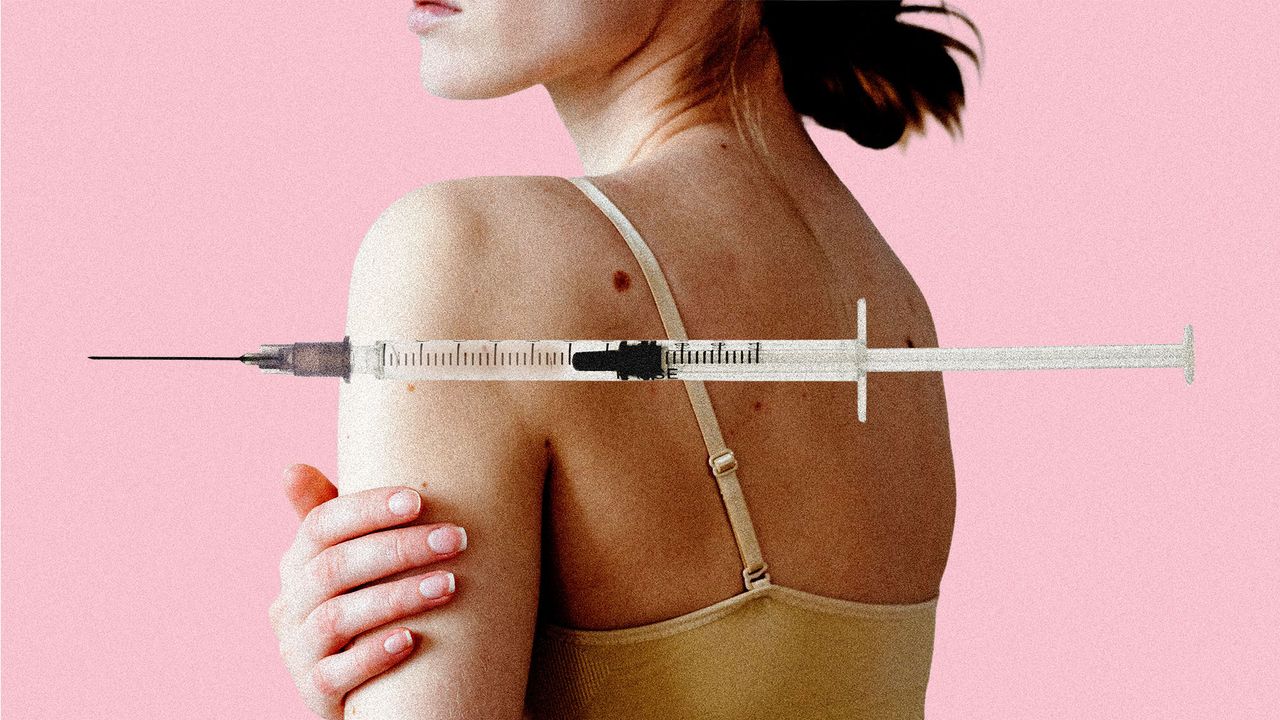
A personalized mRNA vaccine may help reduce the risk of melanoma recurrence, a promising new study finds.
Melanoma is, of course, the deadliest form of skin cancer. According to the American Cancer Society, more than 112,000 new melanomas are likely to be diagnosed in 2026, and 8,510 people are expected to die from the skin cancer variant. It can also be tricky to treat; if you’ve had one, you are at a higher risk for another, notes the American Academy of Dermatology Association. If melanoma does recur, it typically shows up within five years. Cancerous cells may remain after treatment and can spread to other parts of the body, though it most commonly recurs in the same area.
However, results of the latest clinical trial of a specialized vaccine produced by Moderna and Merck, recently published in the Journal of Clinical Oncology, showed that when combined with traditional melanoma treatment (surgery to remove the cancerous tumors, paired with immunotherapy), the personalized mRNA vaccine could reduce the risk of recurring melanoma.
The trial included 157 people in the United States and Australia with stage 3 melanoma who had a high risk of recurrence. All of the participants were treated with surgery and the immunotherapy medication pembrolizumab, also known as Keytruda, used in certain cancer treatments to help the immune system destroy cancerous cells. A portion of that group—107 patients—was also treated with the vaccine. Known clinically as intismeran autogene, the mRNA-based vaccine is personalized to each patient’s tumor using their own DNA, helping to identify and target any possible additional or new cancer cells. Results showed that 68.8% of the patients who received the vaccine stayed skin cancer-free after five years. This is compared to the other group, who were treated with surgery and Keytruda, but no personalized vaccine; 49% of those patients were skin cancer-free after five years.
According to Deborah S. Sarnoff, MD, a board-certified dermatologist and president of the Skin Cancer Foundation, pembrolizumab/Keytruda has been the go-to treatment for patients with resected melanoma, or melanoma that has been surgically removed. “This treatment has been very effective for some patients, but for others, further treatment options are needed,” she says. “If confirmed in larger phase 3 studies, this [immunotherapy plus mRNA vaccine] approach could provide a more personalized treatment option tailored to each patient’s tumor mutations.”
Dr. Sarnoff also notes that it could improve long-term outcomes for patients who are at a high risk of recurrence, and even “expand the role of mRNA technology beyond infectious diseases into cancer treatment,” possibly becoming a model for personalized vaccines in other cancers. “The results are highly encouraging because the benefits appear durable over five years, which is a meaningful benchmark in melanoma treatment,” she adds.
Disclaimer : This story is auto aggregated by a computer programme and has not been created or edited by DOWNTHENEWS. Publisher: www.allure.com



