Some 20,000 guests from more than 130 countries are expected to attend the three-day St Petersburg International Economic Forum (SPIEF), an annual gathering often described as the “Russian Davos”.
This year’s event begins on Wednesday against the backdrop of the war in Ukraine and Russia’s prolonged estrangement from much of the West. Hours before delegates arrived in the city, Ukrainian drones struck energy facilities in and around St Petersburg, according to Russian and Ukrainian authorities. The attacks, which took place roughly 16km (10 miles) from the forum venue, temporarily disrupted operations at the city’s airport, though the conference is proceeding as planned.
Recommended Stories
list of 4 itemsend of list
The SPIEF has become far more than an economic conference for Moscow. As Western governments and many multinational companies have distanced themselves from Russia since the invasion of Ukraine in 2022, the forum has emerged as a showcase for the Kremlin’s efforts to deepen ties with countries in the Global South.
Attendance has remained strong despite Russia’s diplomatic isolation in Europe and North America, with officials portraying the gathering as evidence that Moscow retains international partners beyond the West. Here’s a closer look at the event.
What is the St Petersburg International Economic Forum?
The first SPIEF was held in June 1997, during a period when post-Soviet Russia was seeking foreign investment and closer integration with the global economy. The annual forum was designed to attract investors and project an image of a country open for business after the collapse of the Soviet Union.
Advertisement
Over nearly three decades, it has evolved into one of Russia’s most prominent international events. While investment and business remain central themes, the forum has increasingly become a platform for Moscow to present its vision of the global order and cultivate political ties abroad.
The programme combines investment discussions and political debates. This year’s sessions range from energy markets and artificial intelligence to information warfare and media influence. One panel, featuring Russian Foreign Ministry spokesperson Maria Zakharova, is titled: “Your Words are Like Bullets: How Information Has Transformed into the Most Powerful Weapon of the Modern Era.”
Who is attending?
One notable development this year is the presence of an official US delegation, the first such participation at a major Russian investment forum since before the Ukraine war. President Donald Trump has appointed Rodney Mims Cook Jr, chairman of the US Commission of Fine Arts, as his representative at the event.
Cook is expected to participate in a session titled “Russia-USA: A Cultural Dialogue”. The American Chamber of Commerce in Russia and the Roscongress Foundation are also organising a business forum focused on potential cooperation between Russian and US companies.
Others expected to attend include Uzbekistan President Shavkat Mirziyoyev, Tanzania’s President Samia Suluhu Hassan, and China’s Vice President Han Zheng, Kremlin foreign policy aide Yury Ushakov told media on Tuesday. Han is expected to meet with Putin separately on June 6.
SPIEF’s guest country this year is Saudi Arabia, which is sending Energy Minister Prince Abdulaziz bin Salman Al Saud, said Ushakov.
The event also attracts a mixture of former world leaders and controversial media personalities, with attendees including former German Chancellor Gerhard Schroder, actor and longtime Putin supporter Steven Seagal, conservative US commentator Candace Owens, and far-right social media personalities Andrew and Tristan Tate, both of whom are the subject of allegations of trafficking, rape and organised crime in Romania, as well as a number of allegations in the UK.
German retail billionaire Thomas Bruch, owner of Hyperglobus, is expected to participate in discussions on German investment in Russia. Forum organisers say approximately 1,800 German companies continue to operate in the country despite the deterioration in relations between Moscow and Berlin.
The Kremlin has also invited leaders and ministers from countries with which it has maintained close ties, including the presidents of Uzbekistan and Tanzania, alongside officials from Belarus, Cuba and Saudi Arabia.
Advertisement
Why does the forum matter?
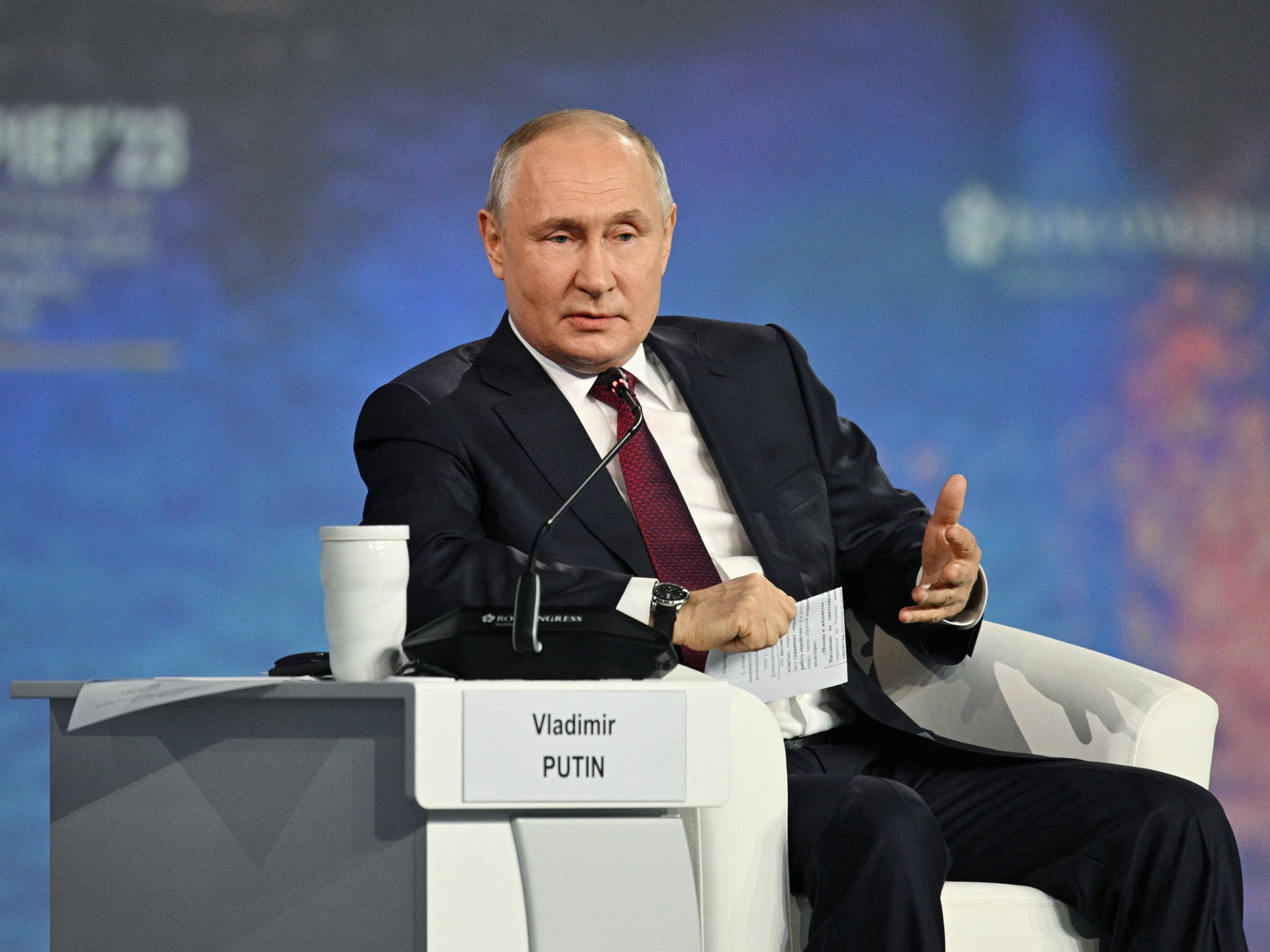
The SPIEF is one of the most closely monitored events on Russia’s political calendar, with President Vladimir Putin almost always attending and delivering the forum’s keynote address, often using the occasion to outline Russia’s economic priorities, but also its stance on regional developments, offering a glimpse into its foreign policy ambitions.
The session typically includes an extended question-and-answer segment, which has been known to grab headlines. In 2022, months after launching Russia’s full-scale invasion of Ukraine, Putin used SPIEF to denounce Western sanctions and argue that efforts to isolate Russia had failed.
Beyond the headlines, the forum serves a broader economic purpose for Moscow, as well. Western sanctions and the loss of many European markets have forced Russia to redirect trade and investment towards new partners across Asia, Africa and South America.
By attracting foreign officials, executives and investors to Russia, Moscow also seeks to demonstrate that it remains integrated into parts of the global economy and is not wholly dependent on the West’s political approval.
Disclaimer : This story is auto aggregated by a computer programme and has not been created or edited by DOWNTHENEWS. Publisher: aljazeera.com