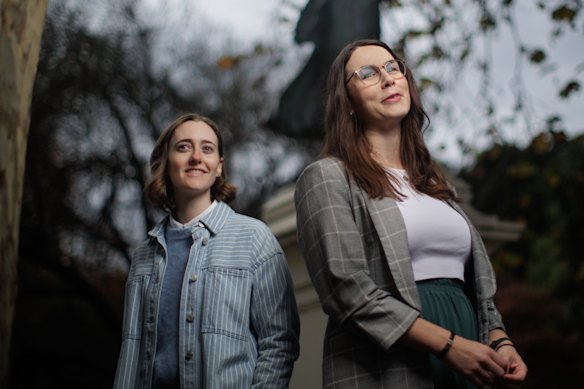

In January 2025, Evelien Florijn’s father, Gert, chose voluntary assisted dying at his home in the Netherlands. Evelien, now 33, was by his side when he passed, along with her mother and two brothers.
Gert, who was 64 when he died, had been diagnosed with stage-four lung cancer in early 2024; his health quickly declined in December of that year.
“He had already discussed the option of euthanasia months before, and he contacted the doctor to finalise that process,” Evelien says. “We knew the date and time about a week in advance, which is a very surreal and absurd thing to experience.”
While Melbourne-based Evelien says she was grateful to be there with him in the months leading up to his death, the combination of anticipatory grief and the grief after his death made it challenging.
“It was incredibly painful to know we were losing him and seeing him get slowly worse, but there was also a lot of love, closeness and fond memories.”
The death of a parent is the most common bereavement experienced in adulthood, says Chris Hall AM, chief executive of Grief Australia. However, this grief is often dismissed, minimised and unacknowledged.
“When an adult loses a parent, people often assume they are old enough to cope or that the death is somehow expected,” he says. “Yet losing a parent in adulthood can be profoundly destabilising, affecting a person’s emotional wellbeing, social involvement and personal life.”
According to Hall, family dynamics often restructure after the loss of a parent, and sibling relationships can either strengthen or fragment. This is why, after losing a parent, it’s often friends who can care for us best.
For Evelien, who had made Melbourne her permanent home only weeks before her father’s diagnosis, relocating back to the Netherlands to spend time with him meant her grief was compounded by logistics. “It felt like I had to pause my life for a full year. I had just decided to build my future in Melbourne, and then everything I wanted had to go on the back-burner because there was this much bigger thing happening.”
Through this time, Evelien says her friends, both in the Netherlands and in Australia, were incredibly important sources of support.
“My close friends in the Netherlands – Laura, Lieke and Richard – were the most practically present because they were nearby. They were the ones I could physically go to for comfort, food, company and hugs,” she says.
But her Australian friends, including 34-year-old Clair Henneberry, were also significant even from a distance.
“Clair, who was in Australia, offered to fly over for Christmas to be there for me … A lot of [other] support occurred through phone calls and voice notes,” she says.
This happened in both directions: Evelien sharing updates with Clair, and Clair checking in on her.
“I messaged to let her know that I was thinking about her, noting no obligation to reply, and was available for phone support while her Dutch friends were sleeping,” Clair explains.
Evelien says this made a significant difference throughout the experience, offering unique support beyond what her family could provide. “Because everyone in my family was grieving in their own way, they did not always have the capacity to support me in the way I needed … especially with them not being into talking deeply about feelings.”
Danielle Snelling, executive officer and co-founder of Motherless Daughters Australia, says that, as in Evelien’s case, friends can play an incredibly important role through the death of a parent because they offer steadiness, normality, companionship and emotional space without the complicated dynamics that sometimes exist within families after a death.
“Family members are grieving too, which can sometimes make it difficult for everyone to support one another consistently and adequately and, on top of that, family members have shared a different kind of relationship with the parent who died.”
Snelling says that friends can be vital because they are often the people helping someone navigate everyday life after loss.
This support often involves practical tasks such as cooking dinner, organising meal delivery, picking up kids from school, running errands, doing housework or caring for pets, which Dr Luke Martin, a Beyond Blue clinical psychologist and spokesperson, says is best offered in concrete terms.
“It is very common to say, ‘let me know if you need anything’, but in reality that can put the pressure back on the person who is grieving. When you are overwhelmed, you often do not even know what you need,” he says. “It’s more helpful to offer something specific like dropping off a meal, helping with errands, doing a school run – but offer it so they don’t have to think about it and the burden isn’t on them to reach out either.”
Ongoing emotional support is also important, says Dr Kelly Gough, president of the Australian Psychological Society.
“Continue to check in and be there to listen to them as they adjust to life after losing a parent,” he says. “Many people receive attention right after the loss, but later they may feel lonely or forgotten. Ongoing support can help the person feel cared for and less isolated as they heal over time.”
For Clair, this has meant actively talking with Evelien about Gert and celebrating his memory.
“Whenever Gert was on her mind, I’d ask her to tell me about him. I still do this today,” says Clair. “I set calendar reminders for important dates like Gert’s birthday and termination-of-life day, and proactively offer to celebrate him with Ave [Clair’s name for Evelien].”
Not only has Clair’s support helped Evelien, but it has also strengthened their connection.
“I learned to rely on others, and that has absolutely deepened my friendships, and especially my bond with Clair, as they are the person I reach out to first for support,” says Evelien.
“I think it’s helped us both to be more open and rely on each other more.”
Make the most of your health, relationships, fitness and nutrition with our Live Well newsletter. Get it in your inbox every Monday.
From our partners
Disclaimer : This story is auto aggregated by a computer programme and has not been created or edited by DOWNTHENEWS. Publisher: www.smh.com.au