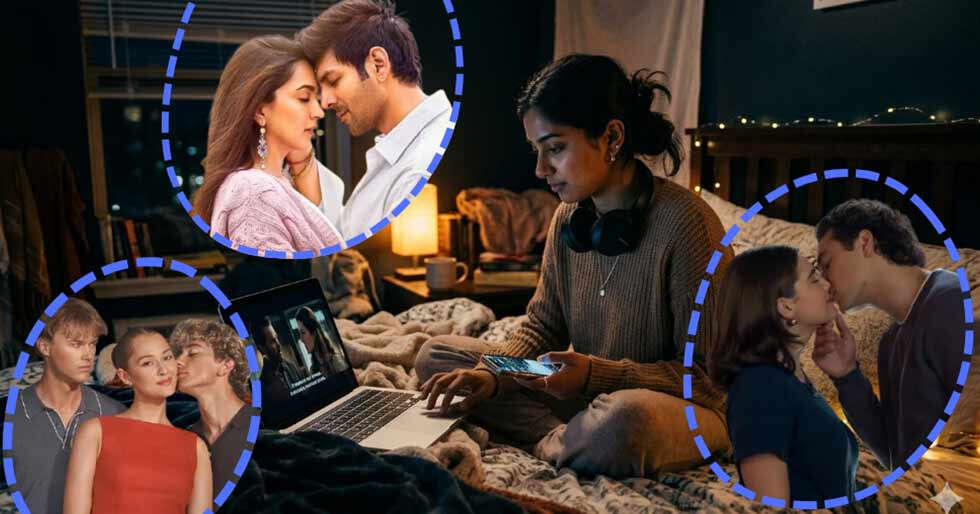
Then there’s Matargashti from the same film. It’s a looser track, intoxicated with the early joy of an unexpected connection, which ends up under falling-in-love montages with a frequency that borders on scientific fact. These songs weren’t made for Western shows. But they were made for something those shows contain: real human emotion pushed past its natural breaking point, until it needs music big enough to hold it.
The Summer I Turned Pretty edits are probably the best documented version of this phenomenon. It had a full, carefully curated pop soundtrack that its own creators clearly cared about. And then the Desi fandom just looked at all of that and said, respectfully, no. They reached back for Pal Pal Dil Ke Paas, for Darkhaast, for Arijit Singh’s whole catalogue of quiet devastation and suddenly Belly and Conrad and Jeremiah’s messy beachside love triangle felt like something out of Imtiaz Ali’s notebooks. The emotion was always there. The right music just unlocked it.
With Bridgerton Season 4, this energy is already building around Benedict. Fans are laying Shah Rukh Khan classics underneath the footage, and honestly, what other choice is there? Nobody has ever created a cinematic language for romantic yearning quite like SRK, and nobody has ever needed it more than a period drama about repressed aristocrats glancing at each other across ballrooms. Kabhi Khushi Kabhie Gham did grand romantic devotion better than most shows will ever do on their best days. The fandom knows this.
What’s changed recently, and this matters,is that the traffic isn’t just going one way anymore. The Dhurandhar soundtrack last year became the first Bollywood film to have every track from its album chart simultaneously within international listing and streaming charts. That is not diaspora numbers. Those rankings demonstrate that Bollywood music is no longer confined to diaspora audiences but is actively being discovered by mainstream international listeners. International creators on TikTok and Instagram have been lifting Indian sounds, Indian reaction templates, Indian editing rhythms, and building their own content on top of them. The meme formats that originated in the Indian internet, the dramatic zoom, the perfectly timed Arijit Singh drop, the slow-motion reveal set to a building orchestral swell, are now part of a shared internet language that creators everywhere are speaking, often without realising where it came from.
The Indian internet built this. It built it slowly, over years of being slightly looked down on by the prestige pop-culture conversation, over years of being told that Bollywood was too loud, too emotional, too much. And now the people who said that are using Indian audio on their reels and wondering why it works so well.
The Off-Campus fandom is just the latest chapter. They took a college hockey romance, ran it through the emotional processing system that Desi editors have been perfecting for a decade, and made something that people who have never heard of the book are watching and feeling things about. That’s not a trick. That’s a point of view. That’s a whole tradition.
The internet didn’t discover that Western dramas could feel like Bollywood. The Indian internet always knew. It’s just taken everyone else this long to notice they were right.
Disclaimer : This story is auto aggregated by a computer programme and has not been created or edited by DOWNTHENEWS. Publisher: filmfare.com