David Blair
London: By firing salvos of missiles at Israel, Iran’s leaders are rolling the dice on punitive retaliation and a return to all-out war. Their calculated decision to run that risk shows just how confident they feel.
It was not supposed to be this way. When America and Israel launched their offensive exactly 100 days ago, on February 28, they gambled on the swift collapse of Iran’s regime, triggered by the brutally efficient killing of Ayatollah Ali Khamenei, the late supreme leader, and a small battalion of his ministers and commanders.
Even after the Islamic Republic had survived decapitation, replaced its slain figureheads and begun hitting back by closing the Strait of Hormuz, US President Donald Trump still assumed that thousands of around-the-clock air strikes would force his enemies to yield to his demands.
Instead, far from breaking under pressure, Iran is now levelling demands of its own. The regime insists that Israel must halt the offensive against Hezbollah, the Shia terrorist group in Lebanon, as the price for any wider deal with America to end the conflict.
And they believe that Trump is so desperate for that deal that he might even try to prevent Benjamin Netanyahu, the Israeli prime minister, from retaliating for Iran’s missile assault.
By negotiating with Trump’s representatives and dangling the prospect of an agreement – though without ever finalising anything – Iran is hoping to drive a wedge between the US president and his only ally, and manipulate America into thwarting a renewed Israeli onslaught.
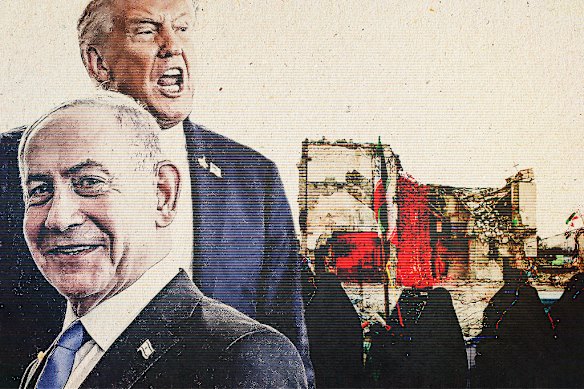
Recent events suggest that is not a forlorn hope. Last Monday, Trump called Netanyahu to tell him to call off Israel’s campaign in Lebanon for fear of jeopardising negotiations with Iran.
No one denies that the two leaders had a furious row. Trump, with calculated understatement, told journalists: “I was a little bit perturbed at his constantly fighting with Lebanon.”
Even if Trump tells him to leave Iran alone, Netanyahu might well refuse to listen, given that his country has been directly attacked and, to make matters even more fraught, Israel will soon hold a general election.
If Netanyahu strikes back in line with Israel’s longstanding military doctrine of swift and overwhelming retaliation for any attack, then the war will restart and Trump will have to decide whether to join in or stay on the sidelines.
Whatever he does, there will be no realistic prospect of a quick deal with Iran, and the Strait of Hormuz will stay closed, pushing the world economy to the brink. If so, Trump would have little reason not to resume his offensive.
And that is how Iran’s overweening confidence could yet turn into folly. Its leaders are a hair’s breadth from making themselves once again the targets of a furious joint onslaught by Israel and America. Having been through this once before – and survived more than 13,000 air strikes – they clearly believe they can do the same again.
No one can tell whether that judgment is correct. But there are two certainties.
The world economy cannot withstand the loss of the oil, gas and fertiliser that should be passing through the Strait of Hormuz for much longer.
And if and when Trump succeeds in extricating himself from his fiasco of a war and averting a global economic calamity, he will have to strike a deal with Iran that falls far short of his grandiose demands for the “surrender” of the regime.
Iran’s belief that it can sucker Trump into restraining Netanyahu tells its own story.
From our partners
Disclaimer : This story is auto aggregated by a computer programme and has not been created or edited by DOWNTHENEWS. Publisher: www.smh.com.au