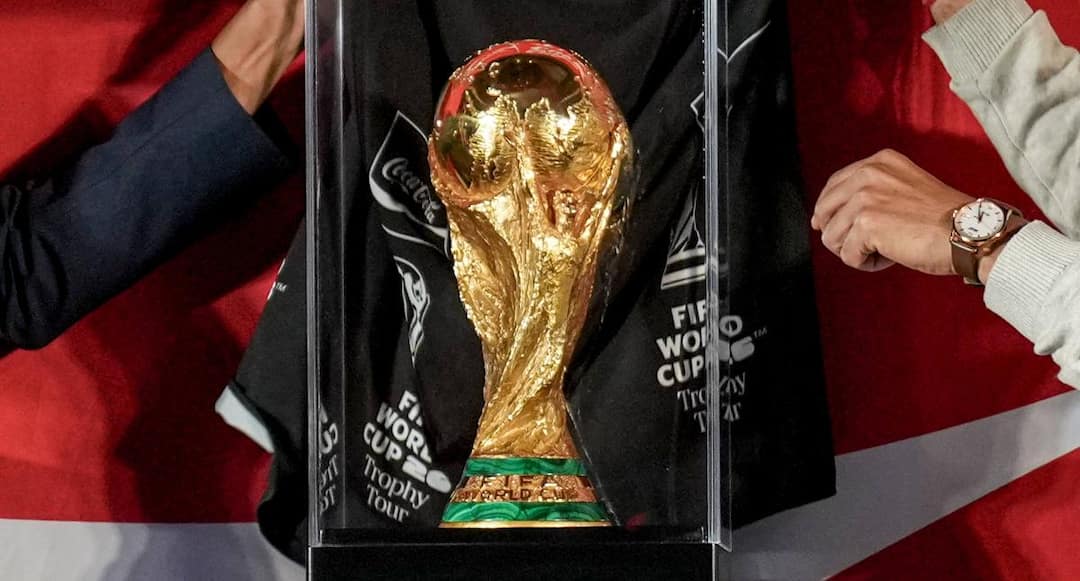
The International Federation of Association Football (FIFA) proudly operates under the unifying slogan “football unites the world,” but the reality on the ground ahead of the 2026 Men’s World Cup paints a starkly different, highly fractured picture.
For the first time in tournament history, three distinct nations – the United States, Canada, and Mexico – are sharing hosting duties. However, a major report by the Council on Foreign Relations (CFR) highlights how sweeping diplomatic policy updates, border clampdowns, and active global conflicts under the current Trump administration have transformed the tournament into a geopolitical obstacle course.
Also Read | Suryakumar Yadav Unfollows Mumbai Indians & Hardik Pandya
Stark Shift Since 2017
When the joint North American bid was initially finalized in 2017, it was envisioned as a seamless display of continental collaboration. Fast forward to the present day, and relations between U.S. and its neighboring co-hosts have grown severely strained over trade friction, protectionist economic stances, and rigid immigration policies.
The physical distribution of the tournament underscores where the logistical pressure lies: the United States is hosting the vast majority of the tournament – 78 out of 104 matches across 11 American cities. Canada and Mexico are managing a modest 13 games each. With more than one million international visitors expected to travel for the event, experts warn that the tournament will face unprecedented friction. “I don’t think this is going to be as smooth as previous World Cups,” CFR Africa expert Ebenezer Obadare.
Travel Bans Take Effect
The most glaring complication stems from the administration’s sweeping travel bans, which either fully or partially restrict citizens from 39 countries from entering United States territory. While the State Department instituted a narrow exemption framework to allow participating athletes, coaches, and vital support staff to cross the border, the policy offers zero protection to everyday sports enthusiasts, independent media personnel, or international corporate sponsors.
This creates a deeply fragmented reality for the fanbases of multiple qualified nations:
Haiti and Iran: Citizens from these countries face complete, non-negotiable entry bans. Fans from these nations cannot legally attend matches played on U.S. soil unless they possess dual citizenship with an unrestricted country or hold U.S. residency.
Ivory Coast and Senegal: These qualified nations are bound by strict, partial travel restrictions, shutting a significant portion of their fanbases out of American stadiums.
Extra Border Scrutiny: Nations caught in secondary visa pauses – such as Egypt, Ghana, Jordan, Morocco, Uruguay, and Uzbekistan -technically remain eligible for temporary tourist visas. However, CFR immigration expert Edward Alden points out that travelers from these regions will face exhaustive, extra layers of vetting and delays at border checkpoints.
Iran Camp Relocation and Visa Delays
The friction isn’t limited to the terraces; it has directly impacted team logistics. Ongoing military conflicts involving the U.S. in the Middle East prompted FIFA to step in and authorize a last-minute security adjustment for the Iranian national team. Originally scheduled to train inside the United States, Iran was permitted to completely relocate its primary base camp across the southern border into Mexico to avoid compounding political pressures.
While FIFA officials confirmed a structural agreement allowing the Iranian squad to cross the U.S. border solely to fulfill their group-stage match fixtures, the team found themselves stuck in a high-stakes waiting game for their official entry visas just days before the June 11 opening ceremony.
Financial and Human Rights Shadow
The administration attempted to smooth over specific diplomatic roadblocks at the eleventh hour – including waiving a controversial $15,000 visa bond that would have financially penalized fans traveling from five African nations.
Nevertheless, global watchdogs like Amnesty International have issued stern warnings regarding the tournament’s environment, emphasizing that aggressive immigration crackdowns and hyper-militarized border checkpoints run entirely counter to the open, celebratory spirit of the world’s game. As opening day arrives, the 2026 World Cup stands as a case study in how domestic policy can directly disrupt global sports.
Before You Go
Pakistan In Turmoil: India Celebrates, Pakistan Reacts in Anger After Crushing Defeat
Disclaimer : This story is auto aggregated by a computer programme and has not been created or edited by DOWNTHENEWS. Publisher: abplive.com