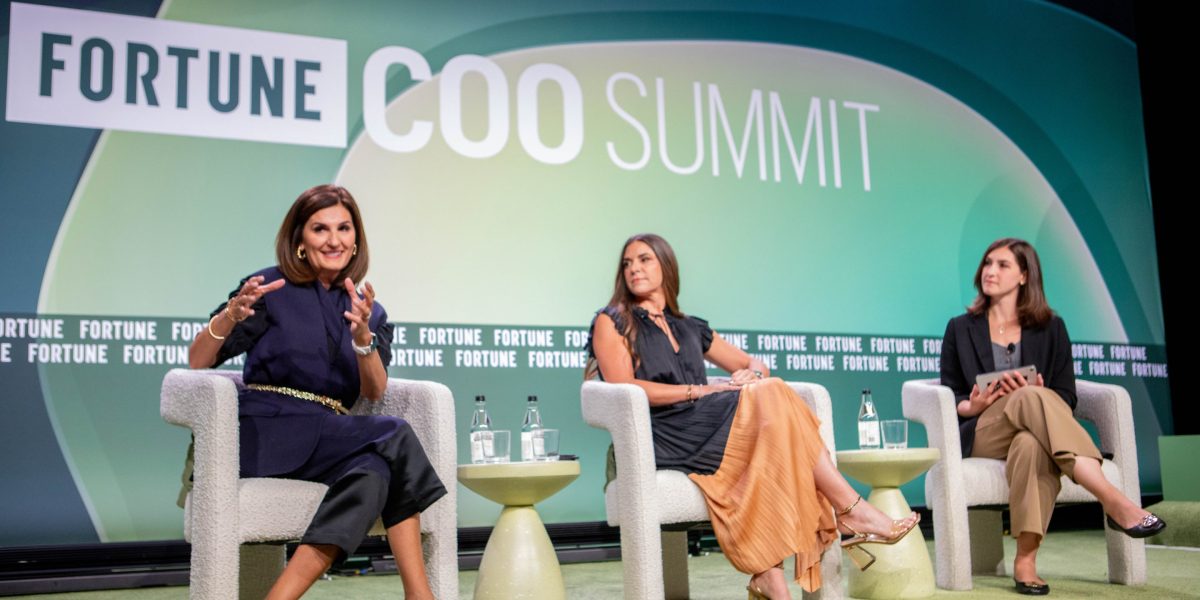
Three years ago, Cisco piloted an AI agent designed to analyze employee communications and diagnose the root causes of workplace conflict. It never made it out of the test phase.
Why? “We believe that’s a conversation that a leader needs to have,” said Francine Katsoudas, Cisco’s chief people, policy, and purpose officer, at the Fortune COO Summit last week. “There can be insights that you decide not to scale, but that was a great test for us.”
The question of where humans provide value—and when AI should step in—was a central debate at the summit. It’s one that comes at a time when 93% of jobs are already impacted by AI, and 30% are now facing existential change, according to new Cognizant research. The firm’s researchers initially predicted this threshold would come in 2032, but it’s now here six years ahead of schedule.
And the much-publicized narrative that blue-collar jobs are safe from AI disruption is no longer true, said Ollie O’Donoghue, Cognizant’s head of research.
Take a plumber, for example. “You’ll still need someone to turn the wrench, no doubt, but the actual process of plumbing and the value that’s added will change a little bit,” O’Donoghue said, as tasks from diagnosis to paperwork could increasingly be reshaped by AI.
Cognizant found those in the construction business received a 12% exposure score, or the degree to which an occupation could be affected by AI—up from 4% three years ago. CEOs and those in the C-suite received a 60% exposure score, up from 25%.
But this doesn’t mean we should blindly turn over these easily disrupted tasks to AI. Lattice CEO Sarah Franklin said strict governance of AI agents is key.
“You don’t just let any person into your home, talk to your children, eat your food, sleep in your bed. You ask them who they are and why they’re there,” she said. “It’s the same thing with our work. We don’t just let any AI in. We need to have clear guidelines and clear guardrails around what happens when you bring AI into a company.”
P.S. Later this summer, we’ll be publishing our third annual list of the 100 Most Powerful People in Business. Think you know someone who should make the list? Nominate them here! You can also learn more about our methodology and see last year’s list.
Kristin Stoller
Editorial Director, Fortune Live Media
kristin.stoller@fortune.com
Around the Table
A round-up of the most important HR headlines.
Pressure to look young in the workplace has led to a mini-boom of lunch-break Botox. Financial Times
The mid-career stall is real: One in four workers are going years without pay or position boosts. Wall Street Journal
KPMG UK is reversing a COVID-era policy that let employees leave early on Fridays over the summer. Bloomberg
Watercooler
Everything you need to know from Fortune.
Hiring nightmare. New research suggests remote work may be the reason why Gen Z isn’t getting jobs. —Tristan Bove
Drawing Gen Z. This data center CEO is pushing for a skilled-trade revival by offering two weeks of vacation on day one. —Preson Fore
Viral values. This recruiter says Gen Z isn’t lazy. Corporate America is just mad they’re harder to manipulate. —Jake Angelo
Disclaimer : This story is auto aggregated by a computer programme and has not been created or edited by DOWNTHENEWS. Publisher: fortune.com