
From a broadcasting mishap at the start of the football World Cup, to where you can find the happiest Germans and the unfortunate end of Timmy the whale, here’s what we’re talking about at The Local this week.
After years of planning and numerous diplomatic flashpoints, the 2026 football World Cup finally got under way on Thursday with a pre-game ceremony curated lovingly by co‑hosts Mexico.
Not that viewers in Germany would necessarily have been aware of this, thanks to a fairly significant own goal from state broadcaster ZDF.
After more than two hours of studio build‑up, punditry and scene‑setting, the channel opted to nip off for a “short break” as the ceremony was getting under way in the Estadio Azteca.
READ ALSO: How to watch the 2026 football World Cup from Germany
By the time the broadcast finally cut back from adverts to Mexico City, about seven minutes of the roughly 20‑minute ceremony – featuring artists such as Danny Ocean and J Balvin – had already passed.
In other words, viewer in Germany missed nearly half of an event carefully choreographed to showcase the best of Latin American music, culture and spectacle.
Which is particularly unfortunate, because at around 20 minutes the ceremony appears to have been one of the few elements of this tournament not suffering from potentially terminal bloat.
No one is quite sure how a competition featuring 48 teams playing 104 games (up from 64) in three different countries is going to feel – but the organisers are certainly doing their best to ensure there’s nowhere to hide.
Where previous editions managed with just a single, official song, for example, this year’s version has released an entire 18‑track “official” album.
Something to listen to, a cynic might suggest, during the interminable group stages.
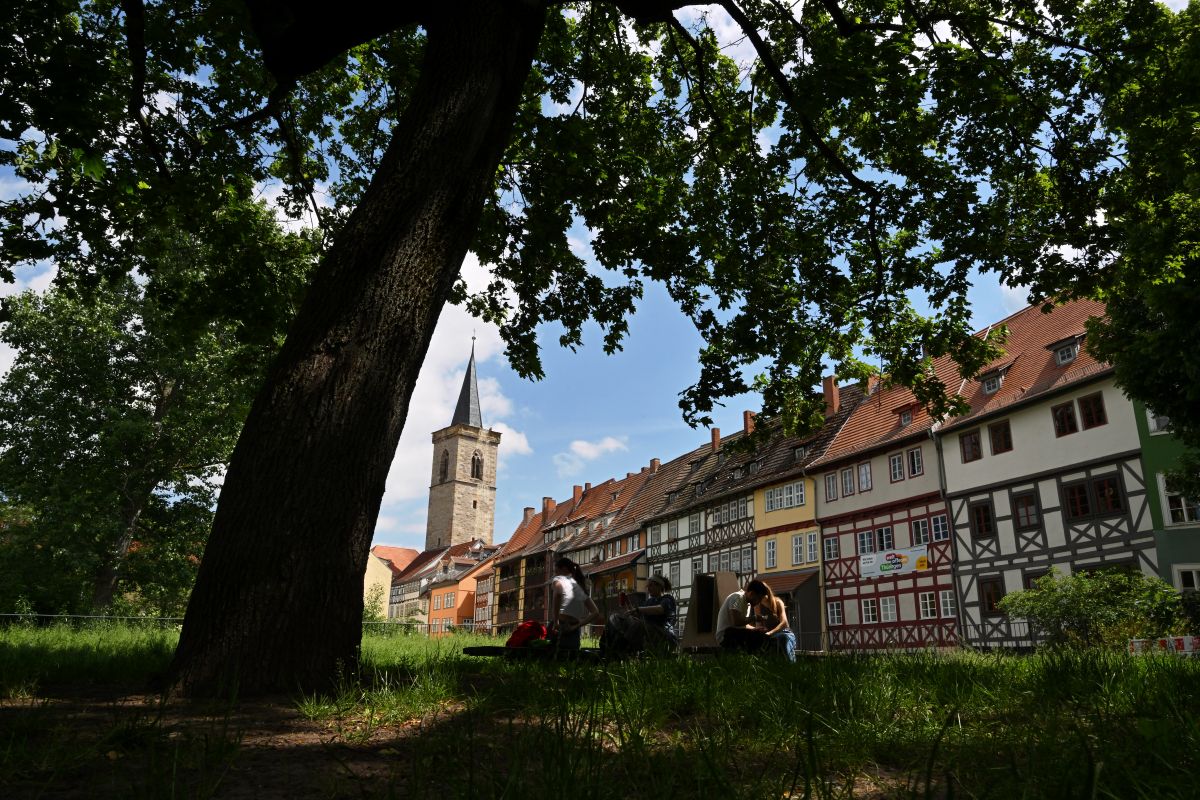
Where is this?
A shady spot at the Krämerbrücke in the center of the Thuringian state capital. Photo: picture alliance/dpa | Martin Schutt
Do you which German city has the happiest residents?
Each year the SKL “Happiness Atlas” ranks Germany’s biggest cities according to how high residents’ rate their life satisfaction. The latest such ranking came out this week and revealed that Erfurt is home to the ‘happiest’ Germans in 2026.
Not the richest city in Germany by any means, Erfurt owes its place at the top of the league to high scores for the more elusive pleasures of daily life: affordable rents, manageable commutes and plenty of attractive green spaces.
For visitors, those qualities translate into a compact, walkable city best explored slowly on foot or by tram, with time set aside for long lunches and unhurried wandering.
READ ALSO: Five summer holiday destinations in Germany you can reach by train
Start in the medieval old town, where the Krämerbrücke – one of Europe’s few inhabited bridges – is lined with independent shops and cafés, before climbing the steps to the cathedral square.
There, St Mary’s Cathedral and St Severus’ Church dominate one of Germany’s most striking ensembles, home to the world’s largest free‑swinging medieval bell.
Beyond the postcard sights, the city’s riverside paths, market squares and student buzz (courtesy of the university once attended by Martin Luther) offer a more understated but enduring charm.
Timmy, in memoriam
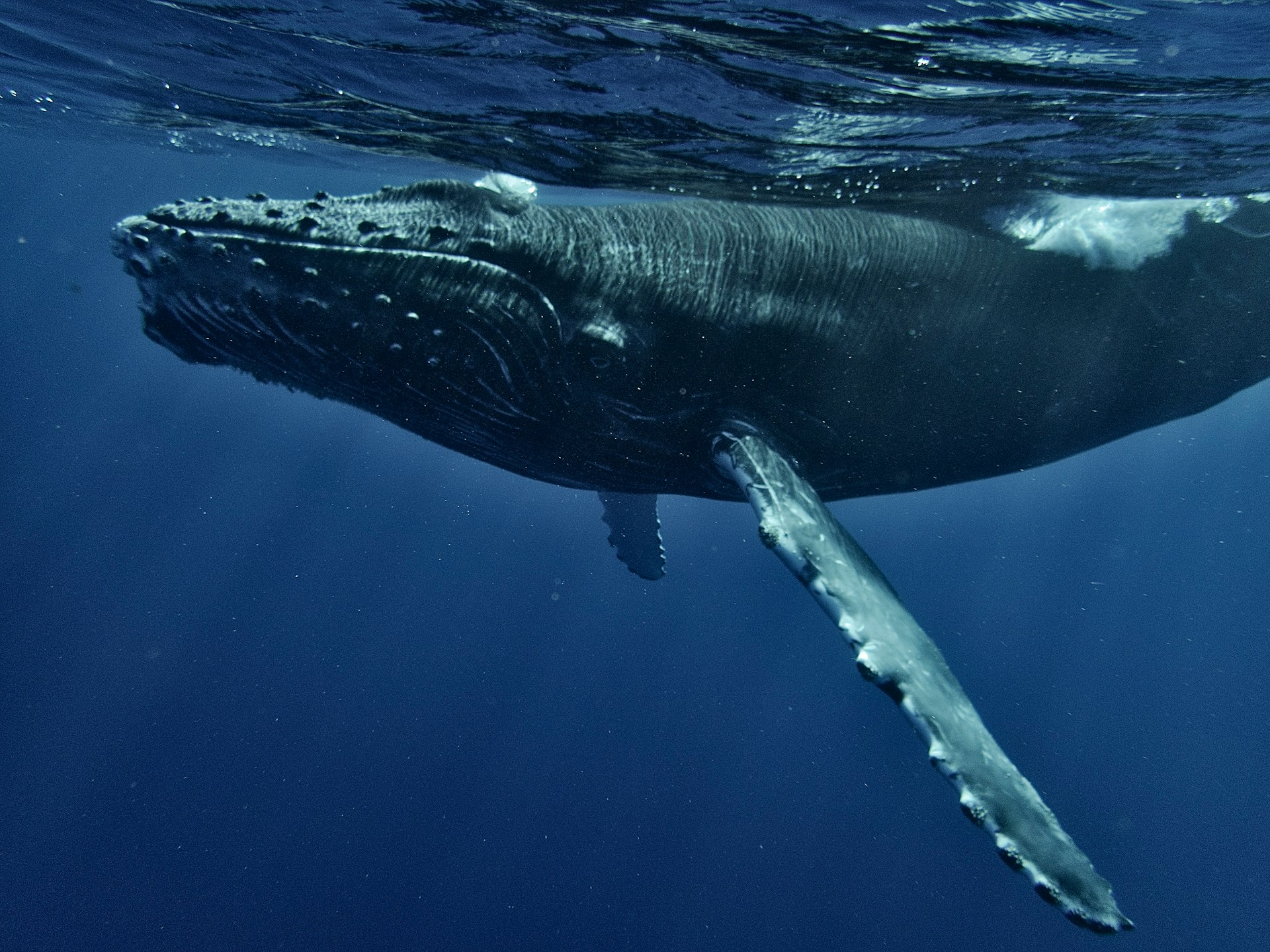
A humpback whale. Photo by Chinh Le Duc on Unsplash
Since the start of March a humpback whale that was stranded several times on sand bars just off the coast of Germany’s Baltic Sea has been the centre a media frenzy and public obsession, and ultimately a tragedy.
In brief, the saga began when a beached whale was spotted near Lübeck. It was named Timmy, for the beach, Timmendorfer Strand, from where it was first seen.
After a long series of rescue attempts, disappearances and reappearances, a growing group of Timmy-supporters had a vested interest in seeing the whale saved. But a growing number of animal experts suggested the whale was actually badly injured and distressed, and would probably be better off left alone.
Then things got a bit weird when two German multi-millionaires stepped in to privately fund the whale’s ‘rescue’, which basically involved moving it onto a floating container, pulling it far out to sea and releasing it there with an animal tracker attached. The mission had been called “inadvisable” by the International Whaling Commission.
Unfortunately, the dramatic rescue did not end with a happy ending. Soon after Timmy’s release the tracker on its dorsal fin was reported to have stopped transmitting, and almost immediately there was talk that it had likely died. Two weeks later a dead whale washed up on a Danish island. It’s identity was confirmed when biologists found the same tracker still attached.
Interestingly, following an autopsy by Danish scientists, it was revealed that Timmy was actually not a ‘he’ but a ‘she’ all along.
Also interesting, if a bit grim, is what will become of Timmy’s remains: According to a report from NDR, the water from the body will be purified and discharged into the sea, the blubber will be processed into biodiesel, and the bones, skin and tendons will be processed into a floury mass, which will then be burned as biomass.
From one perspective, the whole thing reads as a metaphor for humans’ inability to leave things be – and to try and extract value from every single being, tissue and cell that comes across our path.
Or perhaps, from a more optimistic perspective, it also demonstrates humans’ innate, if sometimes misplaced, capacity for care.
With reporting by Paul Krantz.
Disclaimer : This story is auto aggregated by a computer programme and has not been created or edited by DOWNTHENEWS. Publisher: thelocal.de



