Golf instruction is ever-evolving, but the best advice stands the test of time. In GOLF.com’s new series, Timeless Tips, we’re highlighting some of the greatest advice teachers and players have dispensed in the pages of GOLF Magazine. This week, we look back at our June 2018 issue in which Dave Pelz gave a breakdown of the hardest holes at Shinnecock Hills.
This week, the best golfers in the world will head out to the eastern end of Long Island for the toughest test in golf — the U.S. Open.
Any time the USGA is hosting a championship, you can expect a stern test. And no tournament lives up to that more than the U.S. Open.
Among all the historic courses the USGA has taken the national championship, perhaps no host is as feared as Shinnecock Hills. In the four previous U.S. Opens contested at Shinnecock, just three players total have finished the week under par. There may be no course better suited to present a U.S. Open test than Shinnecock.
So, what is it that makes the William Flynn design so challenging? Ahead of the 2018 U.S. Open, legendary instructor Dave Pelz joined GOLF Magazine to break down some of the toughest holes on property.
The unique challenge of Shinnecock
When I think of Shinnecock Hills, two words come to mind: “national treasure.” As a researcher and golfer who has dedicated nearly four decades of his life to developing swing- and course-management strategies to help players shoot better scores, it remains the ultimate test if you can outthink this place, you can out think anyplace. I paid a visit to the William Flynn masterpiece last fall, walking the fairways with my son, Eddie, and even playing a few shots. It was as vexing as ever. The goal of my visit was to paint a picture of the challenges that await the best players in the world so you can better appreciate the drama sure to unfold before your eyes during the playing of the 118th U.S. Open, whether you’re there in person or catching it on TV.
Even among its major-venue brethren, Shinnecock stands alone in its ability to squeeze every ounce of shotmaking savvy and heart from players’ games — a test hardwired into the course’s layout, the slope and contour of the greens and the ever-present wind. When these elements combine — and you can bet they will — watch out.
It’s not all purgatory. Many of Shinnecock’s greens are downright friendly, with raised edges that funnel shots toward the center of the putting surface. Most, however, are shaped to repel shots away from the flagstick and, in some cases, off the green entirely. Be advised: every green features serious undulation. A few are so sloped that it’s impossible to imagine the ball stopping on its own
Adding to the difficulty is the fact that Shinnecock’s greens run faster than Flynn originally intended. Shortly after he redesigned the course in 1931 (Shinnecock dates back to 1891), the USGA began measuring how fast and far balls rolled on level putting surfaces, calling the measurement “green speed.” At that time, Shinnecock’s greens measured in the 4- to 5-foot range, and even then they were considered outrageously sloped, severely undulating and very difficult to putt. Come this June 14, these same greens will roll at 12-foot green-speeds, requiring the most deft green reading and putting touches on earth.
Good luck, fellas.
Here is a breakdown of some of the hardest holes on property.
No. 2, Par-3
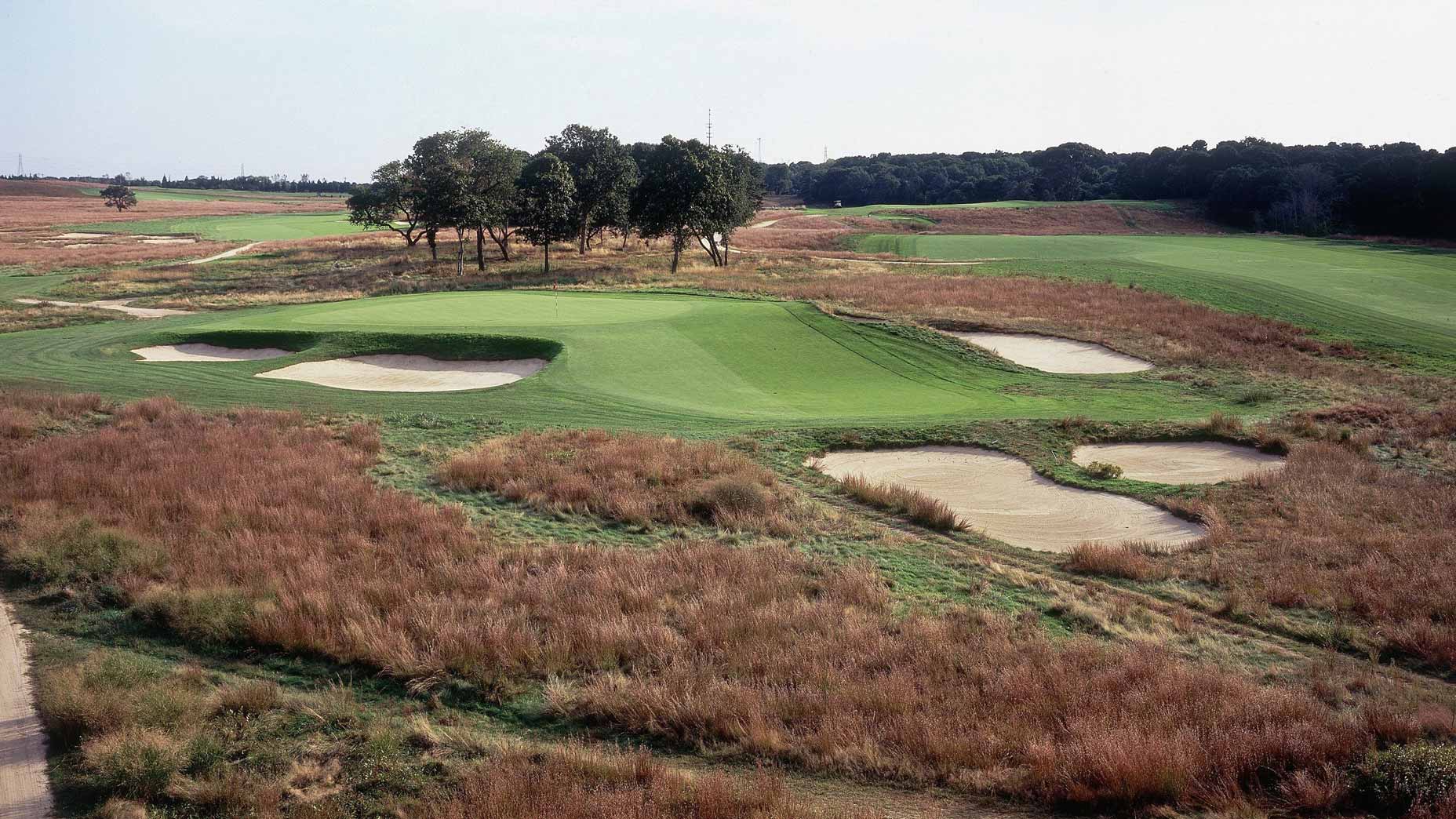
Shinnecock opens with a wide and fairly benign 399-yard par 4 (it played as the fourth-easiest hole during the 2004 U.S. Open). Then it slaps you in the face. Hard. No. 2 is a 250-yard-plus par 3 with sand on both sides of the green and serious rough in play off the left. The green is the second-largest on the course, with a consistent elevation drop of four feet from back to front (though mild undulations help channel shots toward the center of the green). Depending on the wind direction, don’t be surprised to see some players swing driver here. It’s an absolute beast.
For fun, | walked to where PGA Tour ShotLink data says is the average miss distance on a shot taken by a Tour player from 260 yards of the target — about the yardage players will face in the Open on No. 2. This miss pattern puts the ball in the deep rough next to the bunker left of the green. This is not where you want to be, especially during a major.
I was able to lash the ball onto the green (and it eventually rolled off the back). That’s right — I pulled an “o-fer.” I left three of the six shots in the rough and dribbled one into the bunker. The remaining ball? I assume it’s still burrowed somewhere deep in the fescue. I never found it. The tall grass at Shinnecock — here and all over the course — can be so severe that I’ve discussed with some players heading into this year’s Open the usually unthinkable option of taking an unplayable-lie penalty and dropping within two club-lengths if and when they find such a nasty patch of grass. As absurd as this idea may sound, my experience proves it a viable, shot-saving strategy.
No. 7, Par-3
The 7th hole at Shinnecock Hills.
Getty Images
I must warn you: The seventh hole features one of the most wicked green complexes you’ll ever find. It’ll play anywhere from 175 to 205 yards, and to the largest green on the course. It’s a classic Redan— the putting surface slopes away from the tee box, from a high point in the front-right section of the green to seven feet lower in the back-left. Bunkers left and right of the green are there to punish inaccuracy. Heaven help the player who finds the sand on the right he’ll face a huge change in elevation to a green running straight downhill from his line of flight.
The flag hovering above the crest of the hill? My son all 6’5″ of him is holding it as high as he can so I can see it. It’s a ridiculously difficult shot. As I said, Shinnecock is beauty and beast.
No. 10, Par-4
Can you believe that a relatively short, downhill 415-yard par-4 — with no water, out-of-bounds or obviously penal hazards — can play as the most-over-par hole in U.S. Open history? It looks so innocuous. You simply lay up 220 yards off the tee to the crest of the hill or roll a 5-wood or hybrid all the way down to the bottom, and then either play a 190-yard 7-iron or 75-yard wedge shot to a nicely sized green. Two-putt for par. It looks — and seems — so simple.
And it can be — under normal circumstances. It’s not too difficult if the course is playing soft and slow, despite the fact that the green is seriously sloped, elevated in relation to its surroundings and crowned at two-thirds of the way from the front. Its reputation as a monster stems from the fact that, in 2004, the winds completely dried out the green and made it play extremely firm and fast.
If you decide to push your shot up near the green, most approach shots are taken from 20 feet below the putting surface. That means that a normal-trajectory wedge that reaches a peak altitude of 35 feet comes into this green more like a 15-foot shot, or what you’d get from a slightly thinned wedge. When the green is firm and fast, these effectively lower-trajectory wedge shots bounce hard, run over the green and then down the eight-foot slope behind the green.
It gets worse.
From behind the green, the odds of stopping a return pitch close to the hole are long. In fact, many attempts roll down the front side of the crown, off the green, down the fairway and all the way to the bottom of the hill, 75 yards short of the green — right where the player started from. Madness! More than any other hole, No. 10 rolls all of Shinnecock’s mysteries into one: elevation, slope, contour, wind and firm and fast greens.
No. 13, Par-4
This hole looks easy but plays downright nasty if the wind is up. From the fairway, the green appears tame, What’s difficult to pick up is the severe, extended false front, the substantial runoffs to the right and left (into bunkers, no less); a steep fall-off ear the back, and a gentle crown in the middle. Add it all up and players are left with a minuscule effective landing area to stop shots near the flagstick In 2004, No.13 — the shortest par on the course — surrendered only 54 birdies in442 attempts.
Missing the green left or right will demand hitting a flop shot for your third — other short-game shots just won’t hold the green. And hitting in a gusting wind is no picnic. You can sail long or come up short without notice.
No 16, Par-5
The 16th green is the third-smallest at Shinnecock and falls nearly five feet as it slopes continuously from back to front. Its gentle contouring will yield birdies, and you can expect many of the bigger hitters to go for the green in two.
The danger is hitting your approach past the hole. Make this mistake and you’ll face one of the most challenging putts you can imagine.
From the back-left to a front-right pin, it’s a roller-coaster ride. Even with my TrueRoller device, it took me six tries to aim this putt correctly and roll it with reasonable speed. (| missed 12 feet left on my first attempt and ran it 15 feet too long.) Can you imagine getting down in two putts from here? It was difficult for my finely tuned TrueRoller. Expect a lot of three-putts.
No. 18, Par-4
The 18th green at Shinnecock Hills.
Getty Images
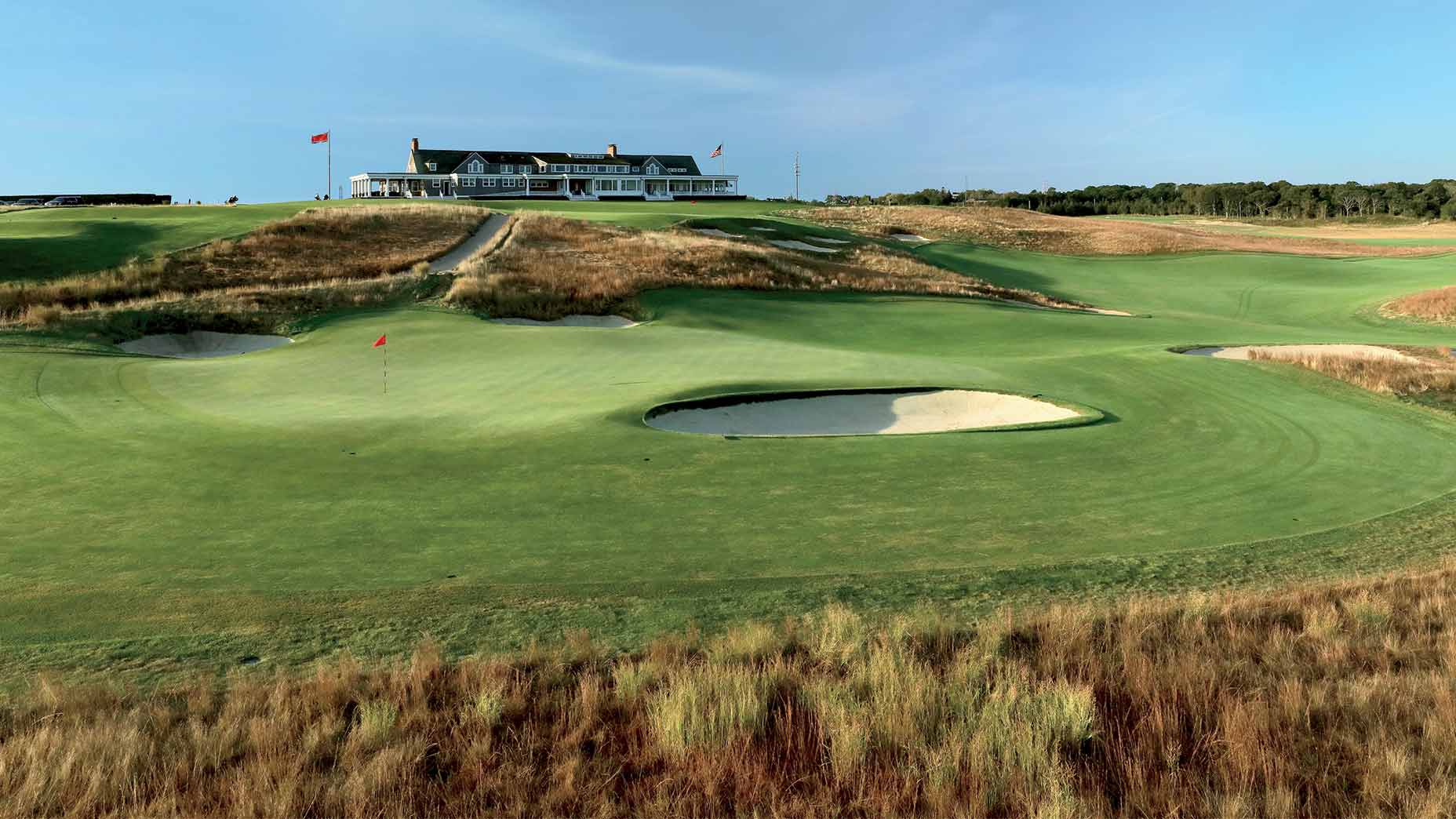
Standing on the 18th tee at Shinnecock — with the fairway disappearing beautifully into the distance and the stately clubhouse on the horizon — is one of the singular thrills in golf. As I gazed upon this grand finale, I though of the players who will be taking in the same view come June 17, a possible United States Open Championship within their grasp. What a moment.
Then it hits you: “Wow, what a tough hole!”
At 484 yards, it demands an accurate drive in the fairway and another 200-yard-plus shot uphill to an elevated green. Corey Pavin needed 4-wood to get home in two on No. 18 during the final round in 1995 en route to victory. Today’s players are a lot longer than Corey, but so is the hole, and there’s only so much you can bite off with your tee shot. The approach remains a bonafide killer.
Even if a player hits two good shots, there’s still the matter of sticking your approach in the right spot. Players better hope they’re not past or above the hole, or that the ball hasn’t rolled into the back fringe or over the green, because it’s darn near impossible to stop any pitch shot or putt in the opposite direction.
I attempted this shot during my fall visit to Shinnecock. I softly slipped a wide-open 64-degree wedge under the ball, landing the shot just three feet in front of my lie. I played this shot as well as I could’ve played it. Then, for the next 25 seconds, I watched the ball slowly amble away from me, down the green and past the hole. It eventually rolled off the front of the green, stopping only after it had traveled 10 yards back down the fairway. Unfair? Maybe. Difficult? Absolutely! But this is the U.S. Open.
This is Shinnecock.
Disclaimer : This story is auto aggregated by a computer programme and has not been created or edited by DOWNTHENEWS. Publisher: golf.com