Donald Trump has declared that the strait of Hormuz will be “completely open” from Friday, as western leaders gathering at the G7 summit in Évian-les-Bains battled to prevent the fragile US deal with Iran from almost immediately unravelling.
“The deal’s all signed. And the strait is already partially opened,” Trump said as he arrived at the summit in France, but Israeli breaches of the ceasefire in Lebanon and Iran’s claims about its right to charge fees in the crucial waterway revealed the agreement’s many loose ends.
Speaking at the start of bilateral talks with the French president, Emmanuel Macron, on Monday, Trump rejected a proposed UK-France joint naval mission in the strait, saying “I don’t think we will need much help” keeping it open.
“I think a lot of great things are going to happen in the Middle East right now. And very importantly, the oil is plummeting down and the stock market is shooting up like a rocket today,” Trump said. “The main thing is that Iran will not have a nuclear weapon. They fully agreed to that with strong policing powers, and they won’t have a nuclear weapon, which is what it was all about.”
The memorandum of understanding – which US officials said would open the strait of Hormuz in exchange for a lifting of a US naval blockade on Iran – is set to be formally signed at a ceremony in Geneva on Friday attended by the US vice-president, JD Vance, and the chief Iranian negotiator, Mohammad-Bagher Ghalibaf.
White House officials said the full details of the agreement would be published in the next 24 to 48 hours.
But the G7 leaders gathering for three days of talks found themselves already trying to shore up the agreement that the US had signed.
Technical discussions led by Vance from the US side will begin later this week, including the more thorny issues of the fate of Iran’s nuclear programme, which Trump has declared must never be able to produce a nuclear weapon.
It would also include provisions to lift sanctions and unfreeze billions of dollars in frozen assets, but US officials said that would be tied to “Iran meeting their commitments”. They insisted no Gulf country was cutting a side deal to unfreeze Iran’s assets, but suggested the US was “prepared to release frozen funds, and we are prepared to relieve sanctions”.
“We’ll do some small gestures of that in the beginning, if they make some small gestures to us that show that they’re willing to meet their commitments,” another official added.
They declined to provide specifics on what that “small gesture” would be, but the first official later clarified that as of now, “$0 of unfrozen assets have been released by the United States or any other country”.
The administration officials also said that there would not be an immediate drawdown of US forces near Iran upon the signing of the MOU.
“The plan is to keep the current force posture during the … negotiations in force,” the official said. “We hope to draw them down. We’re not doing that yet. We want to see the Iranians do what they promise.”
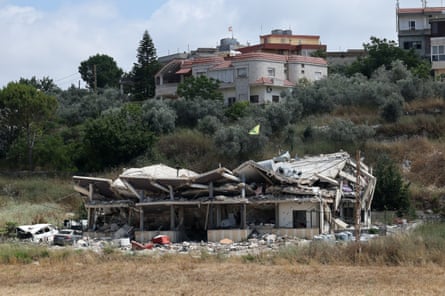
Friedrich Merz, the German chancellor, said the deal could stabilise the world economy, but warned Israel that the ceasefire agreement must apply to Lebanon. He spoke after an Israeli drone targeted a vehicle in southern Lebanon killing one person, the second death since the 60-day ceasefire was agreed.
Ursula von der Leyen, the European Commission president, warned: “There can be no lasting peace whilst Lebanon remains in flames.”
In Israel, concern and anger deepened during the day, directed at both Trump and Benjamin Netanyahu, the Israeli prime minister. Analysts and commenters quickly pointed out that none of Netanyahu’s promises at the beginning of the war in February – which included regime change in Tehran and the destruction of Iran’s nuclear programme – had been fulfilled.
Israel has also launched a wide-ranging offensive into Lebanon after Hezbollah, which has close links to Iran, fired missiles at northern Israeli towns during the first week of the war, suffering new casualties against an enemy that had been previously dismissed by officials as no longer posing a serious threat.
Opposition politicians were quick to capitalise on what some local media described as an “abject failure”. Far-right members of Netanyahu’s ruling coalition called for Israel to ignore the agreement, saying it had not been party to negotiations.
The national security minister, Itamar Ben-Gvir, said of the memorandum: “Trump’s agreement does not bind us … We must not settle for anything less than the dismantling of Hezbollah. We must not withdraw from a single inch of territory that our soldiers have captured and cleared.”
The Iranian foreign ministry spokesperson, Esmail Baghaei, insisted the US had to ensure Israel abided by the ceasefire, warning that the whole deal was contingent on its application to Lebanon.
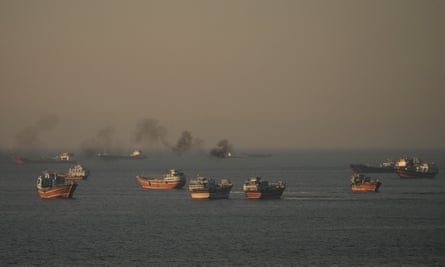
Trump was set to be quizzed by other world leaders whether he had signed an agreement that gave Iran a right to charge for maritime services in the strait of Hormuz.
Such a formulation could prove in effect to be a tolling system that European leaders, committed to freedom of navigation, have fiercely opposed. In Evián, Trump insisted that would not be the case, saying: “because we have an agreement where it’s going to be open, and it’s toll-free”.
The uncertainty meant plans to deploy a Franco-British maritime taskforce within days to clear mines and escort ships through the strait remained in doubt. Iranian officials have rejected what they see as foreign interference in the strait, and have insisted last-minute negotiated changes to the agreement have given Iran the right to charge fees for maritime services.
Macron earlier declared the taskforce could help “ensure the reopening of the strait is peaceful” and France could send its Charles de Gaulle aircraft carrier, frigates, mine search boats and aircraft to the region within days.
But the taskforce plan, partly conceived to soothe Trump’s anger over a European refusal to join a more aggressive US plan to open the strait earlier in the war, looks at best uncertain since all the contributor countries have insisted the taskforce cannot operate in the face of Iranian military resistance.
Macron claimed Oman, on the southern waterways of the strait, did not object to the convoy. Trump also appeared to suggest the waterway was operating without need for a European escort mission. “Ships are starting to move many loaded up with oil, out of the Strait of Hormuz, They are going along the southern highway which is totally safe secure and pristine. There are other areas of travel also,” he posted to social media.
But with shipping companies warning it will take months for trade to return to normal, the European Central Bank governor, Christine Lagarde, said the impact of the war on oil prices meant inflation was now spreading across the European economy, with a secondary effect on wages.
Trump faces a broader uphill task persuading his sceptical fellow G7 leaders that he was right to ignore their advice since the war had secured objectives the west backed, including taming Iran and destroying its nuclear programme.
Many G7 leaders refused to let Trump use US bases in Europe to mount attacks on Iran, and believe the whole episode has damaged the US, while weakening western economies in the battle with China. One western diplomat said: “No one wants a bitter or public inquest, but this has been a crash-and-burn moment for American unilateralism, and perhaps Trump will heed the lessons.”
US officials speaking on Monday claimed the war had left Iran “substantially weakened” and it now had the option to be “invited into the world economy with all the prosperity that comes along with it”, on condition the country provided mechanisms to prove it was not trying to build a nuclear weapon.
Disclaimer : This story is auto aggregated by a computer programme and has not been created or edited by DOWNTHENEWS. Publisher: theguardian.com