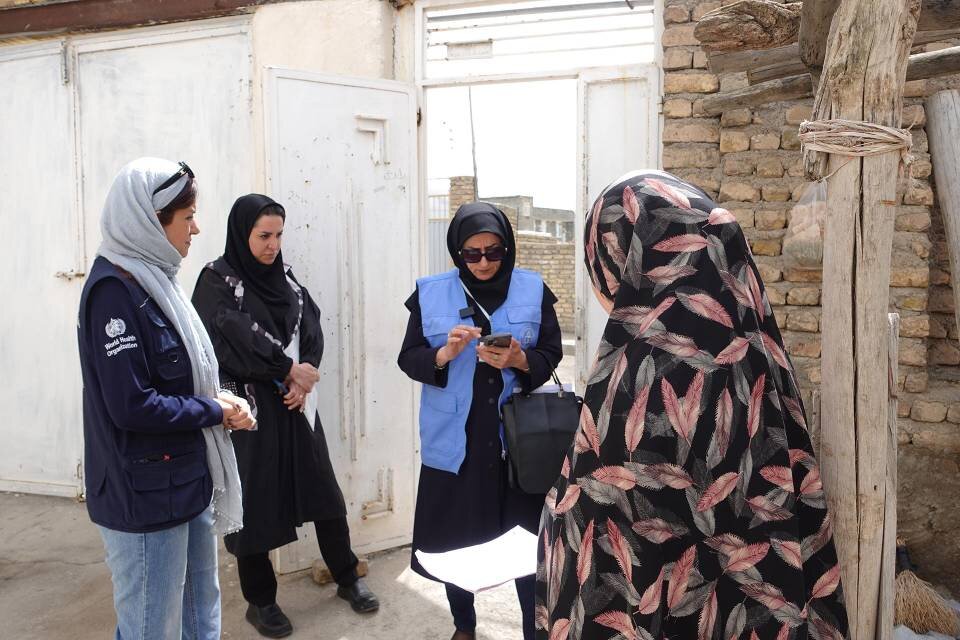
TEHRAN – To assess the implementation of the national Maternal and Child Immunization Coverage Survey, the World Health Organization office in the country, in cooperation with the Center for Communicable Disease Control (CCDC) of the Ministry of Health and Medical Education, has conducted field visits to Fars and Zanjan provinces.
The initiative is part of ongoing efforts to ensure the quality and reliability of national immunization data and generate up-to-date, evidence-based insights into vaccination coverage among mothers and children across the country, the WHO website announced in a press release on June 16.
The survey is being implemented by Kerman University of Medical Sciences, with technical support from the WHO and financial support from the Global Alliance for Vaccines and Immunization (GAVI Alliance). Its findings will play a critical role in strengthening national immunization programs and informing evidence-based policy and program decisions.
Field visits in Fars and Zanjan provinces
During the monitoring visits, the WHO communicable diseases team visited selected urban and rural clusters to observe survey implementation and engage directly with field teams responsible for data collection.
In Fars province, visits were conducted in the urban Bar Aftab Saadi neighbourhood, Bajgah village, and Noorabad county, while in Zanjan province, the team visited the urban Karmandan and Bisim neighbourhoods, as well as Morvarid village, reflecting the diversity of settings included in the survey.
The monitoring focused on key operational aspects of the survey process, including household selection, interview techniques, data recording accuracy, interviewer performance, and adherence to standardized survey protocols in both urban and rural contexts. These observations provided WHO and national counterparts with first-hand insight into the strengths and challenges of survey implementation at the field level.
The findings from these monitoring visits will contribute to ensuring the quality and credibility of the final survey data. Reliable results are essential for identifying gaps in immunization coverage, guiding targeted interventions, and supporting continuous improvement of immunization strategies within the national health system.
Strengthening immunization program
Supported by the WHO and GAVI Alliance, Kerman University of Medical Sciences played host to a 3-day regional workshop on vaccination and vaccine-preventable diseases in October 2025.
Held from October 10 and 12, the event gathered Expanded Programme on Immunization (EPI) officers and managers from 34 medical universities, the majority from eastern and south-eastern Iran, to bolster national immunization capacities, focusing on planning, surveillance, and tackling vaccine hesitancy.
The workshop received technical support from the WHO Country Office in the Islamic Republic of Iran and financial backing from Gavi, the Vaccine Alliance. The training focused on strengthening immunization planning, providing updates to national guidelines, enhancing cold chain management, improving surveillance of adverse events following immunization, and fostering effective community engagement.
High-level officials from the Ministry of Health and Medical Education (MOHME) addressed key priorities. Dr Ghobad Moradi, Director of the Centre for Communicable Diseases Control, emphasized vaccination’s critical public health role and addressed cutting-edge topics, including the targeted use of artificial intelligence in immunization programmes and strategies to boost coverage among migrant populations.
Dr Mohsen Zahraei, National EPI Manager at MOHME, reviewed 50 years of EPI achievements in the Islamic Republic of Iran and outlined plans, including “supplying influenza vaccines to key groups, organizing national and regional meetings, and advancing measles elimination, polio eradication, and central cold storage expansion”.
The workshop provided a platform for interactive discussions and practical problem-solving. Dr Omid Zamani, National Professional Officer from the WHO Country Office, led a session on the global Immunization Agenda 2030 (IA2030), sparking dynamic discussions on national priorities. Participants also collaborated on group assignments to develop and present innovative, practical solutions to address regional challenges like vaccine hesitancy.
Other essential topics covered included a review of the new national immunization guidelines, vaccine procurement, and surveillance systems for diseases like meningitis, diphtheria, tetanus, and pertussis.
An online evaluation survey conducted by WHO at the workshop’s close revealed high participant satisfaction with the event’s organization, content, and trainers.
Equipped with updated knowledge and practical tools, attendees can now cascade the training to provincial and local health teams, amplifying immunization efforts and advancing Iran’s commitment to achieving IA2030 targets.
Disclaimer : This story is auto aggregated by a computer programme and has not been created or edited by DOWNTHENEWS. Publisher: tehrantimes.com