In May 2026, while much of the football world was focused on Mexico, another tournament was quietly making history on the same soil.
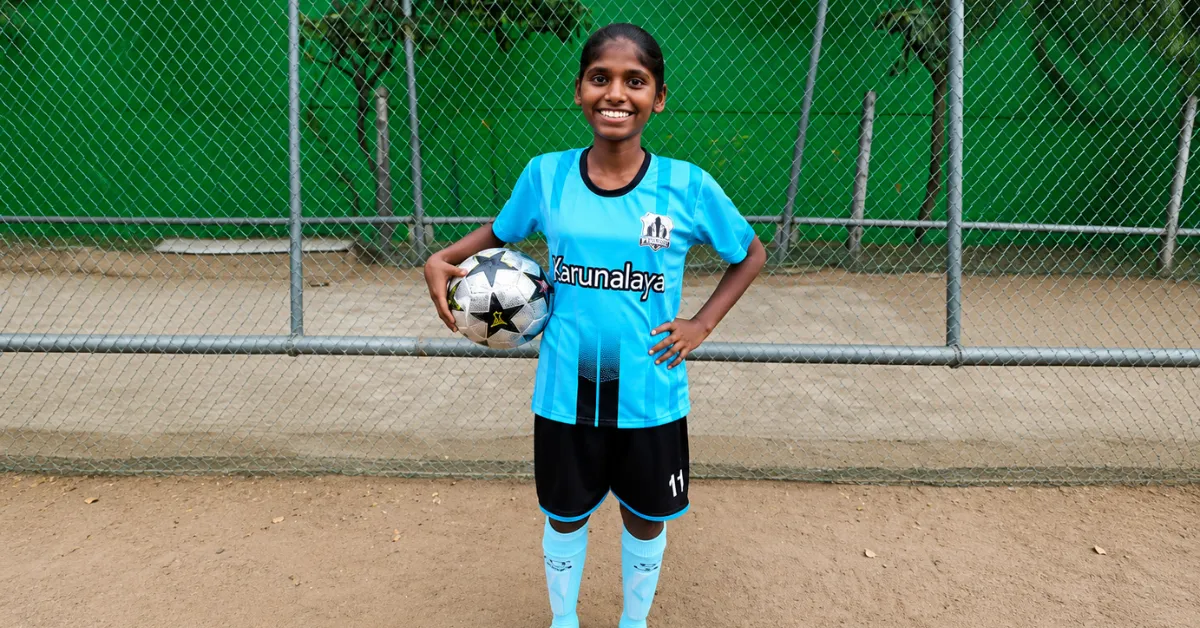
Eight girls from Chennai, all residents of Karunalaya, a shelter for homeless and vulnerable children, stepped onto the pitch at the Street Child World Cup and delivered a remarkable performance.
They defeated Wales and Palestine, lost only to Brazil in the semifinals, and returned home after helping India secure a place among the top four teams in the world.
The fifth edition of the Street Child World Cup brought together street-connected young people from 28 teams across more than 20 countries. The semifinals and finals were held in Texcoco, on the outskirts of Mexico City.
For 17-year-old captain Pavithra Vellaiyangiri, the tournament was an opportunity to meet players from around the world and experience a new country. For the girls she led, it was also proof that difficult beginnings do not define what is possible.
The shelter that gave them a chance
Karunalaya’s girls’ shelter in Chennai is more than a place to stay. Laughter, games, dance sessions, and friendships fill its corridors. Many of the girls living there, aged between four and 18, have no known family.
The shelter provides safety, education support, counselling, and opportunities to explore activities such as football, dance, yoga, and citizenship training.
For years, Karunalaya has helped Chennai’s street-connected children access international football opportunities. Indian girls from the shelter have represented the country in previous editions of the Street Child World Cup, including Moscow in 2018 and Doha in 2022.
But the team’s performance in Mexico marked the deepest run by an Indian girls’ side in the tournament’s history.
Getting there was not easy.
One of the players, 15-year-old V Srimathi, was unable to travel after her visa application was rejected. Her birth certificate had incorrectly identified her as a boy, and correcting the error took nearly eight months. Despite securing the necessary documents, her application was ultimately denied because she did not have a custody order.
While her teammates prepared for Mexico, Srimathi stayed behind, helping them pack and continuing her football practice every morning. Her teammates carried her hopes with them.
A run that made history
On the field, the girls exceeded expectations.
Victories against Wales and Palestine earned them a place in the semifinals, where they faced Brazil, one of the tournament’s strongest teams. Although their campaign ended there, India finished among the top four teams in the world — a first for the country’s girls’ team at the Street Child World Cup.
The tournament is about more than football. Alongside matches, participants take part in arts programmes and congress sessions, where young people discuss the rights of street-connected children and develop collective recommendations for change.
The Chennai girls participated fully, using both their voices and their experiences to advocate for children facing similar challenges.
Their achievement builds on a legacy created by earlier players.
Among them is Sangeetha Sekar, a Karunalaya alumna who grew up on Chennai’s streets and later represented India at the Homeless World Cup in Glasgow in 2016 and the Street Child World Cup in Moscow in 2018. Her journey inspired many of the girls who followed.
The 2026 squad is part of that continuing story — girls who first encountered football within the shelter and went on to represent their country on a global stage.
What football can build
Karunalaya founder Dr N Paul Sunder Singh has long believed that education should remain at the centre of the programme. Participation in sport is linked to school attendance, encouraging children to stay engaged with their studies.
For many children, football became a reason to stay in school and work towards bigger goals.
For girls who have experienced homelessness, abandonment, or child labour, the impact of sport often extends far beyond the field. It builds confidence, creates opportunities, and opens doors that once seemed out of reach.
The results in Mexico reflect that journey.
India’s girls reached the semifinals of a global tournament and defeated teams from established football nations along the way.
For some players, it was their first flight. For others, it was their first time meeting people from another country.
For girls who have had to fight for documents, permissions, and opportunities, experiences like these can be life-changing.
Today, India can proudly claim a place among the world’s top four street child football teams.
And it all began on a football pitch in Chennai, where a group of girls showed up, believed in themselves, and made history.
All images courtesy of tellmystory
Sources
‘Street Child World Cup Wraps in Mexico with Trophies, Music and U2‘: by Reuters/Asharq Al-Awsat, Published on 15 May 2026
‘Homeless Chennai girl refused Mexico visa, dropped from Street Child Football World Cup‘: by DT Next, Published on 6 May 2026
‘Street Child World Cup — Mexico City 2026‘: by Street Child United, Published on May 2026
‘Doing Hope in… India | July 2024‘: by AMOS Trust, Published July 2024
Disclaimer : This story is auto aggregated by a computer programme and has not been created or edited by DOWNTHENEWS. Publisher: thebetterindia.com