He coined the terms petal and pollen, helped to lay the foundations of modern biology and is widely regarded as the greatest English naturalist of the 17th century.
But it was while he was a young college tutor at Cambridge in the 1650s that the botanist John Ray – also known as “the father of natural history” – created his first known garden and began to systematically study plants for the first time.
Now, gardeners at Trinity College, Cambridge have dug up their front lawn and attempted to reimagine the historic garden Ray planted in the college, to commemorate the 400th anniversary of his birth next year.
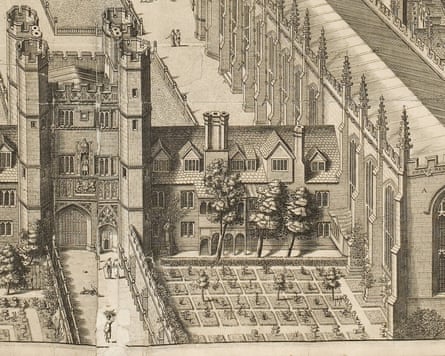
Using clues from a 1690 engraving, they have created the garden in the exact location Ray is thought to have used, in front of a descendant of an apple tree that famously inspired another trailblazing scientist and Trinity alumnus: Isaac Newton.
Ray recorded many of the plants he planted in his garden when he became the first botanist to rigorously document the flora of an English county in his landmark text, Catalogue of Plants Growing Around Cambridge, published in Latin in 1660.
“He makes references to plants, saying ‘I grew this in our little Cambridge garden’ so I had to work out what that phrase was in Latin to find out what he grew,” said the head gardener, Karen Wells. “He would go around the county collecting plants and bring them back to the garden so that he could study them.”
It is estimated Ray tried to grow about 700 different types of plants in his garden, including fenland lichens and fungi that would only survive in boggy conditions and poisonous plants like American pokeweed and Dutchman’s pipe.
But Wells has instead focused on cultivating the drought-tolerant and pollinator-friendly plants that Ray chose, to encourage biodiversity, create climate resilience – and pre-empt any Agatha-Christie style murder plots.
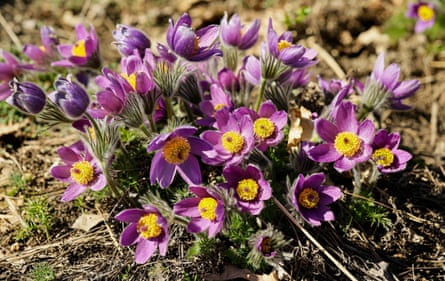
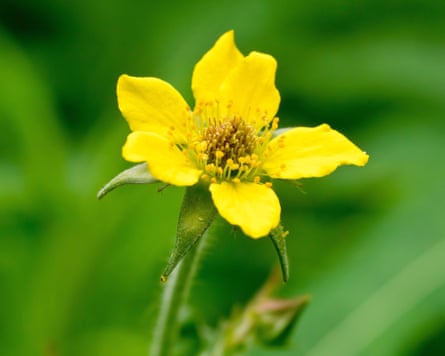
Her planting list – like Ray’s – includes wood avens (a woodland herb with small yellow flowers), betony (a flowering mint), golden rod (a herbaceous perennial that grows in meadows), pasqueflower (a violet flower found in chalk and limestone grasslands) and white-flowered moth mullein (a biennial wildflower beloved by bees and butterflies).
“As soon as I planted the mullein, a bee started foraging on the flower,” she said. “I think the betony, which has pinky-purple flowers, is also going to be quite eye-catching and attractive to insects.”
Another medieval herb she has planted is a nod to the monarch who founded Trinity college in 1546: “We have put in Good King Henry – Ray wrote about how delicious the stems of it were, cooked in butter.”
As the project neared completion, ready for its official opening on Thursday, Wells was amazed to see the 336-year-old garden depicted in the 1690 engraving take shape before her eyes: “Creating this garden, I feel like I’ve time travelled.”
In 2005, a scientist who was trying to figure out where Newton had conducted his chemical experiments tested the site of the new garden, which is located directly beneath the former student’s rooms in the college. Prof Peter Spargo, of the University of Cape Town, discovered the soil contained higher-than-expected concentrations of copper, arsenic, gold, mercury and other metallic residues, as well as fragments of bricks and mortar, indicating he had finally pinpointed the exact location of Newton’s private laboratory.
Linked as it is to the work of both Ray and Newton, the new garden could be on “the most scientifically important spot of land in the 17th century”, said Prof Richard Serjeantson, who teaches history at Trinity.
Ray, who was the son of a blacksmith, arrived in Cambridge on a scholarship at the age of 16 to study rhetoric, logic and grammar. In a moving preface to his book about Cambridgeshire flora, which revolutionised botany by encouraging other naturalists to go out into the field and systematically document their local plants, he writes about the origins of his interest in the natural world.
“I had been rather unwell, and for the sake of both my mind and my body, I had to take a break from more demanding studies by either riding or walking,” he writes.
Serjeantson says Ray’s passion for local plants is inspiring: “We live in an age where you can get anything from anywhere in the world, but in an age that is also conscious of carbon footprints and invasive species, I think there’s an attractiveness to this garden that reflects the world of Cambridge and local flora.”
Disclaimer : This story is auto aggregated by a computer programme and has not been created or edited by DOWNTHENEWS. Publisher: theguardian.com