The Trump administration is employing “authoritarian” and “unconstitutional” quarantine measures for at least one person who came into contact with a hantavirus patient, health law experts say.
The mandatory quarantine, reimposed without an offering scientific evidence, reveals how the US might approach future cases of Ebola and other pathogens in the US – and sets a precedent for detaining Americans with no scientific rationale.
“Cavalierly detaining somebody for no good reason, no crime and no significant public risk” is “arbitrary, it’s capricious and it’s unjust”, said Lawrence Gostin, health law professor at the Georgetown University law center.
James Hodge, a professor and director of the Center for Public Health Law and Policy at Arizona State University’s Sandra Day O’Connor College of Law, said that health officials should never “use unconstitutional, ill-advised, unproven techniques to control infectious diseases”.
This incident could become “really damaging” for public health, particularly as the Ebola outbreak rages in the Democratic Republic of the Congo (DRC) and cases could arise in the US, said Hodge.
“Wait and watch for it, because we’re probably going to see that later this summer. CDC set a terrible precedent right now with the specific hantavirus cases, and I only hope that we’ll see improvements for that to come,” he said.
Angela Perryman, an American passenger on the MV Hondius cruise ship, came into contact with another passenger who was sickened by Andes virus, a type of hantavirus. She has attempted to appeal a federal order to quarantine in a North Dakota facility, asking instead to self-quarantine in Florida.
The US Centers for Disease Control and Prevention (CDC) has asked states to provide in-person symptom checks and round-the-clock guards for the passengers, an unusual move – especially for a pathogen like the Andes virus that is typically only transmitted between people in rare cases.
“It just isn’t the type of thing that you tend to have to quarantine for as tightly as what we’re seeing here,” Hodge said.
Some states acquiesced to the requirement and 10 other passengers have returned home to self-quarantine. Florida refused these conditions.
Michael Bell,deputy director of the division of healthcare quality promotion (DHQP) at the CDC, recently concluded that Perryman could effectively quarantine at home with daily remote symptom monitoring and access to public health support, according to a copy of his analysis obtained by Inside Medicine.
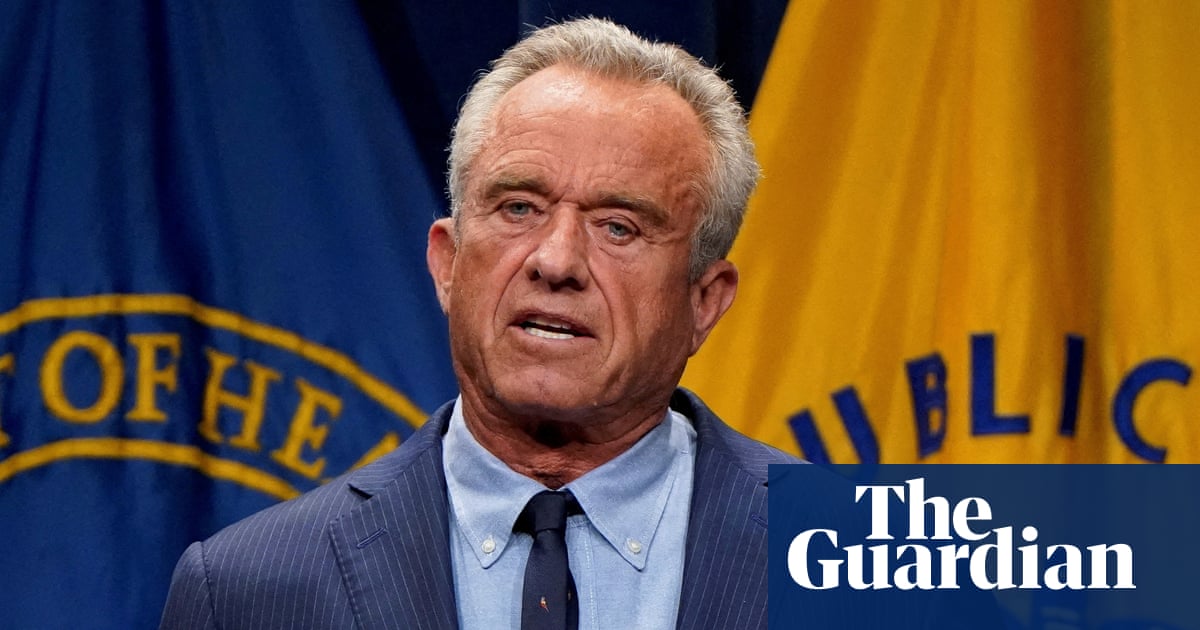
But on 15 June, Robert F Kennedy Jr, secretary of the US Department of Health and Human Services (HHS), overrode that conclusion and continued the mandatory quarantine. He cited no scientific rationale for the decision in his order, which was also shared by Inside Medicine.
Kennedy’s decision to overrule the medical advice of the CDC is “unprecedented”, Hodge said, adding that it acts as “a very bad precedent for just how Americans might expect to be treated if they’re coming back to the United States with highly infectious or even semi-infectious conditions”.
Kennedy “specifically considered the medical recommendation before deciding to continue the current order”, said HHS spokesperson Courtney Spencer.
“In the absence of proper home monitoring by state authorities, the administration’s quarantine order is necessary to ensure both Ms Perryman’s and her community’s wellbeing,” she added.
The agency did not answer the Guardian’s questions about why Kennedy overruled the CDC and whether this sets an unconstitutional precedent for responding to other pathogens.
Officials are meant to use the least restrictive option available to contain health threats in public health. That means that when there are multiple options that are effective in limiting spread, “you take the one that’s less restrictive on civil liberties violations or infringements”, Hodge said.
The situation is “highly atypical” for the CDC, Hodge said. Usually, state and local officials set quarantine and isolation measures; the CDC may offer guidance on doing so. But now, “even when state and local governments have been willing to take over the mantle” of managing some of these cases, “CDC has been reluctant to let them out”, Hodge said.
Both Gostin and Hodge were closely involved in drafting the CDC’s updated quarantine rules in 2017, and they opposed allowing the HHS secretary to overturn the agency’s medical review. While the rules allow the secretary to take this step, “it’s just unconstitutional”, Gostin said.
“I was assured that this would be very rare, and this was not supposed to happen. This wasn’t supposed to work like this. There is a flagrant violation of her constitutional rights,” Gostin added.
Part of his objection is over the lack of accountability. “Secretary Kennedy issued the order, and he’s reviewing his own order, which is outrageous,” Gostin said. “You’ve got a political appointee reviewing his own order, providing no evidence or reasons – a person’s liberty should not hinge on a political calculation, and that’s exactly what this is.”
Officials are required to provide scientific justification for quarantine orders, Hodge said: “That’s a constitutional requirement. This is exactly what Congress expects.”
Heavy-handed requirements – such as institutional quarantine for hantavirus or banning travelers from the DRC, Uganda and South Sudan, for instance – will likely lead to people evading the rules or not providing sufficient information about their activities, making it harder for public health officials to follow up on possible cases or contain outbreaks at the source, Hodge pointed out.
“The threat is not knowing cases that are actually out there, because we created a climate to which people would not self-report for this. That would be the biggest threat,” Hodge said.
It also signals a dangerous “authoritarian” approach from top health officials, Hodge said – despite previous opposition from those leaders to unspecified “lockdowns” from the Covid pandemic.
“The hypocrisy is almost unreal,” Gostin said. “The whole raison d’etre of Secretary Kennedy’s tenure has been based upon medical freedom, ‘the patient gets to choose’, and yet here they’re issuing immediately a compulsory deprivation of liberty.”
Officials in the Trump administration, like Kennedy and Jay Bhattacharya, director of the National Institutes of Health, have castigated the Biden administration and blue states for their handling of Covid, a much more transmissible and novel virus, Gostin said: “Yet their first response is not public health, it’s not science, it’s coercion.”
Disclaimer : This story is auto aggregated by a computer programme and has not been created or edited by DOWNTHENEWS. Publisher: theguardian.com