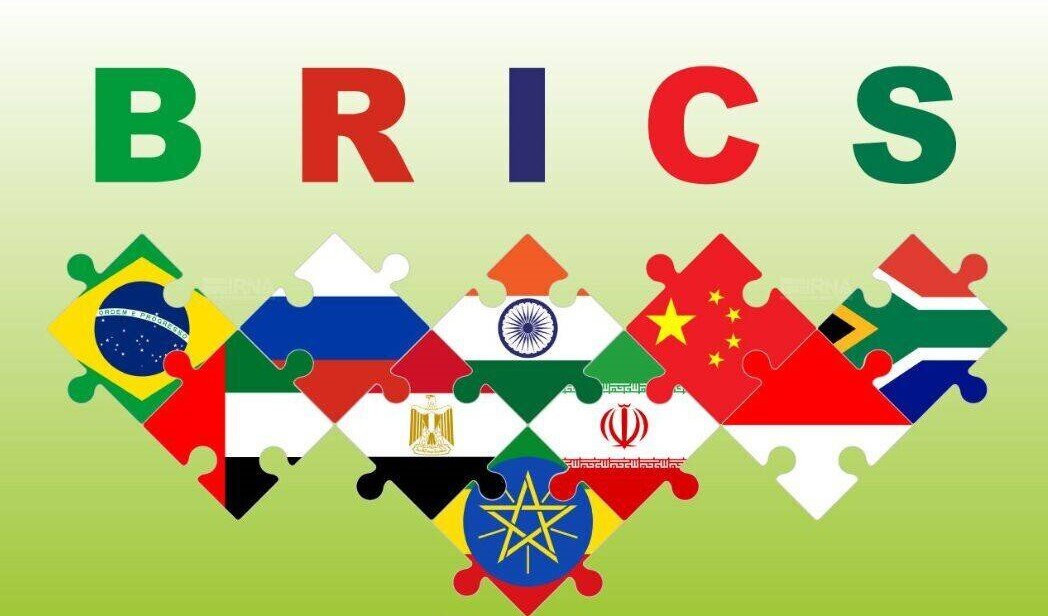
TEHRAN – The Center for Progress and Development of Iran (CPDI) has prepared a report illustrating Iran’s participation in scientific, technological, and innovation cooperation within BRICS, as well as strategic opportunities and required measures to enhance the country’s role in this sector.
BRICS, as one of the most important players in the international system in recent years, has made extensive investments in science, technology, and innovation in addition to economic and political cooperation. Now, the bloc has turned into one of the largest scientific cooperation networks in developing countries, benefiting from 14 specialized working groups and dozens of joint research and technological programs.
CPDI, as the center for the coordination of Iran’s technological and scientific interactions with BRICS, is responsible for leading the country’s representatives, analyzing special documents, providing technical advice, and developing connections among domestic institutions and BRICS specialized structures.
According to the report, 2025 can be considered as the starting point for Iran’s involvement in BRICS scientific, technological, and innovation structure, which has succeeded in showcasing the country’s capabilities in science and technology, laying the basis for active participation in collaborative projects in the future, and strengthening the country’s position in scientific and technological cooperation.
The country had a dynamic participation in BRICS technical and specialized meetings in different scientific fields like artificial intelligence (AI), biotechnology, neurosciences, ocean sciences, spatial information technology, astronomy, photonics, nanotechnology, material sciences, social and human sciences, and research infrastructures in 2025
BRICS, a platform for expanding research collaborations
One of the main focuses of BRICS activities in 2025 was the development of collaborative research projects among member states in fields such as AI, health, clean energy, food security, quantum technologies, data sciences, and advanced materials.
Iran’s membership in this network would provide a great opportunity for researchers and scholars to participate in international projects.
In 2025, BRICS member states discussed developing data infrastructures, sharing supercomputer capacity, creating joint scientific networks, and utilizing new technologies to address global challenges.
Featuring its capacities in AI, data processing, and knowledge-based companies, Iran has tried to gain a greater share in BRICS future technological projects.
BRICS Action Plan for Innovation 2025-2030 is a document that outlines the roadmap of cooperation among member states in the digital economy, technology transfer, support for knowledge-based companies, and the development of an innovation ecosystem.
Iran’s engagement in the plan can pave the way for the exchange of technical knowledge, enhancement of industrial cooperation, and entry of Iranian knowledge-based companies in new markets.
The report also shows that human capital and innovation are among the top priorities of BRICS; the 10th Young Scientists Forum, 8th BRICS Young Innovator Prize, and the first BRICS Startup Forum are among the main events held in this sector.
Iran’s membership in BRICS can bring about numerous advantages, such as greater access to international scientific and research networks, collaboration in joint research projects, enhancement of technological and industrial cooperation, utilizing the capacity of the technology transfer network, developing a market for knowledge-based companies, and attracting investment in technology and innovation sectors.
The report highlights AI, biotechnology, nanotechnology, quantum technologies, digital economy, and space technologies as the most important axes for future cooperation between Iran and BRICS member states.
It also calls for the promotion of scientific ties among universities, research centers, knowledge-based companies, the private sector, and executive bodies to establish a national coordination mechanism to enhance cooperation with BRICS member states.
MT/MG
Disclaimer : This story is auto aggregated by a computer programme and has not been created or edited by DOWNTHENEWS. Publisher: tehrantimes.com