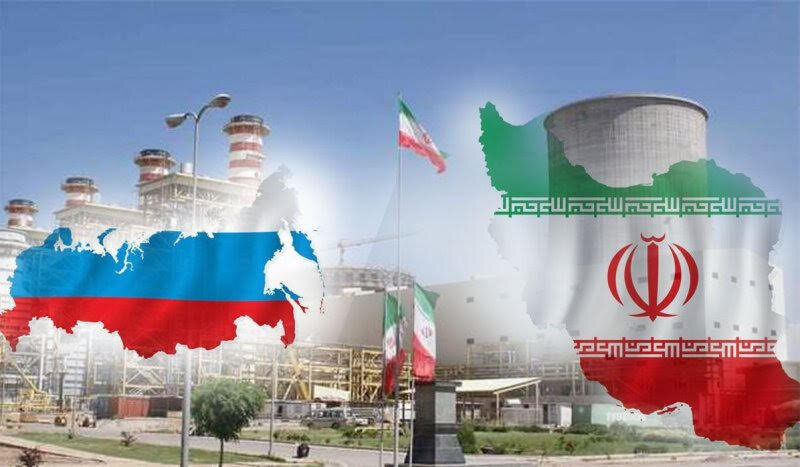
TEHRAN- Iran’s Deputy Energy Minister Mostafa Rajabi Mashhadi announced a bilateral meeting with the Russian Energy Minister on the sidelines of the 6th Meeting of Energy Ministers of the Shanghai Cooperation Organization (SCO) in Bishkek, Kyrgyzstan.
According to him, in this meeting, the Russian side stated that their specialists will soon be deployed in Iran with greater speed to accelerate the construction of phases 2 and 3 of the Iranian nuclear power plant, so that the implementation process of the project can continue.
Rajabi Mashhadi also referred to talks regarding the electrical connection between Iran and Russia via Azerbaijan, stating that the Russian side has agreed to this plan, and it was decided that the technical issues and the modality of cooperation among the three countries in this regard would be pursued further.
The Deputy Minister for Electricity and Energy added: In the field of gas transmission, given the damage inflicted on gas infrastructure, the Russian side declared its readiness for cooperation, and it was decided that Iran’s requirements in this area and other related sectors would be officially sent to the Russian side so that the cooperation can lead to practical results.
In early April, Russia’s Energy Minister emphasized that his country will continue to expand energy contracts with Iran despite the current situation in the West Asia region.
According to IRNA from TASS news agency, Sergey Tsivilyov made the remarks on the sidelines of the Energy-2026 Forum in the city of Kazan, in response to reporters’ questions: Russia does not intend to suspend its energy contracts with Iran, but will continue to develop these contracts based on the principles of fairness and its own technological sovereignty.
Elsewhere in his remarks, the Russian Energy Minister stated that Cuba is currently under complete siege and that imports of oil and petroleum products to the country have been cut off, adding: “We will not abandon the Cubans.”
He further noted: One Russian tanker has already broken the Cuban siege, and a second tanker is currently being loaded for dispatch to Cuba.
Earlier, the Russian Ministry of Transport reported that the Russian tanker Anatoly Kolodkin, carrying 100,000 tons of humanitarian aid, has arrived in Cuba.
According to the report, the fuel situation in Havana worsened after the United States military operation in Venezuela in January 2026 to arrest Nicolás Maduro, the president of that country. Venezuela was one of the main oil exporters to Cuba.
In February 2026, the US President signed an executive order allowing Washington to impose tariffs on goods from countries that supply oil to Cuba. Subsequently, reports were published claiming that the United States, for humanitarian reasons, has no objection to periodic oil shipments to Cuba by Russia and other countries.
Iran and Russia have steadily deepened their ties over the past decade, driven by geographic proximity, overlapping regional interests, and a shared sense of pressure from Western policies that threaten their national security and economic stability.
With the signing of the Iranian-Russian Treaty on a Comprehensive Strategic Partnership in January 2025—and its ratification and implementation later that year—exchanges between Iran and Russia have intensified to an unprecedented level. These interactions have taken many forms, including joint commissions, peopletopeople exchange, and a steady stream of official visits.
Among them was a visit to Tehran in mid-February by Russia’s energy minister, Sergey Tsivilyov.
The centerpiece of Mr. Tsivilyov’s trip appeared to be his participation in the 19th session of the Permanent Iranian-Russian Commission on Trade and Economic Cooperation, which convened on Wednesday and concluded with what both sides described as significant outcomes, including the signing of four memorandums of understanding. Ahead of the meeting, he held talks with Iran’s late national security chief, Ali Larijani, and later that evening sat down with the Tehran Times for an exclusive interview.
In the interview, Mr. Tsivilyov addressed a wide range of issues, including the two countries’ growing coordination in international forums, the development of major joint projects in Iran, efforts to advance the International North-South Transport Corridor, and the exchange of technology and technical expertise between the two sides.
Answering to the question, “In which areas—such as LNG, gas-to-liquids, or refinery upgrades—is Russia ready to share advanced technology with Iran?” The Russian official said: “There are currently several Russian companies operating very successfully in Iran, and they make use of the latest Russian technologies.
After we were cut off from Western technological ecosystems, our president ordered the creation of a Russian scientific and technological ecosystem. Today, we possess almost all the technologies we need domestically, and in some cases our technologies are even more advanced than their Western counterparts.
The president has also instructed us to share these technologies with friendly countries and to cooperate in building a joint technological domain. Iran is not only our friend, but also an important partner in the Middle East. Accordingly, we regularly share our technologies with our Iranian partners, including in the gas and energy sectors.
From our perspective, technological governance should ensure that all countries have access to the technologies they need to meet their requirements.
At the same time, we also benefit from Iranian know-how and technology. For example, Iran has a company that manufactures turbines. We already purchase these turbines and plan to localize their production in Russia in the future.”
EF/MA
Disclaimer : This story is auto aggregated by a computer programme and has not been created or edited by DOWNTHENEWS. Publisher: tehrantimes.com