
A student recently asked me who among the political leaders around the world I admire the most. It set me thinking. It seems there are virtually no claimants for statesmanship these days. The bar has been set particularly low by the head of state and government of the world’s biggest economy and oldest democracy. A recent quotable quote of the President of the United States, a nation that celebrates its 250th birth anniversary next weekend, includes the F-word. There was a time when students in India would memorise lines from famous speeches of American leaders like Abraham Lincoln and John F. Kennedy. Now, an expletive could be regarded a quotable quote.
In responding to this young student, the only name I could think of was President Luiz Inácio Lula da Silva of Brazil. His leadership is defined by both admirable values and charisma. In a continent full of dictators, carpet-baggers and corrupt politicians, Lula stands out. In many ways, it is he who has become the real “voice of the Global South”. While Indian and Chinese leaders claim to be spokespersons for the developing world, Lula has acquired better credentials with his stated views on a range of issues that have come to worry developing countries.
The other political leader who could have occupied the high ground, positioning himself as a global statesman with a statesmanlike speech delivered in the recent past was Canada’s Prime Minister, Mark Carney. His address at the World Economic Forum in Davos earlier this year made many take notice of him. A low-profile central banker, Mr Carney had his moment in the sun at Davos. Soon thereafter, his name fell off my chart as he endorsed Benjamin Netanyahu and Donald Trump’s mindless and brazen attack on Iran. I wrote a column in praise of his Davos speech, and then had to strike him off my heroes list.
Scratching my head, and stretching my imagination, in a desperate search for a political leader I could get myself to like, perhaps even admire if not respect, I could think next of Prime Minister Anwar Ibrahim of Malaysia. A man chastised, condemned and imprisoned by his own people, Prime Minister Ibrahim came back to claim leadership of his country. The one time I listened to him in earnest was when he came to visit Prime Minister Manmohan Singh with a group of scholars and religious leaders. He was gentle in his demeanour, spoke with deep conviction and betrayed no anger for what he had been put through.
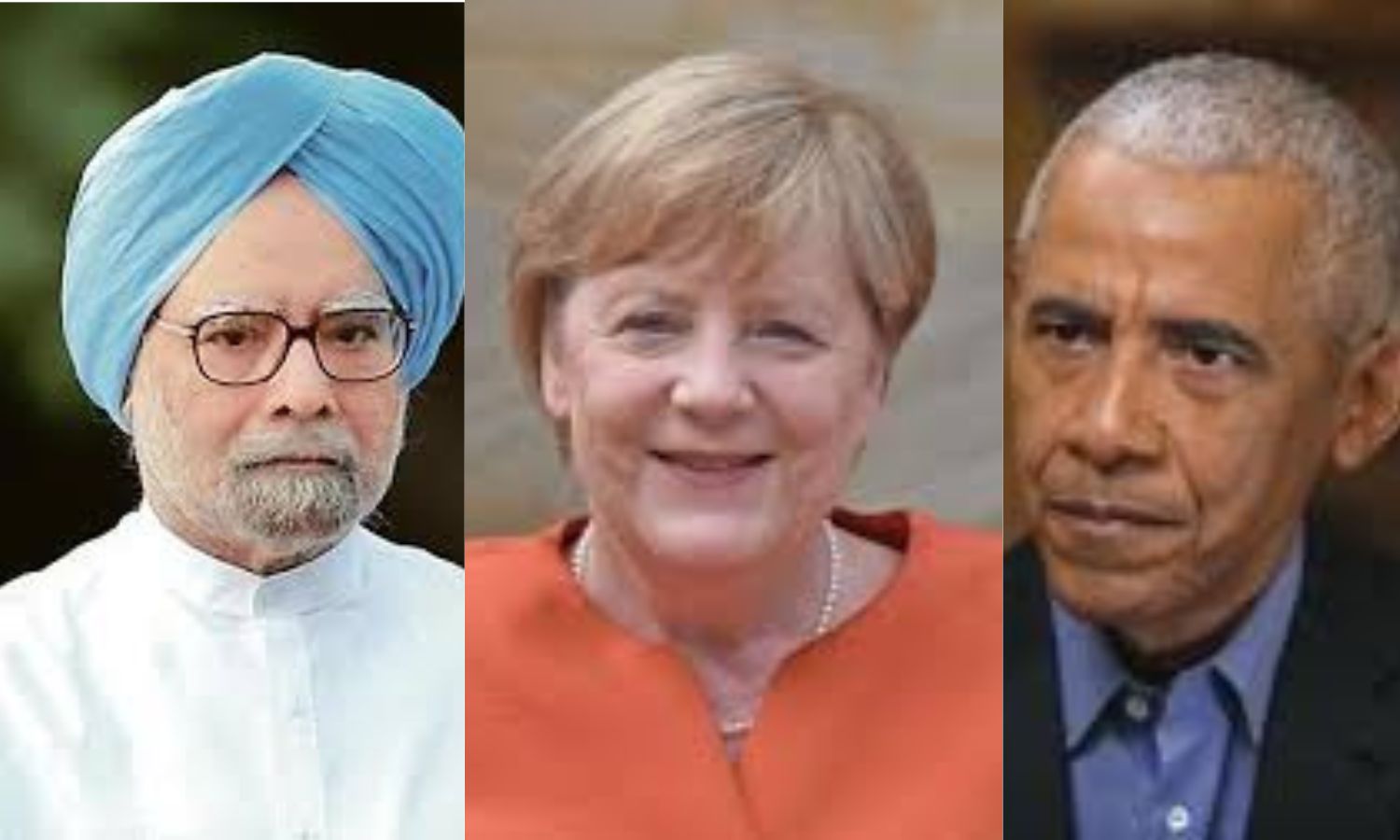
Lula and Anwar, with Carney scratched out, that’s a rather short list for a world in turmoil and in desperate need for leadership. Just over a decade ago there were at least a handful to look up to. There was Barack Obama in the United States, Manmohan Singh in India, Angela Merkel in Germany and Shinzo Abe in Japan. Abe was the only “princeling”, so to speak, in this group. Son of a Japanese minister and grandson of a Prime Minister, Abe suddenly emerged on the global political firmament with his historic address to the Indian Parliament in August 2007. His vision of the Indo-Pacific and his commitment to rearming Japan came like a breath of fresh air from the staid and conservative corridors of Japanese power.
The other three — Barack Obama, Manmohan Singh and Angela Merkel — were not only self-made but leaders of personal integrity with a vision not just for their own country but for their region and the world. Ms Merkel is the last great European leader. After her, we have had a parade of mediocrity in European capitals, with London being the stage for ludicrous Punch and Judy shows. Who was the last great British Prime Minister? Most would say Tony Blair. He blotted his record with Iraq. In any case, he was a Thatcherite in Labour clothing. So, it was really Maggie.
There was a time when Asia and Africa had great world statesmen for leaders. A Jawaharlal Nehru and an Indira Gandhi in India, a Nelson Mandela in South Africa, a Ho Chi Minh in Vietnam, a Deng Xiaoping in China, a Kwame Nkrumah, a Lee Kuan Yew, even a Golda Meir. One may agree or disagree with their politics and economics, but they had vision, an understanding of the world and of their own country’s place in that world.
Geopolitical crises have in the past provided an opportunity for great leaders to emerge. Churchill, Roosevelt and Stalin during the Second World War. John F. Kennedy, Helmut Schmidt and Lech Walesa during the Cold War era. Who are the great leaders and statesmen, or stateswomen, that the current era of geopolitical and geo-economic crises have thus far produced? None in Europe. None save Lula in Latin America. None in Africa. None in the wide continent of Asia.
Prime Minister Narendra Modi had the opportunity. He even had a brief moment of glory with two platforms he sought to occupy: that of a peacemaker with his “not an era of war” statement; and that of a leader of the developing world with his “Voice of Global South Summit”. Both were very clever initiatives that could have helped elevate his global profile and made a statesman out of a mere politician. He goofed up on both.
The “not an era of war” statement was followed by equivocation and lack of a follow-up strategy to bring Ukraine, Russia and the West to the table for a negotiated settlement. Perhaps the assessment was that India did not have the clout. Discretion being the better part of valour, Indian diplomacy cut its coat according to the cloth.
The “Voice of Global South” was an equally tough act to pursue. The present Indian leadership, with its domestic Hindutva politics, has not been able to convince the rest of the developing world, comprising largely of Christian and Muslim-majority nations, that it has everybody’s best interests at heart. It also became clear that one cannot play the role of a voice without deep pockets.
Interestingly, the one corner of the world where statesmanship seems to be knocking at the door is Iran. The leadership there has conducted itself admirably in the recent crisis, proving once again that real adversity can in fact offer the opportunity for a leader to become statesman.
Sanjaya Baru is a Distinguished Fellow, United Service Institution of India and Takshashila Institution
Disclaimer : This story is auto aggregated by a computer programme and has not been created or edited by DOWNTHENEWS. Publisher: deccanchronicle.com





