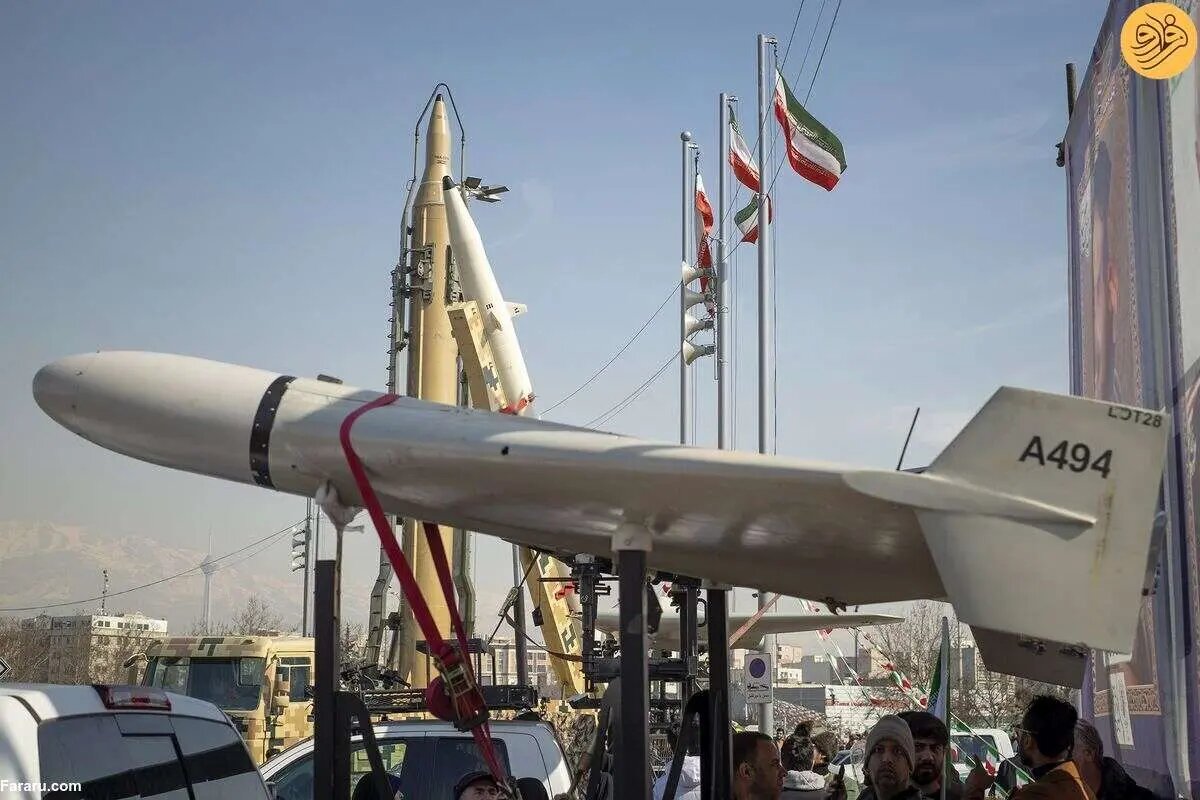
SHANGHAI- The past 100 days have witnessed Iran’s most resolute resistance to joint U.S.-Israeli aggression. While the bravery shown by the Iranian people in this war against two hegemonic powers will be remembered by history, the implications for the future international order will be deep and far-reaching, manifesting in many ways. Perhaps the most profound of these is that U.S. hegemony will be systematically impacted.
First, the U.S. global strategic framework will be seriously shaken. Europe, the Asia-Pacific, and the Middle East are key pillars of U.S. global strategy, and all have been severely affected by this war.
NATO is a crucial strategic pillar for the U.S. in maintaining its global influence and hegemony. However, in recent years, U.S. policies on defense cost-sharing, its reluctance to take on greater responsibility in the Russia-Ukraine conflict, and Trump’s vows to annex Canada and Greenland have caused deep discontent in Europe, sharply intensifying internal contradictions within NATO.
The discord over aggression against Iran has further widened the rift between the U.S. and its European allies. While European allies were deeply dissatisfied that Trump launched the war without consulting them, Trump was equally frustrated that NATO’s European allies refused to provide support. The gap between Washington’s disregard for its NATO allies and the allies’ expectation of respect is a major manifestation of internal NATO tensions—and it was fully exposed during the war. In the future, even if NATO does not dissolve, it will struggle to maintain internal cohesion.
Beyond Europe, the U.S. strategic presence in other regions will also be impacted. Many U.S. military installations in the Middle East have suffered severe physical damage. According to reports, 228 U.S. military facilities in the region have been struck by Iran. Moreover, rather than providing protection for the Persian Gulf states, the U.S. has become a security burden for them, severely undermining the legitimacy of its military presence. The Persian Gulf states are also deeply dissatisfied with U.S. demands that they pay for war costs. Even if the U.S. military presence in the Middle East can be maintained after the war, it will be difficult to return to pre-war levels.
U.S. military presence in the Asia-Pacific will also be seriously affected. To cope with this war, the U.S. redeployed strategic resources from the Asia-Pacific to the Middle East, weakening not only its strategic footprint but also its credibility as a security guarantor in the region. Its strategic disadvantage in the region will grow further, and the U.S. Indo-Pacific Strategy framework may suffer a crippling blow.
Second, U.S. financial dominance will be seriously undermined. U.S. financial hegemony, established in the early post-WWII period on the basis of American economic strength, has in recent years had to be propped up by U.S. military power as economic power has declined. By puncturing the bubble of U.S. military might, Iran’s Operation True Promise has severely weakened the foundation of U.S. financial hegemony.
Another key foundation of U.S. financial hegemony is the petrodollar. Oil remains one of the most important commodities in international trade, and the commitment by Saudi Arabia and other Persian Gulf states to sell oil in dollars in exchange for U.S. security guarantees is a crucial pillar of dollar dominance.
Since the Persian Gulf states have become the main battleground of this war, and the Strait of Hormuz—through which they export their oil—has been blockaded, the resulting security concerns will have far-reaching effects on the petrodollar. First, the Persian Gulf states’ share of global oil exports will drop significantly. Second, their overall economic strength will decline. Third, oil’s position in the global energy mix will also fall. And fourth, because the U.S. failed to provide security protection for the Persian Gulf states, their incentive to continue settling oil trades in dollars will further decrease.
Third, U.S. political influence will be significantly reduced. American-style “liberal democracy” was once seen as a beacon lighting the way for the world, blindly admired in many countries. However, the U.S. has persisted in its policy of over-protecting Israel while ignoring the humanitarian catastrophe in Palestine, severely damaging its hypocritical image as a defender of “human rights” and “humanitarianism.”
The Trump administration’s tariff war, its attempt to annex Greenland, the kidnapping of a foreign leader, and its reckless war against Iran have greatly tarnished the U.S.’s international standing. In its aggression against Iran, the U.S. even used negotiations as a pretext to launch war, attacked numerous civilian facilities, and repeatedly crossed moral and legal red lines. As a result of this war, the U.S.’s “moral image” will be shattered.
The hegemony of the United States is an integrated system composed of its global strategic framework, its economic and financial dominance, and the ideology of “liberal democracy.”
Historically, it is true that the U.S. has repeatedly recovered its hegemonic power after being mired in wars and crises. The main reason is that previous setbacks only damaged one aspect of its hegemony at a time.
Whether in the Vietnam War, the Afghanistan War, or the Iraq War, although the U.S. suffered military losses, its alliance system remained robust, and its “liberal democratic” values continued to be blindly admired around the world. Thus, the U.S. was able to recover by plundering allied resources and leveraging its “political appeal.” The U.S. recovered from the 2008 financial crisis because not only its allies but also the G20 members were willing to “supply blood” to the U.S., out of considerations for globalization.
However, the impact of Iran’s resistance—and the chain reactions it has triggered—on U.S. hegemony is comprehensive and systematic. Even if a permanent ceasefire is achieved on the basis of the current “fragile truce,” the U.S. will still pay heavy strategic, economic, and political costs as a result of this war. Moreover, hostilities could reignite at any time, potentially costing the U.S. even more and making it impossible to fundamentally restore its hegemonic strength.
History will record that Iran has contributed to the weakening of U.S. hegemony.
Dr. Jin Liangxiang is Director and Senior Fellow at Center for Middle East Studies, Shanghai Institutes for International Studies (SIIS)
Disclaimer : This story is auto aggregated by a computer programme and has not been created or edited by DOWNTHENEWS. Publisher: tehrantimes.com