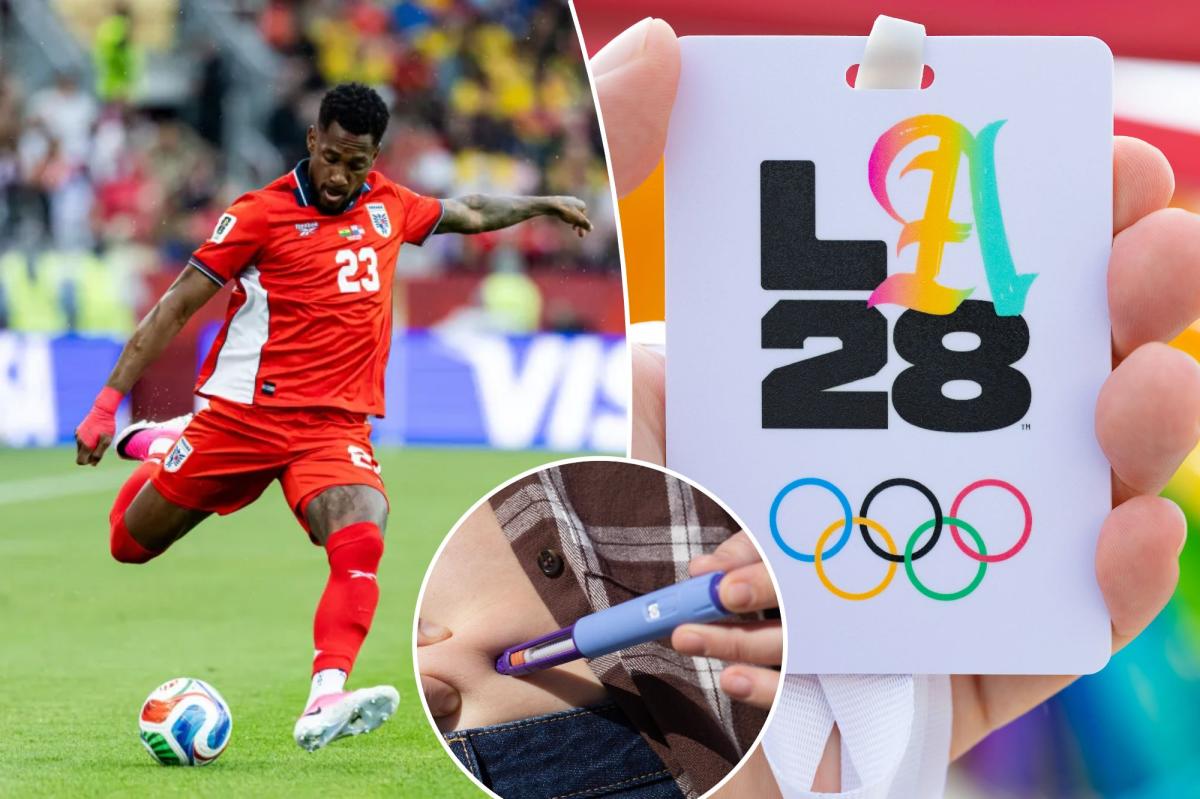
They’re sweeping the country — and raising questions in the locker room.
At least one in eight American adults say they’ve used a GLP-1 drug such as Ozempic or Wegovy to lose weight or manage a chronic health condition, a stunning rise in just a few years.
And while top athletes may seem unlikely candidates for the same blockbuster treatments used by everyday dieters, experts say they’re a growing topic of discussion inside the world of professional sports.
“I would not characterize GLP-1 medications as widespread within elite sport today, but awareness and curiosity have increased substantially over the past two years,” Dr. Mark Kovacs, a performance physiologist who has worked with hundreds of professional athletes, told The Post.
“As with many emerging medical interventions, athletes, coaches, agents, physicians and performance staff are asking questions about their potential benefits and risks.”
The growing interest has caught the attention of watchdogs, too. In 2024, the World Anti-Doping Agency (WADA) added GLP-1s to its monitoring list, signaling that officials are paying close attention to how the drugs are being used in sports.
For now, GLP-1s remain legal in competition. But as their popularity grows, so does speculation about whether today’s weight-loss wonder drugs could eventually become tomorrow’s prohibited substances.
To learn more, The Post asked four experts to weigh in on the current state of play — and what may come next.
Could GLP-1s help athletes perform better?
Maybe — but it’s not as simple as getting lighter.
GLP-1s work by mimicking hormones released in the gut in response to eating, helping regulate blood sugar, slow digestion and reduce appetite.
“GLP-1s can significantly reduce body weight and body fat, which could theoretically benefit athletes in sports where power-to-weight ratio, endurance efficiency, speed or weight-class requirements are important,” said Dr. Paul Gross, a physician specializing in diabetes, weight management and metabolic dysfunction.
A wrestler trying to make weight, for example, may find it easier to cut pounds when cravings and “food noise” are reduced.
Kovacs said dropping excess body weight could also improve heat tolerance, reduce cardiovascular strain and lessen stress on joints.
But he cautioned: “The challenge is that elite performance depends on far more than simply being lighter.”
Could GLP-1s be bad for athletes?
Like any drug, GLP-1s carry risks. Side effects range from nausea, vomiting and diarrhea to more serious complications such as pancreatitis, acute kidney injury and intestinal paralysis.
For athletes, muscle loss is a key concern. While GLP-1s are designed to target fat, studies suggest 15% and 40% of weight loss may come from muscle and other lean tissue without proper nutrition and strength training.
“Athletes spend years building muscle, power and resilience. Any intervention that compromises those adaptations must be evaluated very carefully,” Kovacs stressed.
Reduced appetite can also make it harder to fuel properly and get the right nutrients to support intense training, recovery and muscle maintenance. “In elite sport, under-fueling can quickly become a performance-limiting factor,” Gross said.
Combine those downsides and endurance performance may actually decline, Kovacs said.
Where do things stand now?
Few elite athletes have publicly acknowledged using GLP-1 drugs.
Tennis legend Serena Williams is among the highest-profile examples, revealing she used Zepbound to lose more than 30 pounds after pregnancy. Retired NBA stars Shaquille O’Neal and Charles Barkley have also copped to taking the jab.
And they’re just the known quantities.
“I have definitely been asked by many athletes, both amateur and professional, about GLP-1s,” said Dr. Sergio Guiteau, a sports medicine physician who works with the NBA. “I am often being asked if they are safe to use and whether they are considered banned substances by any of the anti-doping governing bodies.”
For now, the answer is no.
GLP-1s are not prohibited by WADA, which oversees anti-doping efforts in Olympic and Paralympic sports. But the drugs are being monitored.
“Being monitored doesn’t mean that there’s this cloud or assumption that if you’re using this stuff, there’s something shady going on,” said Dionne Koller, director of the Center for Sport and the Law at the University of Baltimore.
“All it means is that they’re letting the world know, ‘Hey, we’re keeping an eye out for this,’ so that if they decide to move to ban it, it doesn’t come out of the blue.”
The same framework applies to soccer’s biggest stage. FIFA follows the World Anti-Doping Code, meaning its prohibited substances list mirrors WADA’s.
“With GLP-1s, if they aren’t banned in the WADA anti-doping regime, then they are not banned for the World Cup,” Koller said.
In the US, major professional leagues including the NBA and NFL operate under their own anti-doping policies. Neither currently prohibits GLP-1 drugs.
“At the moment, the larger conversation is not about doping — it is about athlete health, body composition management, fueling, recovery and the long-term implications of using these medications in already high-performing individuals,” Kovacs said.
But that doesn’t mean the regulatory picture can’t shift in the future.
Could WADA eventually ban GLP-1s?
Only time will tell.
WADA is currently reviewing scientific research, adverse-event reports, athlete usage patterns and information from sports organizations to determine whether GLP-1s warrant further action.
To be added to its prohibited list, a substance must meet at least two of three criteria:
- Has the potential to enhance athletic performance.
- Poses a health risk to athletes.
- Violates the “spirit of sport” by providing an artificial advantage over natural talent, training and dedication.
At this point, Killer said a ban before the Summer Games kick off in Los Angeles in unlikely.
“I’m just not sure that in the next six to nine months we’re really going to know that GLP-1s are giving people an unfair advantage or are so risky that we need to ban them,” Koller said. “If I’m WADA, personally, I think it would be a fairly aggressive move to make before the 2028 Olympics.”
After all, there isn’t a fixed timeline for WADA’s review process. Some substances remain under observation for years before regulators decide whether they should be banned.
And the science is only getting more complicated.
A new generation of GLP-1 drugs is already emerging, including treatments designed to reduce side effects such as muscle loss. If those drugs prove more effective, they could strengthen the argument that athletes may eventually seek them out as a shortcut to improve body composition.
But even if GLP-1s were restricted by WADA, athletes with legitimate medical needs could apply for a therapeutic use exemption, allowing them to take the medication without violating anti-doping rules.
WADA did not respond to a request for comment.
For now, experts say it’s too early to assume a crackdown is coming.
“Based on the evidence available today, I think it would be premature to assume GLP-1 medications are headed toward prohibition,” Gross said.
“The key question will be whether future research demonstrates a meaningful performance-enhancing effect independent of their therapeutic role in treating obesity and metabolic disease.”
Disclaimer : This story is auto aggregated by a computer programme and has not been created or edited by DOWNTHENEWS. Publisher: nypost.com