
Neither side is budging on its demands, and Israel remains a structural threat to any lasting peace
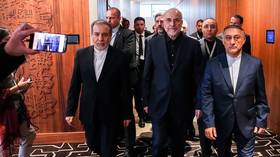
On June 21, 2026, in the Swiss resort town of Buergenstock, US and Iranian representatives sat down in the same room for the first time since the sides signed their memorandum of understanding.
US Vice President J.D. Vance, Steve Witkoff, and Jared Kushner on one side; Iranian Foreign Minister Abbas Araghchi on the other; and Qatar and Pakistan in the middle, as essential intermediaries without whom the two sides apparently cannot hold a technical conversation. That detail alone tells you something important about the state of trust between Washington and Tehran.
The atmosphere was tense from the start. The Iranian delegation went out of its way to avoid being seen publicly alongside the Americans. Disputes over protocol dragged on. Trump’s characteristically combative statements, issued in parallel with the talks, did little to steady the room. And yet the meeting held together. The process, as mediators announced afterward, was kept alive. But kept alive for what?
A memorandum of failure
The memorandum signed on June 17, 2026 is not a peace treaty or even a framework agreement in any meaningful sense. It is a temporary, non-binding statement of intent whose primary function is not to end the conflict but to postpone its next phase. Every substantive issue – Iran’s nuclear program, sanctions, freedom of navigation through the Strait of Hormuz, the situation in Lebanon, mechanisms to prevent further military escalation – has been pushed into a 60-day negotiating track.
Washington has tried to sell this as a diplomatic win, and on the surface the framing has some logic to it. But a more honest reading would be to admit that the US failed to force Iranian capitulation, did not achieve the full dismantlement of Iran’s nuclear infrastructure, and it certainly did not compel Tehran to abandon its regional allies. The strategy of maximum pressure, which had been the backbone of US policy for years, simply did not produce the outcome it promised. Iran absorbed the strikes, the sanctions, and the threats – and still came to the table as a party with its own demands, not just a subject of American conditions.
Disclaimer : This story is auto aggregated by a computer programme and has not been created or edited by DOWNTHENEWS. Publisher: rt.com



