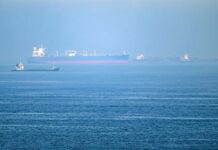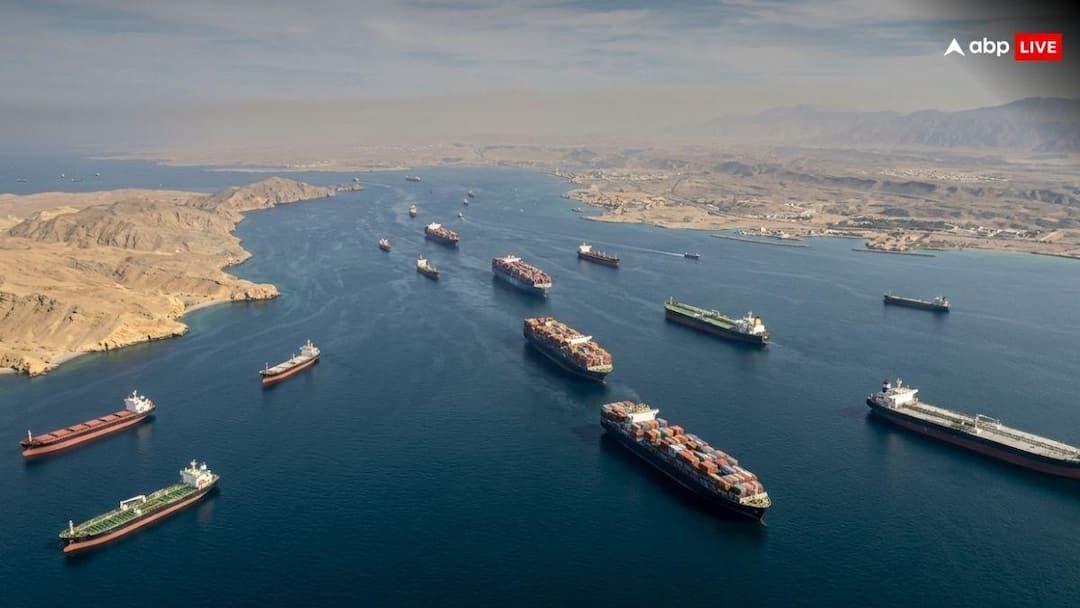
- More vessels transit Strait of Hormuz with satellite tracking on.
- Iran-US agreement boosted confidence, easing tensions, lowering oil prices.
- Iran declared the vital waterway fully open for commercial shipping.
An increasing number of vessels are transiting the Strait of Hormuz with their satellite tracking systems switched on, signalling growing confidence among shipowners and traders in using one of the world’s most important energy corridors.
According to vessel-tracking data compiled by Bloomberg, seven tankers, including two fully laden non-Iranian supertankers, were either in the strait or had already crossed on Tuesday. All of them were broadcasting their locations through tracking systems.
Confidence Improves After Iran-US Agreement
The change in shipping behaviour comes after an interim peace agreement between Iran and the United States helped ease tensions in the region and allowed more oil to move through the waterway.
“The shift reflects a degree of strengthening confidence among shipowners, as Iran is expected to refrain from targeting vessels,” said Muyu Xu, senior crude oil analyst at Kpler Ltd.
However, Xu cautioned that it remains uncertain whether safe and unrestricted passage through the strait will continue. Vessel-tracking data also showed that another supertanker entered the Persian Gulf with its signal switched off.
Iran Says Strait Fully Open To Commercial Shipping
The reopening of the Strait of Hormuz has not been without challenges, but shipping traffic has gradually increased.
Iran said on Tuesday that the waterway is fully open to commercial shipping and that large volumes of oil are moving through the route, according to the semi-official Iranian Students’ News Agency.
The statement followed reports over the weekend from domestic media outlets that the strait had been closed.
Oil Prices Retreat As Tensions Ease
The reduction in regional tensions has had a significant impact on energy markets.
Oil prices have fallen almost 40 per cent from their peak during the conflict as shipping activity resumed and confidence returned to the market.
In recent days, millions of barrels of oil per day have exited the region at the fastest pace since the conflict began. US President Donald Trump also stated on Truth Social that large volumes of oil were flowing through the route.
AIS Signals Offer Greater Market Visibility
As more vessels resume broadcasting their locations through the Automated Identification System (AIS), traders, shipping companies and investors are expected to gain a clearer picture of traffic patterns through the strait.
Under normal conditions, around 135 vessels pass through the Strait of Hormuz each day. These include oil tankers, natural gas carriers, bulk cargo vessels, container ships and livestock carriers.
AIS transmissions are generally required by mainstream insurers, financiers and legal advisers to provide visibility and support commercial operations.
Tankers Continue Crossing In Both Directions
Among the vessels transiting the strait on Tuesday was the VLCC Universal Glory, carrying 2 million barrels of Saudi crude. The vessel entered the strait from inside the Persian Gulf and listed South Korea as its destination.
Two product tankers followed behind it, while a Norwegian-flagged vessel and another VLCC travelled along the Omani coastline.
A day earlier, three VLCCs carrying Iranian crude openly signalled their crossings.
In the opposite direction, the Suezmax tankers Sarak and Sobar were making inbound transits from waters near Pakistan.
On Monday, a non-Iranian VLCC and four liquefied natural gas carriers also broadcast their crossings into the Persian Gulf.
Some Operators Still Choosing To Go Dark
Despite the broader return to AIS usage, some ship operators continue to switch off their transponders for part of their journeys.
Shortly before Universal Glory began its transit, a Taiwan-bound VLCC carrying Saudi and UAE crude entered the strait before disappearing from tracking systems. The vessel later reappeared in the Gulf of Oman.
An empty Liberia-flagged VLCC similarly reappeared in the Persian Gulf on Tuesday after previously going dark near Khor Fakkan in the Gulf of Oman.
HMM Co. Ltd., identified on the South Korean company’s website as the operator of Universal Glory, did not immediately respond to requests for comment. An email sent to an address listed on Equasis for India-based Vaniya Ship Management Pvt Ltd., manager of Sobar, also failed to elicit a response.
Before You Go
BREAKING NOW: Indore fire tragedy as EV short circuit triggers deadly explosions
Disclaimer : This story is auto aggregated by a computer programme and has not been created or edited by DOWNTHENEWS. Publisher: abplive.com