Lesley Ryf built AMADA the way most people wouldn’t dare to, with no degree, no financial safety net and no backup plan either . What she had instead was sixteen years of accumulated instinct — in luxury event marketing across Switzerland, in the early social media scenes of New York and Miami, in a swimwear label she launched at twenty-one and a consultancy she ran before the word “freelancer” had fully entered the Swiss vocabulary. By the time AMADA launched in 2021, the groundwork had been laid across a decade of doing things the hard way. Five years on, with a debut UAE collection that sold through more than half its assortment on Ounass within ten days of launch, she talks us through what it actually takes to build a premium activewear brand from scratch — and where the brand is headed next.
Tell us about your education
I don’t have a formal university degree, but I do have a strong practical background. I grew up in Switzerland, where public schools are very solid, and I completed the mandatory school years followed by four years of pre-college. During that time, around age 16 to 19, I did an exchange year in New York to learn English. I started working at 16 and have been financially independent since then, as my parents weren’t able to support me. Early on, I worked in events with brands like Ferrari, Maserati, and fine jewellery houses in Switzerland, which gave me firsthand exposure to luxury branding, event marketing, and premium positioning. Being in the US during the rise of social media also helped me understand the behind-the-scenes of marketing, events, and influencer culture very early on.
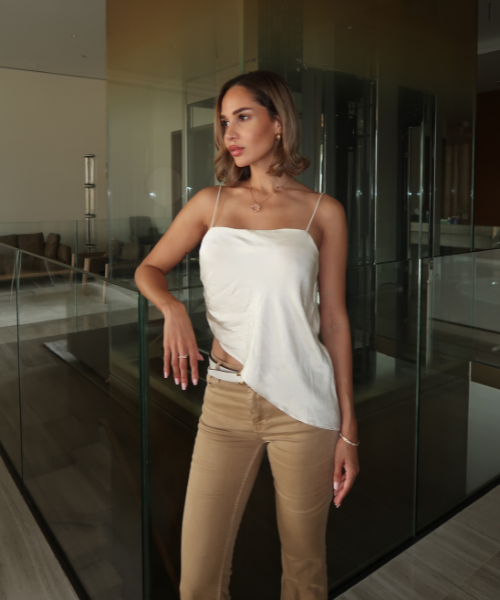
Even though I never formally studied business or marketing, I built my education through hands-on experience. At 17, I was re-selling nightlife clothing I sourced in the US through Facebook groups and my personal Instagram. By 18 I was writing party and event concepts for nightclubs in Zurich. In 2014 I launched a small swimwear brand selling Brazilian triangle bikinis through my first online shop — my first real experience with e-commerce and product development at a time when that was still relatively new in Switzerland. At 21, I took a marketing role at a private equity firm, the classic corporate dream with a great salary, a prestige office, and fancy cars — but after three months I realised the Swiss finance world wasn’t for me. I needed something more creative and entrepreneurial. At 23, in 2019, I founded a social media and branding consultancy, operating as a marketing freelancer at a time when that word barely existed in Switzerland or Germany. The consultancy went well, but I realised I didn’t want to build a traditional agency. I started looking for products with potential and became very interested in activewear. Brands like Gymshark were proving what was possible with social media-driven, influencer-led growth, and the keyword athleisure was really taking off. Designing activewear came naturally to me — I had been going to the gym since 16 and had immersed myself in pilates, Barry’s Bootcamp, and the broader wellness lifestyle while spending time in New York, Miami, and LA from 2016 onwards. In 2021, I founded AMADA while still managing my marketing clients, and about 17 months later I committed to it full-time. I didn’t have a backup plan, so I had to make it work.
AMADA will hit its 5-year anniversary this coming October. Looking back to day one, how does it feel to see the brand reach this milestone?
Honestly, it fills my heart. I’m usually very focused on the next steps, so I don’t always pause to celebrate milestones. If it weren’t for my friends and my mother, I probably wouldn’t stop to look back at all — they are my biggest supporters, cheerleaders, and reminders to acknowledge how far we’ve come. What feels the most surreal is that my day-to-day life now is almost exactly how I described and wrote it down four or five years ago. The moments that really land for me are when customers reach out after their first purchase to tell me how much they love the pieces, or when people who have been quietly following AMADA for years congratulate me on the progress. At the same time, I feel like we’re just getting started. There is still so much more coming this year and next that I’m very excited to share.
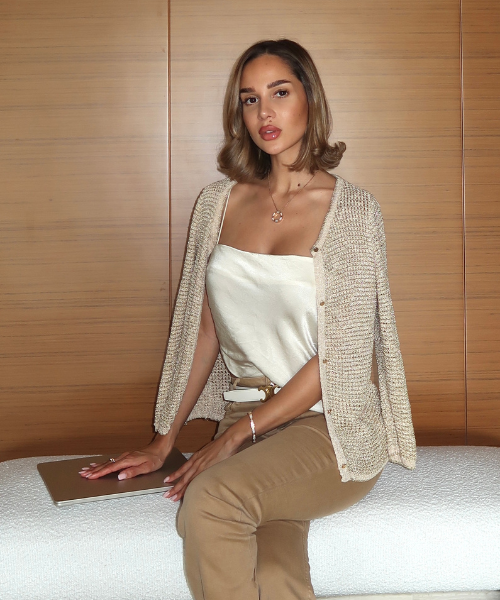
The brand is built around body-forming essentials and activewear silhouettes designed to move between workout and everyday life. What idea sparked the creation of AMADA?
AMADA means beloved or dear in Spanish in the feminine form, so from the beginning it was a homage to women. I wanted to create a clothing brand that could truly do it all. Women today juggle so much — we need pieces that are as versatile as we are, while still feeling chic, comfortable, and empowered. The designs started as a very practical solution for my own life. I was travelling a lot with limited luggage but still needed to work out, meet friends, take formal meetings, run errands, and go out for dinner. My travel wardrobe had to cover all of that with as few pieces as possible. That’s where the core design philosophy of AMADA comes from. The brand should be the solution for the days when you don’t know what to wear, but you do know how you want to feel.
Since your brand is rooted in the Swiss lifestyle, how has your personal background shaped the brand’s aesthetic globally?
In Switzerland, you can’t sell low-quality products — people expect functionality, durability, and a clear reason behind every purchase. That mindset shaped AMADA very naturally: functionality and quality are non-negotiable, not marketing buzzwords. Swiss and German customers are also very loyal but hard to convert. We like to stick to what we know, and trust-building takes consistency over years. Knowing this, I went into AMADA with a long-term mindset and accepted from the start that it would take years to be noticed and trusted. That commitment to quality, patience, and consistency has become part of how I operate the company and how it reflects as a brand.
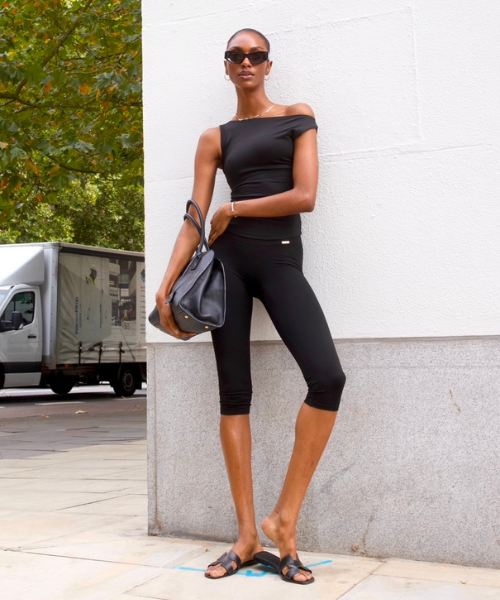
The brand launched on Ounass in May, and within 10 days over half the assortment had sold out. Did you anticipate such rapid demand in the Middle East?
Not at all. There wasn’t a big awareness campaign around the launch, so the products and imagery had to speak for themselves. We were actually supposed to launch in April, but our inventory was stuck at sea for nearly six weeks due to the war situation. I was worried the order might be cancelled or pushed indefinitely. Seeing the collection perform so well on Ounass, alongside so many established brands, felt incredibly rewarding — especially after such an uncertain lead-up.
The brand is scaling its regional footprint with more retail partnerships slated for this summer. How do you choose partners that protect AMADA’s premium essence?
There are only a handful of retail partners in the GCC that are truly right for AMADA, so we have to be very selective. Even though we already offer same or next-day delivery in the UAE and express shipping across the GCC, it’s still important to be physically present where the AMADA woman is already shopping. It’s about convenience and coherence for her. We only stepped into B2B last year. I previously had opportunities to be listed with large regional and international retailers but chose to hold off because the positioning wasn’t right. It might have been great for short-term cash flow, but it would probably have damaged the long-term brand perception. I would rather grow slower with the right partners than faster with the wrong ones.
Your upcoming summer drop launches mid-July 2026 and is being shot at a summer destination. What is the visual narrative of this campaign?
With this campaign, I want to show how easy it is to build full day-to-night looks with AMADA just by playing with accessories — sunglasses, bags, and shoes ranging from kitten heels to sneakers and ballerinas. Visually, the narrative is about ease, elegance, and movement. The idea is to highlight how minimal, feminine, elevated silhouettes can be incredibly versatile: airport to lunch, sightseeing to dinner, gym to city. I always say elegance is beauty that never fades. The campaign is meant to show that if you start with a strong, refined base, everything else becomes effortless.
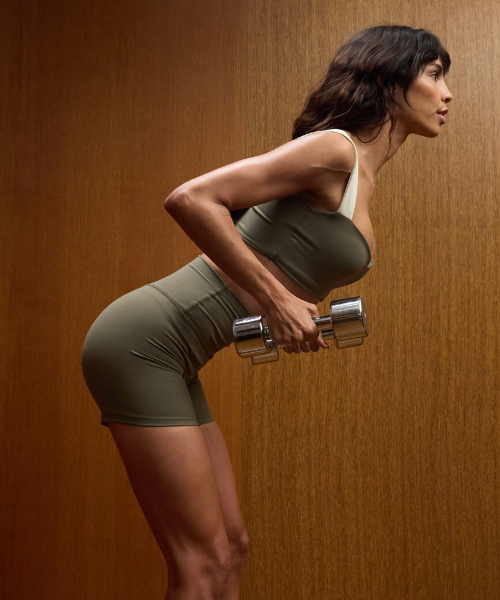
You are preparing to launch a loungewear collection featuring cotton-silk blends, merino wool, and cashmere knitwear. What challenges came with integrating these premium fabrics?
I’m bringing a new perspective to loungewear from the activewear world — not just another jersey sweater and jogger with a logo. The main challenge is that AMADA is known for pieces that are durable, resilient, stretchy, and flattering. Those qualities don’t naturally apply to delicate natural fibres. Merino wool, cashmere, and silk are beautiful but incredibly sensitive — you can’t throw them in the wash or have them rubbing against rough surfaces without consequences. I don’t want to create pieces that need constant dry-cleaning or lose their shape after a single wear. So the hardest part has been sourcing and developing blends that feel luxurious and elevated, are comfortable and flattering, can still be washed at 30°C at home, and hold their shape over time — especially for travel pieces. Designing is the fun part. The real challenge is aligning fabric performance with the expectations people already have of AMADA.
You have spoken about growing up in Switzerland while being shaped by Latin American heritage. How does that duality inform the brand?
Those two sides of me are like yin and yang. Switzerland taught me to be precise, reliable, consistent, and calculated. My Latin side is more expressive — creative, warm, emotional, spontaneous, and open to trying new things. My friends always joke that in business I’m very Swiss, and in my personal life I’m very Latin. That duality is visible in AMADA: the Swiss side shows up in the structure, operations, quality control, and long-term planning; the Latin side comes through in the branding, storytelling, visual identity, and the emotional connection with the community.
How do the stylistic demands of women differ from place to place, and how does AMADA bridge that gap?
In today’s social media age, I actually think style preferences have become quite universal. What I see is less variation by city and more by season, lifestyle, and cultural moment — winter versus summer, Christmas versus Ramadan, holidays versus work periods. AMADA is intentionally timeless in terms of season, colour palette, age group, and body type. That said, when focusing on the broader GCC, I’m increasingly incorporating longer-torso tops, long sleeves, and pieces that can be layered or styled more modestly, alongside future loungewear that leans into looser, flowing silhouettes. What unites my customers globally is not geography but how they want to feel — supported, comfortable, confident, and empowered, whether that translates to feeling chic, elegant, or simply put-together.
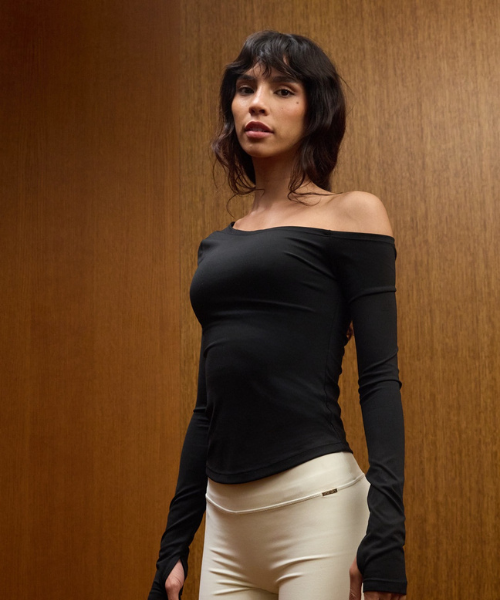
The activewear market is saturated. What was your strategy for carving out a distinct space?
I already saw strong growth projections for activewear in 2018, but I didn’t anticipate how much COVID would accelerate the category and push it into industries well beyond fashion. In the beginning, I was intentionally benchmarking against the big US-based billion-dollar brands, which made it easier to identify the gaps. Large companies often lose touch with the customer’s daily reality when they’re focused on cutting costs. That’s where smaller brands can win. I knew the market didn’t need another copy-paste activewear brand with the same cuts and a different logo. The branding had to feel different from traditional performance wear, and being small allowed me to build around a real, engaged community from day one. A lot of my product decisions come directly from people — friends, existing customers, women I stop on the street, and influencers who know what works and what doesn’t. That closeness to the wearer is a huge part of my strategy.
Activewear brands often rely on loud logos or hyper-minimalism. How does an AMADA piece remain recognisable without heavy external branding?
For AMADA, recognisability is in the silhouette, the fit, and the way it makes you look and feel. When you wear AMADA, you instantly look more put-together and held without it drawing the wrong kind of attention. The pieces are designed to spark quiet conversations — someone in a studio asking where your set is from. That’s the type of recognition I want. Because the whole idea is multi-purpose versatility, I can’t plaster logos everywhere; it would limit how and where you can wear the pieces. That constraint pushed me to focus on unique cuts, considered details, and flattering lines — to redefine what activewear can look like in a more elevated, timeless way.
If you could fast-forward AMADA five years to 2031, what is the ultimate milestone you would want to reach?
I see AMADA available in multiple key markets worldwide, distributed across major premium fashion retailers while still keeping its strong direct-to-consumer connection. Beyond distribution, I want to build event experiences that bring wellness into everyday life — not just fitness events, but holistic experiences around movement, mindset, and community. I also dream of collaborations with major designer brands and partners in other industries, like designing the first-class pyjamas for an airline such as Emirates, which is basically my third home. Ultimately, I want to grow with the AMADA woman. If she starts having babies, we’ll explore maternity fashion. If she wants swimwear, we’ll drop bikinis. The brand should evolve with her life stage and needs.
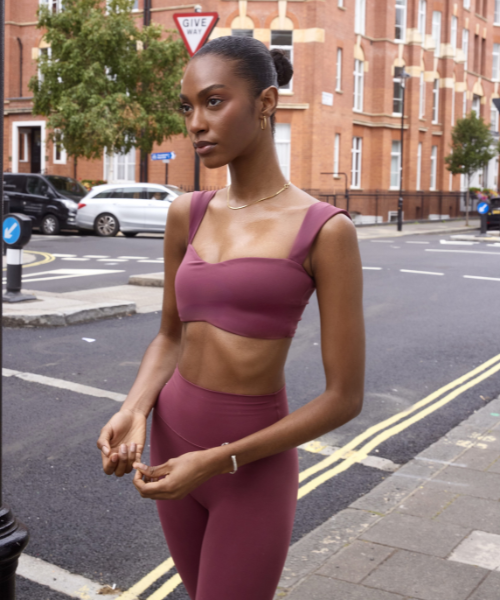
As a founder balancing worldwide expansion, design, and travel, what is the one non-negotiable daily habit that keeps you grounded?
My non-negotiable is checking in with myself every day — my health, my energy, and my mental state — and reconnecting with my goals for the week, month, and quarter. It’s very easy to get lost in busyness. Before I started this journey, I promised myself I would never ignore my limits. I push and expand them all the time, but I don’t pretend they don’t exist. Life and work stop being enjoyable when your body and mind are not healthy. Breaking big goals down into daily, weekly, monthly, and quarterly actions helps me stay grounded and focused rather than just reacting to whatever feels urgent.
What impact do you hope AMADA makes in women’s daily lives?
I want women to simply feel good when they wear AMADA. It should lift your mood, simplify your routine, and make getting dressed easier. One of our slogans is be good, feel good, look good — and for me, those three are genuinely connected. On another level, I hope AMADA’s story inspires women to create whatever they believe in. This brand and everything I had to learn to run it were built from scratch. I want that to be a reminder that you don’t need a perfect background to start. You just need to begin and stay consistent.
– For more on luxury lifestyle, news, fashion and beauty follow Emirates Woman on Facebook and Instagram
Images: Supplied & Feature Image: Supplied
Disclaimer : This story is auto aggregated by a computer programme and has not been created or edited by DOWNTHENEWS. Publisher: emirateswoman.com