
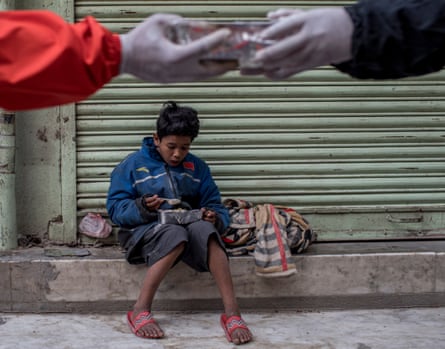
Child malnutrition in Nepal has reached “alarming” levels, according to the largest ever survey of under-fives in the country.
The new figures came just over a year after USAID, the former US flagship agency closed by the Trump administration in 2025, stopped funding work on child nutrition in Nepal.
A senior Nepalese nutrition expert, who ran programmes in the country that were axed in the US aid cuts, said she worried that hard-won gains in reducing child mortality over the past 20 years were at risk.
“If you are malnourished, your risk of dying, compared to a child who is not malnourished, is 12 times higher,” said Pooja Pandey Rana. “What we’re seeing is [an] alarming rate of acute malnutrition in Nepal.”
More than one million children aged between six months and five years were weighed and measured as part of a government screening programme carried out over three weeks in May.
The World Health Organization deems rates of wasting – the percentage of children who are underweight for their height – of 10% or above to be “high”, and suggests they should prompt immediate intervention.
The survey revealed rates as high as 12.3% in one province, Madhesh, near the Indian border. There, 24.2% of children were classed as underweight, meaning their weight was low for their age.
Overall, 7.8% of children suffered from wasting and 1.6% from severe wasting, while 17.4% were underweight.
Pandey Rana, Helen Keller Intl’s country director for Nepal, said the screening had only reached about half of the country’s children in the relevant age groups, and rates in remote areas could be higher still.
Nepal had been a leading country in reducing death rates among under-fives, which declined by 72% between 1996 and 2022. Pandey Rana said: “The worry we have is we are now backsliding.”
Beyond the immediate risk to a child’s life from malnutrition that compromises the immune system, she pointed to research that also linked it to worse school performance and productivity as they got older.
Helen Keller Intl was due to receive $72m from USAID over five years, beginning in 2025, to deliver nutrition programmes covering almost 9 million people in 48 districts.
It has only been able to partly replace that funding, raising just under $5m from other donors to reach 223,000 people in nine districts.
Nepal’s government buys the country’s stocks of Ready-to-Use Therapeutic Food (RUTF), a nutrient-rich and high-calorie paste that can treat malnourished children. But much of the community outreach – such as health workers going door to door to identify children who needed treatment – was aid funded and stopped with the US cuts.
“We saw this sudden, abrupt [halt],” Pandey Rana said. “In the last 14 months, we have seen this breakdown of systems where you have RUTF, but we don’t have families coming in. You have services, but there’s no one to refer or follow up.”
Reducing malnutrition required an integrated approach, she said, including work on gender equality, because of links between women’s empowerment and the health of their children, and on access to clean, safe water.
Increasing prices were also making things harder, she said. “Prices have really shot up – for example, we promote egg as a very wholesome, nutritious food. The price of two eggs is equal to a kilogram of rice … what would you choose, if you’re a food-insecure family?”
While differences in methodology mean comparisons with earlier surveys are difficult, Pandey Rana said the figures were “for sure” higher than they would have been 14 months earlier. A 2025 survey put the national rate of wasting among under-fives at 6.6%.
Malnutrition was competing for domestic government funding with other health priorities such as immunisation, she said.
A spokesperson for Unicef in Nepal said: “Supplies are still insufficient to meet the overall demand for treatment.”
Only about 35% of children under the age of five affected by wasting currently received treatment, they said.
Disclaimer : This story is auto aggregated by a computer programme and has not been created or edited by DOWNTHENEWS. Publisher: theguardian.com







