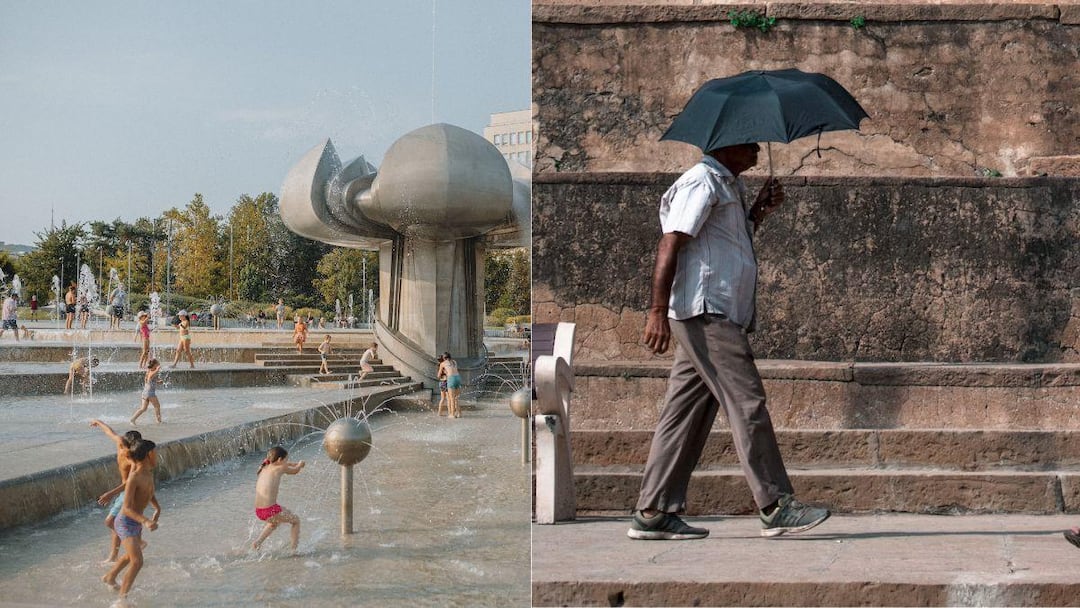
- Climate change amplifies heatwaves, demanding preparedness and urban planning.
Whether you are in Europe or India, the thermometer’s reading may be the same when temperatures reach 45°C. However, a lot of people who have lived in both regions claim that the heat in Europe can feel surprisingly more oppressive. Although this may seem paradoxical, meteorologists and medical professionals claim that a number of physiological, environmental and infrastructure elements affect how people react to excessive heat. Adaptation is one of the main causes. Long stretches of extreme summer heat are common in India, especially in the country’s northern and central areas where temperatures regularly rise beyond 40°C. The human body improves its ability to regulate heat over time through increased circulation and more effective sweating. On the other hand, many people in Europe are less accustomed to protracted heat because such intense temperatures are rather rare.
Housing And Infrastructure Influence Heat Exposure
Another important factor is the built environment. Instead of releasing heat during heatwaves, a large portion of Europe’s houses were built to preserve warmth throughout long, severe winters. Heat can be trapped indoors by thick insulation, poor natural ventilation and the lack of air conditioning in many residences, leaving buildings uncomfortably warm even after sunset, unlike houses in India. In contrast, air conditioning and air coolers are far more prevalent in many Indian cities where high summer temperatures are anticipated.
ALSO READ |Oral Cancer: Tobacco And Vaping Are Putting More Young People At Risk, Know The Early Warning Signs
Rising Night-Time Temperatures Add To The Risk
The predicament is made worse by the temperatures at night. The World Weather Attribution (WWA) reports that the probability of abnormally hot nights in Europe has significantly increased due to climate change. Heat-related sickness is more likely when temperatures stay high after sunset because the body has less time to recuperate from the heat of the day. According to Reuters, scientists discovered that recent heatwaves in Europe would have been nearly impossible without human-caused climate change, with dangerously warm nights occurring much more frequently over the continent.
Humidity Makes Heat Feel More Intense
Another crucial element is humidity. While some regions of India suffer from dry heat, several heatwaves in Europe are accompanied by increased humidity, which prevents sweat from evaporating from the skin. Humidity can cause temperatures to feel much hotter than the actual air temperature because sweating is the body’s main cooling mechanism. The heat index or wet-bulb temperature, which more accurately captures the physiological stress that the human body experiences than air temperature alone, is frequently used by meteorologists to evaluate this.
Urban Heat Island Effect Worsens Conditions
Urban planning may make the issue worse. Narrow streets, dense historic neighbourhoods, and vast expanses of concrete that absorb heat during the day and gradually release it at night are characteristics of many European towns. The “urban heat island” effect prolongs exposure to hazardous temperatures well after dark by keeping metropolitan centres warmer than nearby rural areas.
ALSO READ |Stay Healthy This Summer With These 6 Nutrient-Rich Superfoods
Climate Change Is Intensifying European Heatwaves
The World Meteorological Organisation (WMO) reports that Europe is warming at the fastest rate in the world, increasing the frequency, duration, and intensity of heatwaves. According to scientists, climate change is increasing baseline temperatures, which means that excessive heat is now more common than it was in earlier decades due to naturally existing weather patterns.
Heat Safety Remains Essential Everywhere
Regardless of location, health experts emphasise that no temperature of 45°C could ever be deemed safe. Long-term exposure to high heat can cause dehydration, heat exhaustion, heatstroke, and cardiovascular problems, according to the World Health Organization (WHO), especially in older persons, small children, and those with underlying medical disorders. In the end, not everyone is affected equally by a 45°C day. Heat perception is influenced by a number of factors, including urban infrastructure, humidity, nighttime temperatures, house design, and climate adaptability. Improving heat preparedness and resilient urban development will be crucial in both Europe and India, according to experts, as climate change continues to worsen heatwaves globally.
Before You Go
Breaking News: US Naval Blockade Challenged as Multiple Ships Exit Iranian Ports Amid Hormuz Tensions
Disclaimer : This story is auto aggregated by a computer programme and has not been created or edited by DOWNTHENEWS. Publisher: abplive.com