
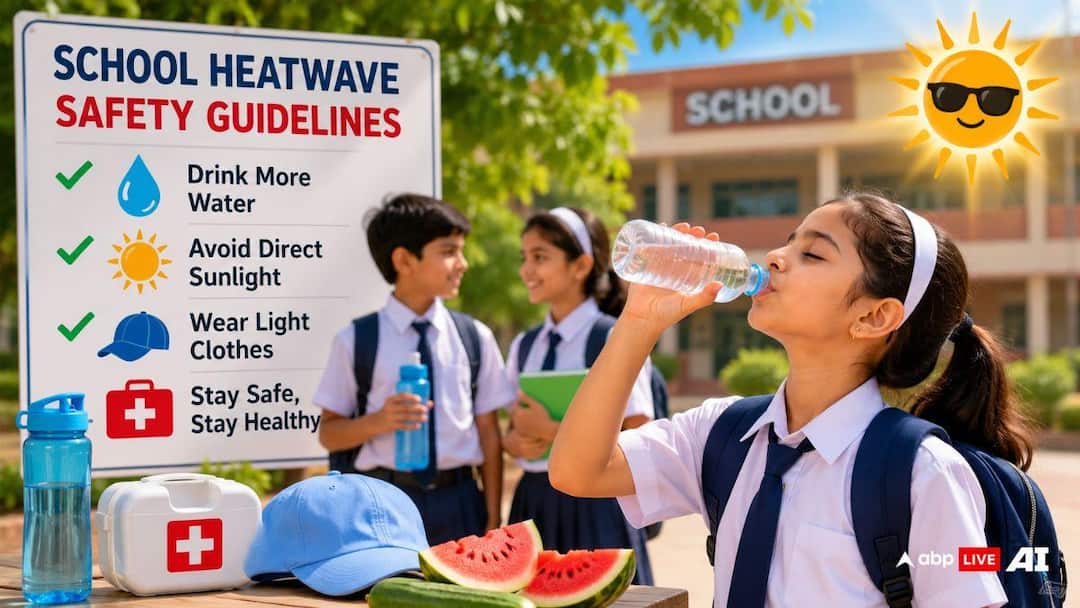
UP Schools Latest News: The Uttar Pradesh government has unveiled a comprehensive set of heatwave safety guidelines for schools across the state, aiming to safeguard students from the growing risks posed by extreme temperatures. The new ‘Teachers’ Guideline-2026 for Sensitising Students Towards Heat-related Illnesses’, issued by the Basic Education Department, outlines measures that schools and teachers must adopt to reduce heat-related health risks among children.
Prepared under the direction of Additional Chief Secretary for Basic and Secondary Education, Parth Sarathi Sen Sharma, the document focuses on equipping teachers with the knowledge and practical skills needed to recognise heat-related illnesses, provide immediate assistance, and implement preventive measures within school campuses.
ALSO READ: NEET Re-Exam Result 2026: Check NTA’s Expected Result Date And Latest Updates
Schools Directed to Create Heat Action Plans
As part of the new protocol, every school in Uttar Pradesh has been instructed to formulate a dedicated School Heat Action Plan. Institutions will appoint health nodal teachers responsible for coordinating awareness campaigns and emergency preparedness related to heatwaves.
Schools will also conduct orientation sessions for teachers, staff members, and students while prominently displaying safety messages, emergency contact numbers, and preventive measures across campuses. Posters highlighting essential ‘dos and don’ts’ will help educate students, parents, and the wider school community on staying safe during periods of extreme heat.
The government has made it mandatory for schools to maintain first-aid kits equipped with ORS packets, digital thermometers, and medical emergency contacts, including the 108-ambulance service.
Teachers to Lead Awareness Campaigns
Under the guidelines, teachers have been assigned a central role in promoting heatwave awareness. Through morning assemblies, classroom discussions, co-curricular activities, and routine interactions, they will educate students on practical ways to stay safe during hot weather.
Students will be encouraged to drink water regularly, avoid prolonged exposure to direct sunlight, wear lightweight cotton clothing, and consume water-rich seasonal fruits. Teachers will also explain the warning signs of heat exhaustion and heat stroke while encouraging children to immediately report if any classmate feels unwell.
School schedules will continue to follow government directives. Morning assemblies, sports, and other outdoor activities should be completed before 10 am. During orange or red heatwave alerts, schools have been instructed to suspend all physically demanding outdoor activities.
ALSO READ: School Dropouts To IPL Superstars: Indian Cricketers Who Left School To Pursue Cricket
Focus on Safe Campuses and Emergency Response
The new guidelines require schools to strengthen safety measures to protect students from extreme heat. Key instructions include:
- Ensure uninterrupted access to clean drinking water, with students encouraged to drink water every 20 to 30 minutes during school hours.
- Improve school infrastructure by maintaining functional fans, ensuring proper ventilation, creating shaded areas through plantation, and adopting cooling measures such as reflective paint and cool roofs wherever possible.
- Promote heat-safe habits by encouraging students to wear light-coloured cotton clothing, use caps or umbrellas outdoors, and consume water-rich seasonal fruits like watermelon, muskmelon, cucumber and kakdi.
- Discourage unhealthy drinks, including caffeine, carbonated, and excessively sweet beverages. Mid-day meals should be served in clean, shaded areas.
- Take immediate action if a student shows signs of heat-related illness, such as excessive sweating, severe thirst, headache, dizziness, muscle cramps, vomiting, confusion, or unconsciousness. Schools must shift the student to a shaded place, provide first aid, apply cold compresses, and contact the 108-ambulance service or the nearest health centre if necessary.
- Closely monitor vulnerable students, including those suffering from asthma, diabetes, heart disease, obesity, disabilities, or those recovering from fever or diarrhoea.
- Parents are advised to ensure children drink enough water before leaving for school, avoid sending unwell children to class, and follow heatwave safety practices at home.
- Schools must also maintain preparedness by recording heat-related incidents, regularly reviewing safety measures, monitoring India Meteorological Department heatwave alerts, and conducting periodic mock drills.
Education Loan Information:
Calculate Education Loan EMI
Before You Go
Delhi Election Results 2025: Counting Begins; BJP Poised for Historic Comeback in Delhi, Exit Polls Suggest | ABP News
Disclaimer : This story is auto aggregated by a computer programme and has not been created or edited by DOWNTHENEWS. Publisher: abplive.com








