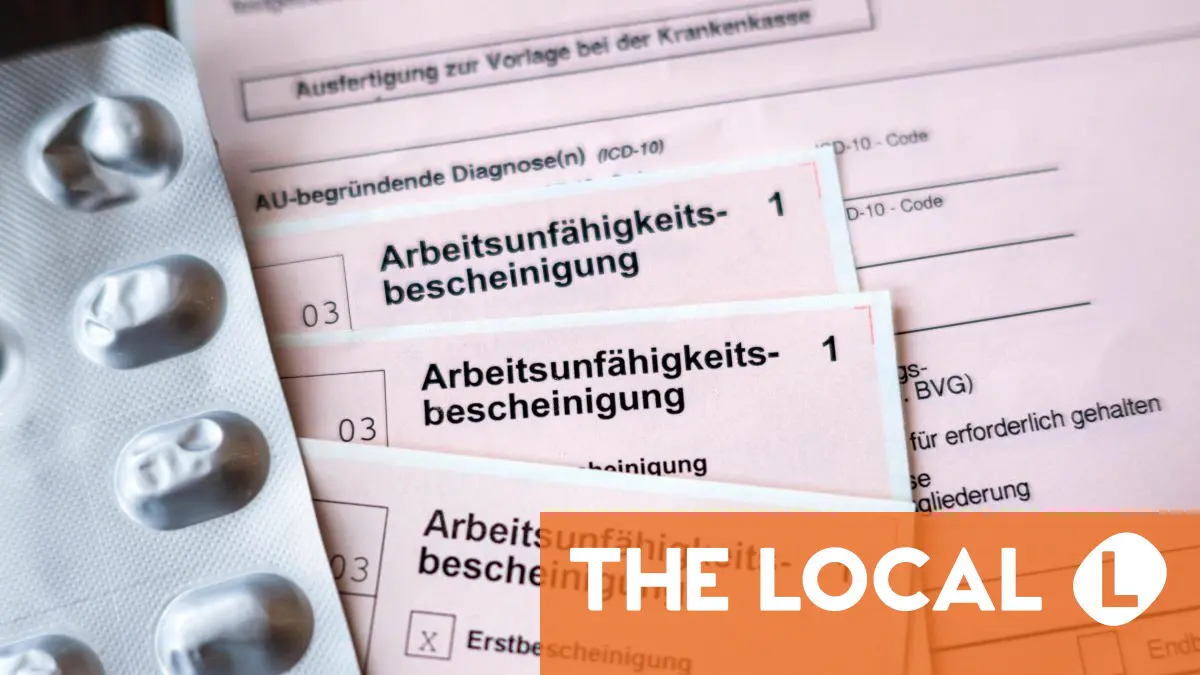
Sick workers in Germany could soon face more hurdles to prove they are genuinely ill. The government says it’s tackling high absenteeism – but doctors warn the plans could overwhelm doctors’ offices and clinics.
Anyone living in Germany will know how difficult it can be to get an appointment with a doctor, and how long you might wait if you turn up without one.
That situation could soon become significantly worse, warns the Association of General Practitioners.
Under the federal coalition’s latest proposals, employees would have to see a doctor on the very first day of illness to obtain a sick note, while the option of getting one by phone would be scrapped.
The plans were announced on Thursday by Germany’s black-red coalition of the conservative CDU/CSU parties and the centre-left SPD as part of a broader reform package.
While the government argues the move is necessary to tackle high levels of absenteeism, doctors warn it could flood already stretched practices with patients who don’t necessarily need medical care.
READ ALSO: Can employees visit the doctor during work hours in Germany?
What exactly is set to change?
At the heart of the proposals are two key changes.
First, employees would be required to submit a doctor’s note from day one of any illness when they call out of work. At a press conference in Berlin, Chancellor Friedrich Merz said exceptions would be possible at the company level.
At present, employees in Germany only need to provide a doctor’s note if they’re off work for more than three calendar days – although employers can ask for one earlier.
Second, the option to obtain a sick note by telephone would be abolished.
Since the end of 2023, patients who are already known to a practice and have mild symptoms have been able to receive a sick note without visiting in person – a system originally introduced during the Covid-19 pandemic.
There are also indications that anyone providing false sick notes could be punished more severely in future, although details remain limited for now.
Section 278 of the Criminal Code currently stipulates that issuing false medical certificates is punishable by imprisonment for up to two years or a fine.
Before any of this becomes law, however, the proposals must still go through the legislative process – meaning they must win majority backing in both the Bundestag and the Bundesrat.
READ ALSO: Allergy season – What to ask for in German pharmacies
The arguments for and against
There is broad agreement that absenteeism is an issue Germany needs to address.
Figures reported by German media and The Local suggest workers in Germany take more sick days than in many other European countries. Merz had previously described the rate of absenteeism as “exorbitantly increased”.
On Thursday, he said the decision to change sick leave regulations had been difficult, but that, “We can no longer afford this competitive disadvantage caused by long absences at work.”
READ ALSO: Why German business leaders want to cut back on paid sick leave for employees
But critics remain unconvinced this approach will work. Family doctors in particular have reacted with alarm.
Markus Blumenthal-Beier, head of the Association of General Practitioners, called the plans “absolutely catastrophic”, warning they would create a wave of bureaucracy and place an unsustainable burden on practices.
He also argued that phone certificates had not actually increased overall sickness levels, but only changed how cases were recorded in Germany.
There are also concerns about unintended consequences such as so-called “presenteeism” – when employees go to work sick, potentially spreading infections and harming productivity in the long run.
The new proposals are part of wider reforms with the stated aim of improving productivity in Germany.
READ ALSO: How will Germany’s income tax reforms affect you?
Disclaimer : This story is auto aggregated by a computer programme and has not been created or edited by DOWNTHENEWS. Publisher: thelocal.de