
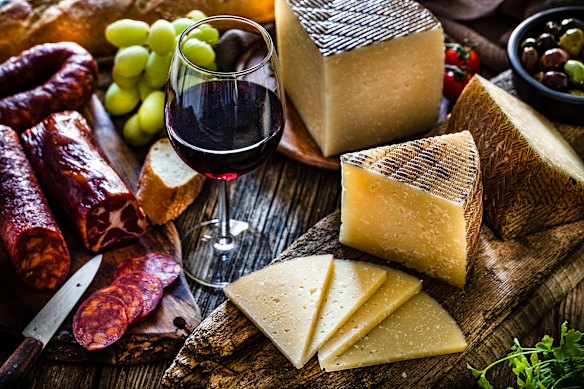
Even the most vibrant wines can feel muted after a little cheese. But drinks with carbonation, bitterness and savoury depth reset the palate more effectively.
Mike Bennie
It’s heresy to say this, but the old-world canon of gastronomy is often wrong: its dictum, for instance, that wine goes with cheese.
Yes, mature port paired with stilton is sublime, and Vin Jaune wine and comte from the alpine French region of Jura have wonderful synergy. But spend enough time in the company of sprawling cheese platters that have been matched to conventional wine choices and a creeping sameness can emerge with tannin, acid and fruit flattening into one long, lactic blur.
This is because cheese coats the palate with fat and milk proteins, muting acidity and amplifying bitterness. The lingering lactic richness can make even the most vibrant wines feel broad and monotone after a few mouthfuls.
In contrast, drinks with carbonation, bitterness, notes of oxidation and savoury depth often reset the senses more effectively, bringing freshness and contrast back into play. One of the great rules of food and wine matching is found in a self-coined motto: “tannin and acid are your friends”.
Cheese expert Penny Lawson, who runs Sydney’s Penny’s Cheese Shop, says it’s difficult to match cheese and wine because there are so many variables. “Wine has a vintage every year, but cheese has a vintage every day it’s made. Cheese is so dependent on the weather, the season and the feed of animals, even the lactation cycle of the mammals.”
The best recipes from Australia’s leading chefs straight to your inbox.
This is where sake, beer, cider, whisky and amaro come in – they’re extraordinary companions to cheese. Carbonation in beer and cider, for example, scrubs the palate clean, bitterness in amaro counters creaminess, while sake’s amino acid-rich umami and general freshness harmonises with an array of cheeses without overwhelming them. As with high-proof spirits, these all serve an ideal function of Control, Alt, Delete on the palate.
The case for sake
Matt Young imports sake under the label Black Market Sake (he’s also co-owner of famed Sydney sake bar Ante) and says sake and cheese have a shared savoury architecture. “There is a certain supporting element in matching sake to cheese, as if the sake is there to highlight the full flavour without overpowering the more delicate elements in the cheese itself.”
Junmai styles of sake (made from pure rice and produced without additives) can work beautifully with alpine cheeses or clothbound cheddar, while sparkling sake can refresh bloomy rind cheeses with vibrancy and lift. The umami elements feel a little like a seasoning in the glass, while also being refreshing.
Beer and cider are equally clever suggestions
Beer and cheese might be a head-scratching moment for some, but bitter beers and wild fermented, more sour styles may just be some of the greatest and most underappreciated partners for cheese. Carbonation cleanses the palate, bitterness cuts richness, with the wilder, savoury streaks of the fermentation bringing complexity that mirrors the funk, nuttiness and savoury depth in aged cheeses, saltier cheeses and some of the more traditional cheddar styles.
Topher Boehm of Wildflower Brewing and Blending sees magic in matching cheese with farmhouse and wild-fermented styles. “My personal favourite is an aged cloth bound cheddar with a lambic, gueuze or Brettanomyces heavy golden barrel-aged beer … [matching] mould-influenced cheeses with barrel-aged amber/red beers is also excellent.”
Traditional farmhouse ciders (that are dry and tannic) have an affinity with cheese that stretches back centuries through Somerset, Normandy and the Basque region. Tart acidity and subtle bitterness refresh the palate effortlessly, particularly with triple cream cheeses or firm, alpine styles.
And also spirits
Spirits are overlooked for their appropriateness and marriage with cheese, but calvados (styled as an apple brandy of sorts) provides a faint sweetness, gives subtle detail and refreshes the palate. Whisky does a similar thing, though the peated styles often shine, the smoky elements working particularly well with “stinkier” cheeses. A left of centre pairing, bitter amaro and even some dryer vermouths add a herbal nuance that feels like a final seasoning for cheese.
Try these
Moriki Shuzo Suppin Rumiko No Sake 2025 ($88)
A pure rice sake of subtle savoury notes, citrusy freshness, sleek texture and a cool, dry finish. Light and refreshing, it sits well with manchego or gruyere.
Manoir Kinkiz Cidre Fouesnant ($11)
Made from old, cider-apple varieties, this is a faintly sweet but decidedly chalky-textured cider. Green apple fruitiness with nutty savouriness and a firm, pleasingly bitter finish. It likes soft French cheeses.
Lark No.151 Fire Trail Whisky ($170)
This Tasmanian whisky, aged in port and sherry casks, finds impossibly smooth texture, with salted toffee, smoky spice and warm, hazelnut savouriness.
Hello, mature cheddar.
Mike Bennie writes a monthly drinks column called Bar Cart. Find more here.
From our partners
Disclaimer : This story is auto aggregated by a computer programme and has not been created or edited by DOWNTHENEWS. Publisher: www.smh.com.au





