Mumbai’s floods are, by scientific consensus, unavoidable.
“If 90 mm of rain occurs in two hours, any city in the world will flood,” says Dr Subimal Ghosh, Institute Chair Professor in the Department of Civil Engineering and Convener of the Interdisciplinary Program in Climate Studies at IIT Bombay, explaining that no city in the world, irrespective of the public infrastructure in place, can prevent flooding at that intensity of rainfall.
Mumbai now receives such extreme rainfall (300-500 mm) in just three to four days every monsoon.
Ghosh believes the real question is no longer whether the city can stop flooding, but how quickly it can warn people before the water rises. And for that, he points to a model built 1,800 kilometres away, on India’s eastern coast.
A cyclone that changed everything
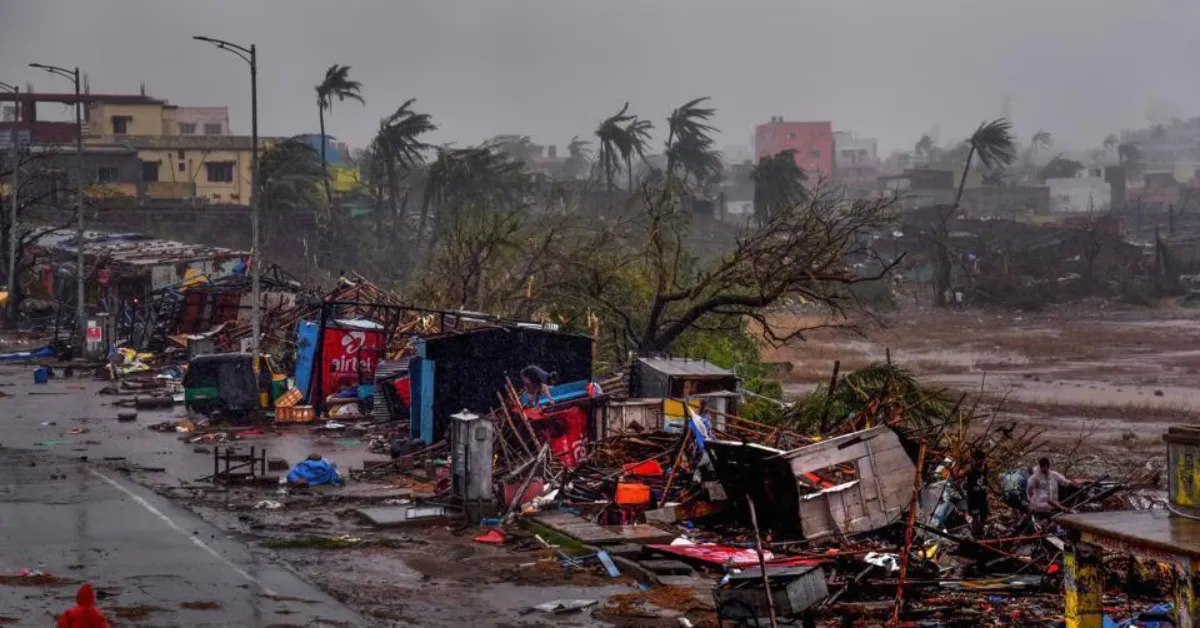
On 29 October 1999, a super cyclone tore through Odisha with winds crossing 250 kmph, killing close to 10,000 people. It remains one of India’s deadliest natural disasters.
Two decades later, cyclones of comparable intensity strike the same coastline and claim a fraction of the lives once lost, largely because of a warning and evacuation system built brick by brick since that tragedy.
IAS officer Pradeep Kumar Jena, who has managed disaster response in Odisha for over 20 years, has spoken about the state’s “zero-human-casualty” mission, a goal set after 1999 and pursued relentlessly since.
When Cyclone Fani struck in 2019 with wind speeds exceeding 200 kmph, the state evacuated over a million people and limited the toll to a few dozen deaths.
During Cyclone Amphan in 2020, of comparable ferocity to the 1999 storm, Odisha recorded only a handful of fatalities in the state, even as overall regional casualties stayed under 100.
What the system actually looks like
The Odisha State Disaster Management Authority, set up in 2000 as India’s first dedicated body of its kind, anchors a layered warning network.
IMD forecasts and satellite tracking feed into a chain of over 800 multipurpose cyclone shelters and watchtowers across 120-plus coastal locations, from where sirens and mass alerts reach nearly 1,200 villages down to the last mile.
District collectors carry satellite phones and HAM radios so communication survives even when towers fall. A trained cadre of over 100,000 volunteers, alongside gram panchayats and women’s self-help groups, runs evacuations and manages relief camps, while twice-yearly mock drills keep the machinery ready before cyclone season begins.
Dr Mrutyunjay Mohapatra, Director General of the IMD and an Odisha native, has led much of the country’s cyclone forecasting work behind this system, calling accurate, lead-time forecasting the single biggest lifesaver.
Why forecasting made the difference
Structural fixes for urban flooding require geotechnical, structural, and water engineers working together over years, and solutions cannot simply be copied from cities like those in Japan without understanding local implications, Ghosh explains.
/filters:format(webp)/english-betterindia/media/media_files/2026/07/10/1-2026-07-10-15-17-01.png)
Early warning, meanwhile, can save lives immediately. “I would rather stress that we should have a very good early warning system. This is what I always tell,” he says.
“With early warning, we can save a lot of people by making quick decisions,” pointing to Cyclone Dana’s 2024 forecast-driven school closures as an example. He calls this kind of forecasting work a silent scientific revolution, one that has quietly saved tens of thousands of lives without much public recognition.
A blueprint that other states have borrowed
Odisha’s approach has not stayed confined to its coastline.
Andhra Pradesh, Tamil Nadu, and West Bengal have built similar community-based disaster preparedness and early warning frameworks, and the World Bank-backed National Cyclone Risk Mitigation Project has extended comparable shelters, evacuation infrastructure, and warning systems across ten coastal states since 2010.
/filters:format(webp)/english-betterindia/media/media_files/2026/07/10/2-2026-07-10-15-20-54.png)
Community-based disaster preparedness manuals developed in Odisha were translated for wider circulation specifically so other states could adapt them. Researchers now regularly cite the “Odisha model” as a benchmark against which other coastal states measure their own preparedness.
Mumbai’s own experiment
IIT Bombay has already built mumbaiflood.in, a portal offering a three-day rainfall forecast, a 90-minute radar-based nowcast, and a continuously updated flood inundation model, which received over 10,000 visits within days of launch.
A dedicated IIT Bombay–BMC working group shares this data in real time, and Ghosh describes the civic body’s response as prompt, citing pump operations adjusted based on the institute’s forecasts.
A new crowdsourced flood-reporting feature now adds ground-truth data from citizens to the model, and Ghosh believes Mumbai needs the same last-mile relay Odisha uses, since “not everyone can have access to internet, but at least a few people will have access, and they can immediately inform others.”
As Odisha’s mangrove replanting drives show, resilience is often built through unglamorous, sustained science rather than singular fixes. Odisha’s cyclone story suggests India already has a working model. The task now, experts say, is fine-tuning it for a flooding megacity.
Sources:
‘Cyclone Biparjoy: IAS Officer Who Led Odisha’s Stellar Disaster Management’: by The Better India, Published on 13 June 2023
‘Saving Over 1 Million Lives: How Odisha Saw Cyclone Fani in The Eye & Came Out Strong‘: by The Better India, Published on 6 May 2019
‘Odisha’s turnaround in disaster management has lessons for the world‘: by The World Bank, Published on 3 November 2023
‘What states can learn from Odisha in disaster preparedness and mitigation‘: by ReliefWeb/World Bank, Published on 14 June 2019
‘The “Odisha model” for disaster resilience‘: by Ideas for India, Published on 16 August 2024
Disclaimer : This story is auto aggregated by a computer programme and has not been created or edited by DOWNTHENEWS. Publisher: thebetterindia.com