
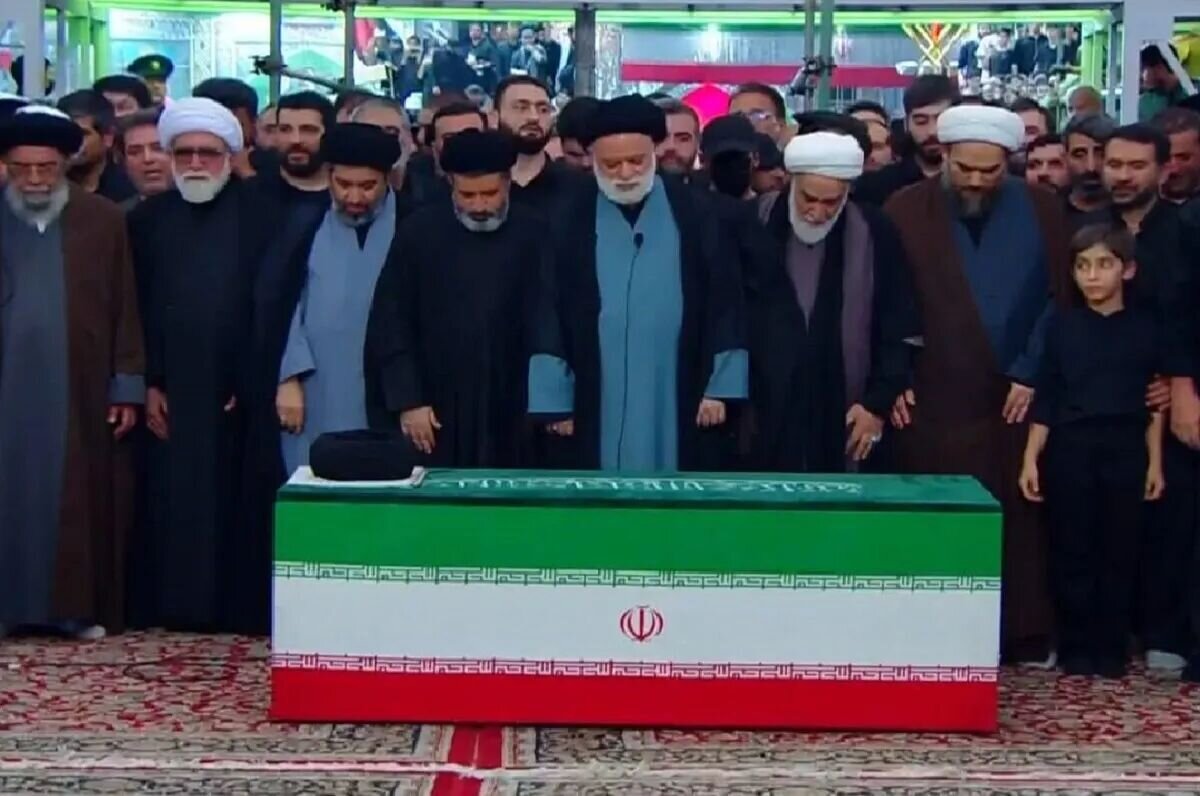
LAHORE – How does it feel when humanity becomes so deeply connected through one guiding force that deception itself loses ground? It feels like a historical moment unfolding in real time—one that humanity has only witnessed in rare chapters of history, most notably in the legacy of the Battle of Karbala and the spiritual mass gathering of Arbaeen.
In those moments, millions of hearts unite beyond race, nationality, language, and geography. Today, a similar phenomenon appears to be emerging once again—where people from every nation, every color, every sector, and every belief system are observing a shared reality: humanity itself being reshaped by the force of leadership and ideology.
The idea of leadership has been made so clear that deception seems increasingly difficult to sustain. When leadership becomes visible in its principles and consistency, confusion loses its space. This clarity is what transforms perception into certainty for many observers.
This narrative is deeply connected to the philosophy derived from Imam Hussain ibn Ali, whose stand in Karbala represents a timeless separation between truth and falsehood—between resistance and submission to injustice.
From historical standpoint to modern political movement
This ideological continuity is seen as extending into modern revolutionary thought, especially through the political transformation led by Imam Ruhollah Khomeini, who reintroduced the concept of governance rooted in religious legitimacy and resistance to imperial structures.
Despite decades of wars, sanctions, global isolation, propaganda campaigns, and economic pressure, the system claims to have maintained its ideological consistency. This endurance is not accidental—it is proof of certainty in a long-term vision.
Resilience through struggle
The narrative of this movement emphasizes continuous sacrifice: political pressure, economic constraints, and diplomatic isolation have all been part of its historical journey.
Yet from this perspective, standing firm under such pressure is itself considered evidence of conviction.
Over time, this has shaped how both supporters and observers interpret the evolution of Iran’s political identity—whether as resistance, revolution, or a contested geopolitical model.
Global visibility and changing perception
Today, this funeral has created an impact where this ideological and political framework is getting increasingly visible in global discourse. Social media has amplified narratives in real time, allowing audiences worldwide to observe developments without traditional mediation.
This visibility has contributed to shifting perceptions, where even previously distant or skeptical audiences are now engaging with the image of a nation deeply tied to its leadership and ideological identity.
When religious authorities, political delegations, government officials, military leaders, and media influencers from around the world gather for one funeral, it becomes more than a farewell—it becomes history.
International diplomatic movements—whether discussions about reopening embassies or recalibrating foreign relations—are often interpreted as signs of changing geopolitical dynamics, even if gradual and complex.
Social media narrative shift
Social media is flooded with content surrounding the funeral, as countless voices document what they witnessed. Narratives that once dominated international discourse are now being openly challenged, while influential figures from around the world share content expressing support for Iran and paying tribute to Ayatollah Khamenei.
History may be witnessing one of its most significant shifts in public perception. Many who had long accepted portrayals of Ayatollah Khamenei through the lens of political rhetoric are now expressing grief, reflection, and, in some cases, regret that they never sought to understand him during his lifetime.
This nation represents something larger than politics. It is seen as the unfolding of a deeper historical truth: that sustained conviction against pressure eventually reshapes global perception.
The phrase associated with this ideology is interpreted as a declaration that such a path cannot be easily erased or diminished by opposition.
What is being witnessed, after seeing this large gathering at the funeral of Ayatollah Khamenei, is not merely political change but a convergence of ideology, leadership, and collective identity. Whether interpreted as spiritual awakening, political transformation, or historical continuity, it is a phenomenon that continues to shape global conversations about power, legitimacy, and resistance.
Syeda Yasha Raza Naqvi is a student of Jamia Ummul Kitab, Lahore, Pakistan
Disclaimer : This story is auto aggregated by a computer programme and has not been created or edited by DOWNTHENEWS. Publisher: tehrantimes.com




