At Canada’s biggest rodeo, the starting gun is fired in the fight over Alberta separation
To play this video you need to enable JavaScript in your browser.
This video can not be played
-
Published
Over a million people descend on the Calgary Stampede every year to marvel at the iconic chuckwagon race, a sport invented in the Albertan city where carriage drivers race teams of horses around the track to the sound of pounding hooves, or be amazed by the speed of bareback riders racing in First Nations horse relays.
The ‘Greatest Outdoor Show on Earth’ is the marquee event on Alberta’s summer calendar, a distinctly western Canadian spectacle where political leaders also have to test their mettle, judged on the quality of their pancake flips at community Stampede breakfasts and their ability to pull off a cowboy hat.
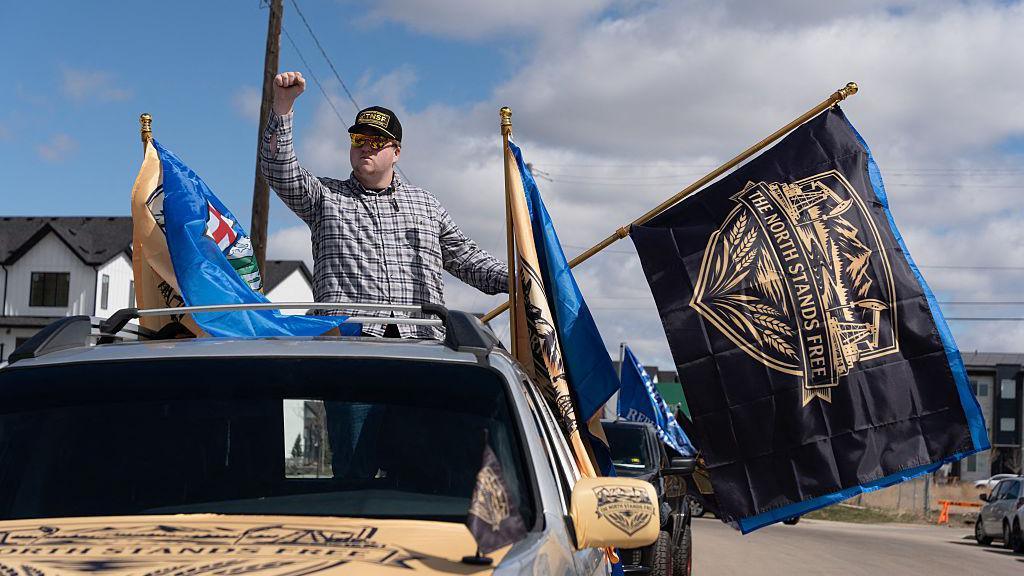
This year, however, looming over the festivities and carnival music of the stampede grounds is the upcoming referendum on Alberta’s place in Canada. In October, Albertans will vote on whether they want the province to remain in the country, or hold a binding referendum later on separation.
It is, in some ways, the starting gun of what is shaping up to be a hard fought battle over the future of Alberta.
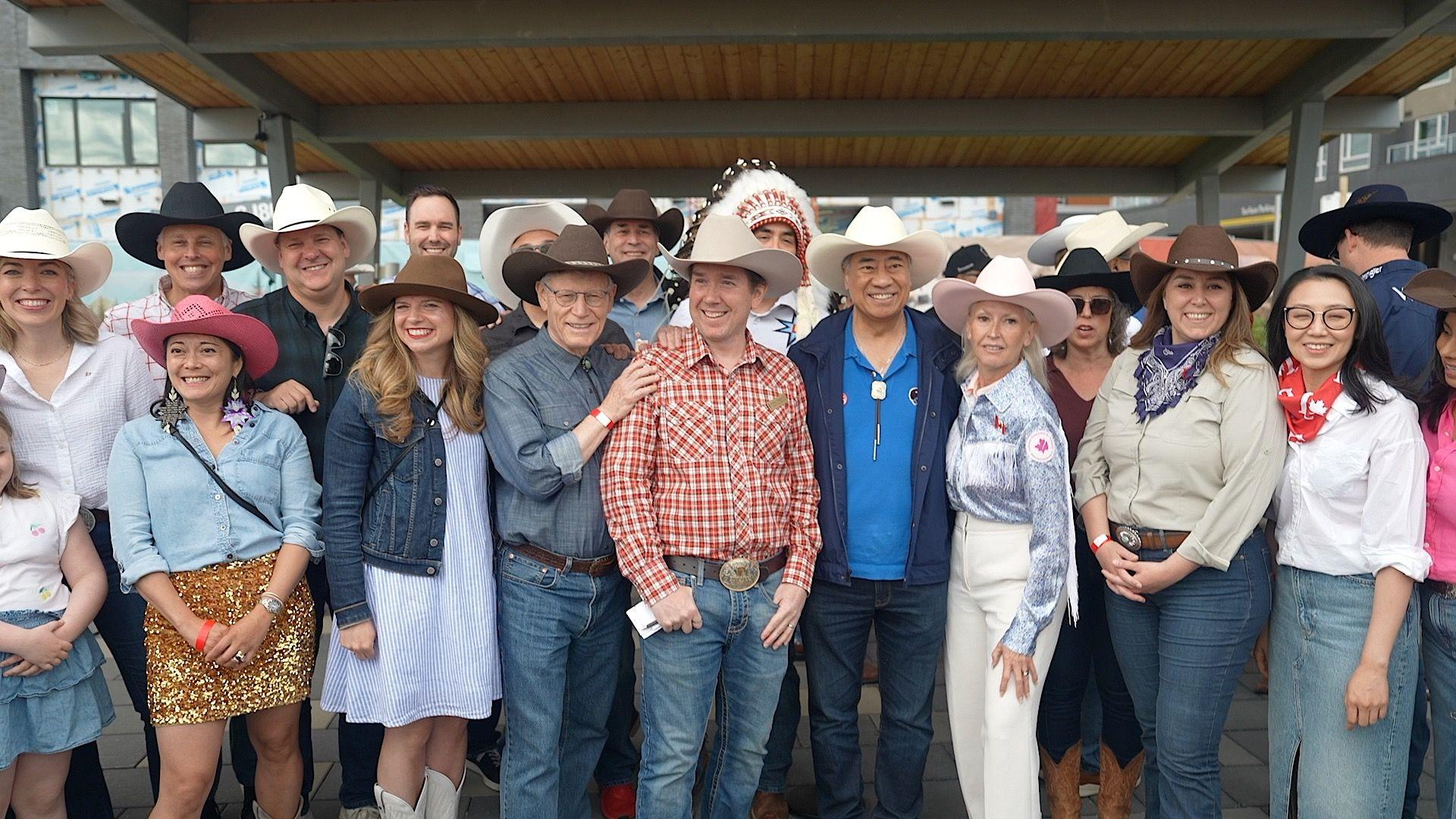
“The referendum is the cloud over everything,” said Corey Hogan, a Liberal MP from Calgary who invited dozens of his colleagues from across the country to this year’s stampede to promote unity.
“It underpins every other conversation we might want to have.”
-
‘We have more in common with America than the rest of Canada’
-
Published26 April 2025
-
Those who are rallying for a united Canada are using the Calgary Stampede as the stage to make their case.
At his own stampede speech, Hogan called separatism “a poison” dividing families across the province.
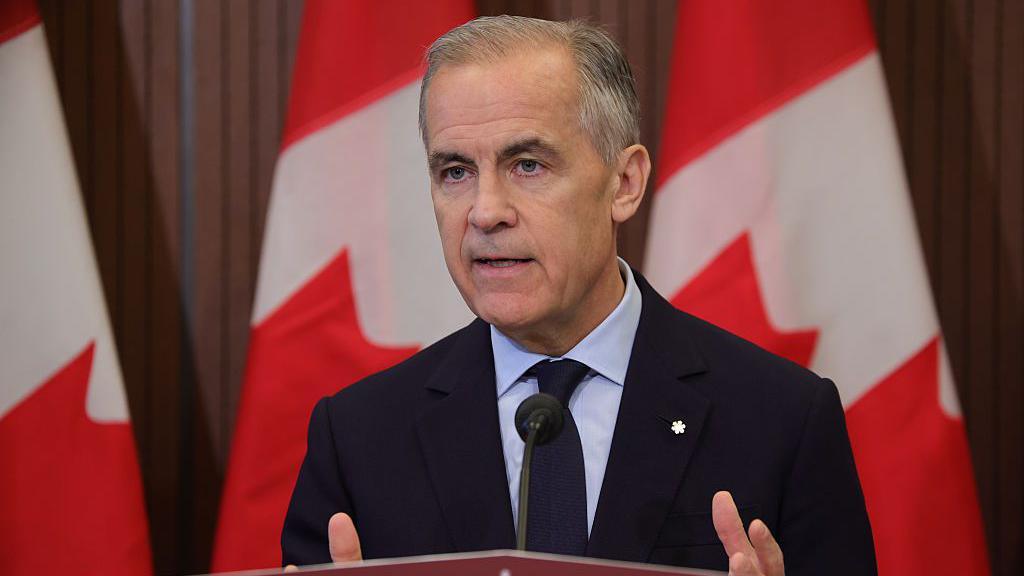
Prime Minister Mark Carney is slated to make his own appearance in Calgary this weekend, where he is expected to deliver a unity message.
“Everybody wants to make sure they’re here at this moment,” Hogan told the BBC.
Polls suggest the pro-unity side will comfortably win in October.
But those who want Alberta to remain told the BBC they were still anxious about the outcome, fearing a Brexit-style upset, when the UK voted to leave the European Union, in which the “Remain” side grows complacent, only to lose in the end.
“The shadow of Brexit is hanging over this whole thing,” said Andrew Kemle, a graduate student at the University of Calgary, at Hogan’s stampede breakfast.
“An entire country sleepwalked into an economic disaster.”
They’ll have the challenge of winning over people like Justin Perkins, who spoke to the BBC about his thoughts on the referendum while fuelling his car in rural Alberta.
“I would say I’m 100% Canadian, but every year it is a little less,” Perkins said. “When you’re not respected, it’s hard to respect the people that don’t respect you… I’m the hated redneck, right? That’s me. Not that I did anything wrong, I’m just born here.”
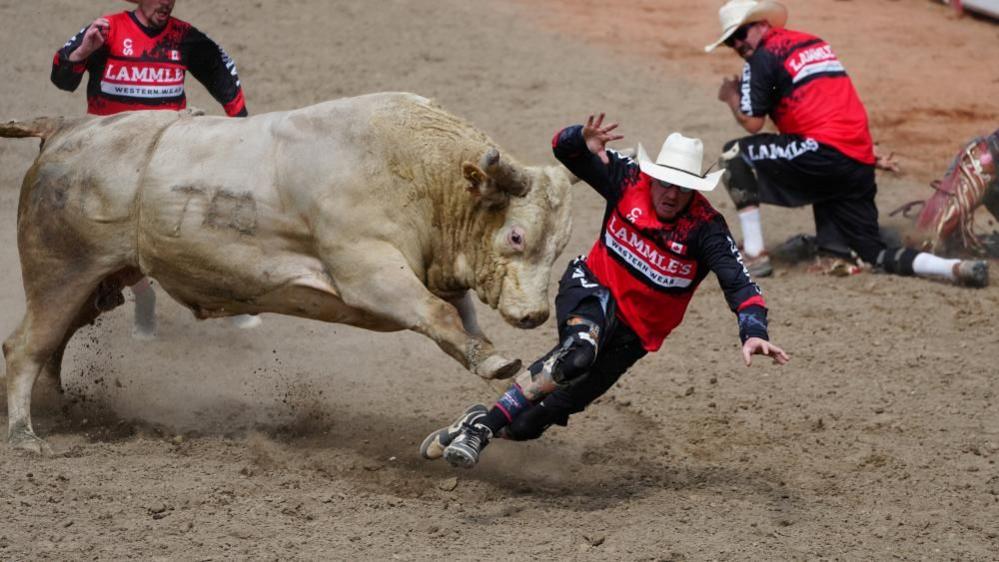 Image source, Reuters
The pitch by Thomas Lukaszuk, a former Progressive Conservative Alberta lawmaker, is that separation “would be, from a political, economic, and social perspective, a terrible process to have to go through.”
Lukaszuk’s group, Forever Canadian, recently formally opened its campaign headquarters in Calgary. He told the BBC that his aim is not to tell Albertans how to vote, but to remind them of what it means to be Canadian, and – in his view – the dire consequences of separation.
He has spent the past two months driving a maple-leaf laden, refurbished 1997 camper van dubbed the “Unity Bus” across the province to make the case for Canada, handing out pins and lawn signs and speaking to would-be voters.
The October vote has been dismissed by people on either side of the debate as a “referendum on a referendum”, since the question doesn’t ask directly if the province should separate, but whether Albertans want to explore the possibility.
Still, many on the pro-Canada side are treating it like a binding vote.
“I think we’re all very worried that Alberta politics could be consumed by this forever,” Hogan said.
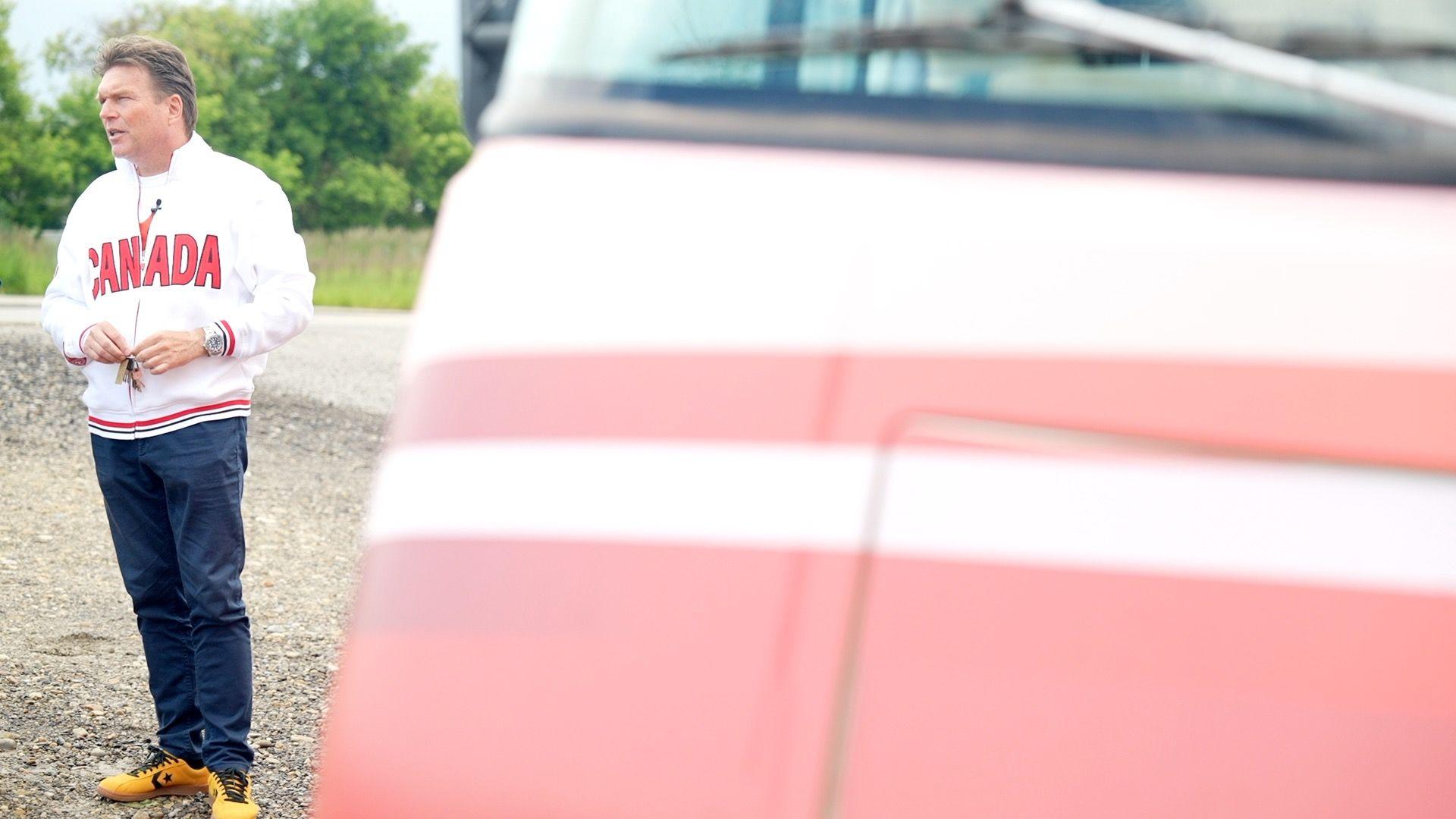 Image source, BBC News/Eloise Alanna
The main motivator behind the separatist push is the belief that Alberta is misunderstood and overlooked by decision makers in Ottawa – the “ugly cousin”, one independence supporter told the BBC at the Stampede – arguing that the province has no choice left but to go it alone.
The reason a binding referendum isn’t taking place is due to a court challenge by First Nations groups, who successfully argued they weren’t properly consulted and their treaty rights placed at risk by the prospect of Alberta independence – a decision now being appealed.
“Our future is more secure if we stay in Canada,” said Chief Samuel Crowfoot of Siksika First Nation, located just east of Calgary.
Crowfoot spoke to the BBC a few feet from where Treaty 7 was signed in 1877 between the British Crown and five First Nations in the region. Three such treaties encompass most of Alberta, of 11 numbered treaties in Canada. They form the basis of the relationship between the Crown, Canada more broadly, and hundreds of First Nations.
“Those treaties will be honoured more so if we stay within Canada,” Chief Crowfoot said.
“There is no guarantee, there’s no talk from the separatists, no outreach from any of the movements to speak with any First Nations about what this new Alberta would look like if we were to separate.”
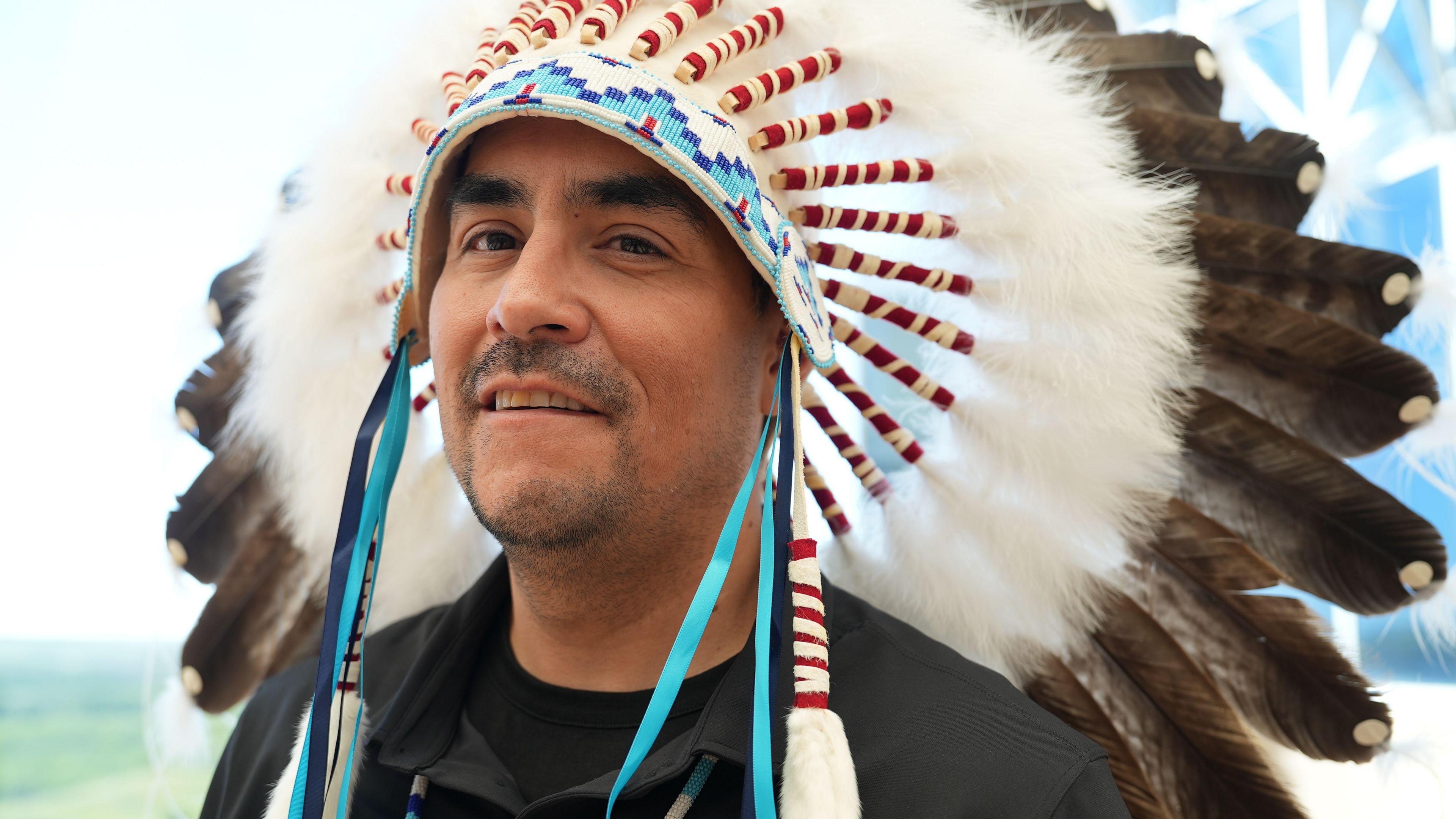 Image source, BBC News/Eloise Alanna
Chief Troy Knowlton of Piikani First Nation put it more bluntly, telling the BBC he would rather be “dealing with the devil that we know today”.
So far, it’s First Nations that have done the most to keep Canada together, Chief Crowfoot argues. A binding referendum “would still be moving full steam”, he said, if it wasn’t for the legal battle launched by indigenous Albertans.
Alberta Premier Danielle Smith, who has to navigate a political base with separatist leanings while being personally and politically pro-unity, argued the “referendum on a referendum” is a chance to hear directly from Albertans.
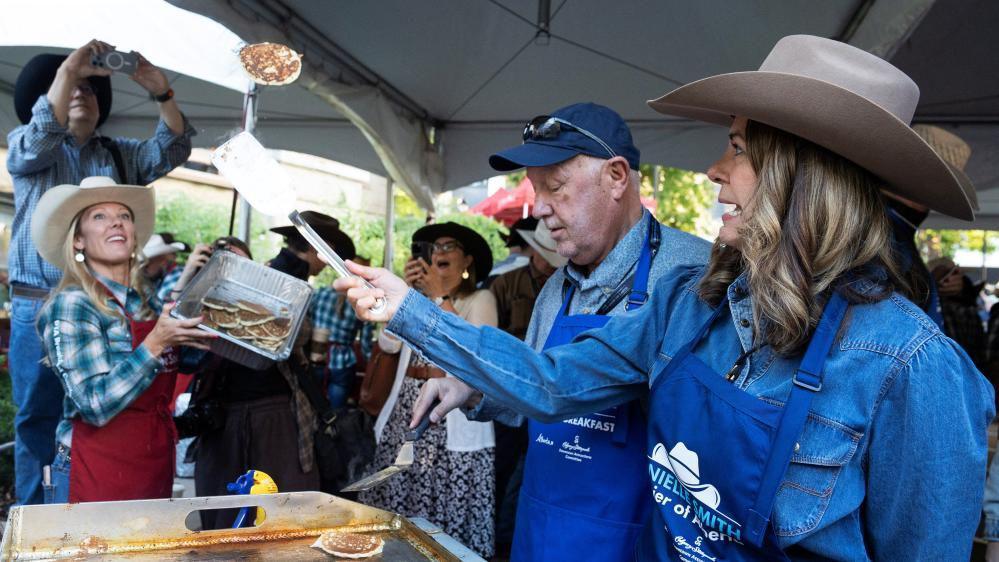 Image source, Reuters
While the idea of an independent Alberta has existed for decades, it gained steam last year, after pro-separatist groups held town halls across the province and later collected enough signatures for a petition to force a referendum under provincial law.
The pandemic helped fuel that restive anger, and some pro-independence Albertans told the BBC that the Freedom Convoy protests in 2021, when hundreds of truckers, many from western Canada, travelled to Ottawa to protest vaccine mandates, was a turning point.
“I was raised believing that Canada was a free country,” said Chris Scott, an Alberta independence organiser who took part in the Freedom Convoy.
After two weeks of the protests, which gridlocked downtown Ottawa, then Prime Minister Justin Trudeau invoked the never-used Emergencies Act, granting authorities expanded powers to clear demonstrations.
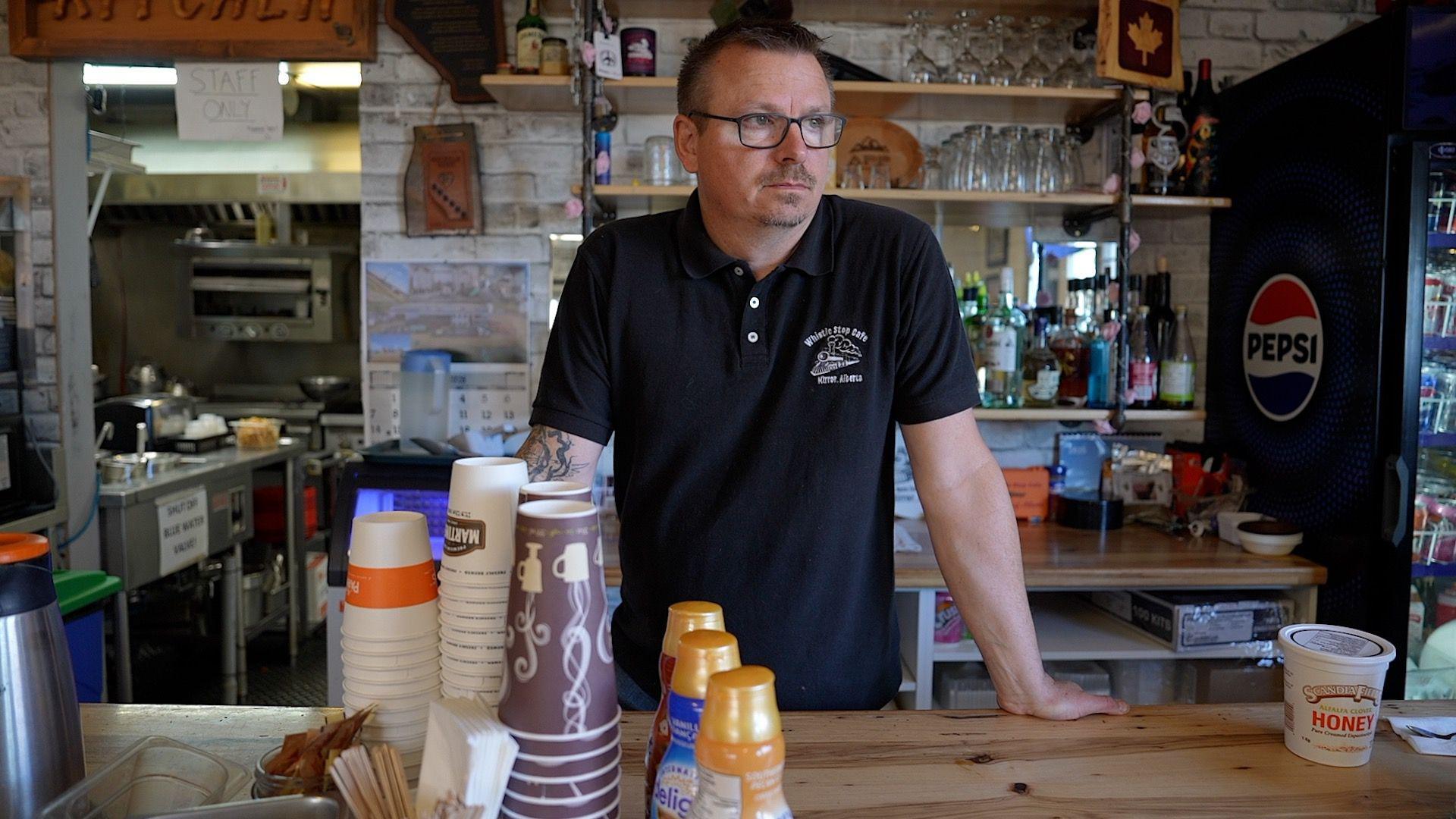 Image source, BBC News/Eloise Alanna
Scott, who spoke to the BBC at his cafe and truck stop in rural Alberta decorated with the province’s blue flag and drawings depicting scenes from the Freedom Convoy protests, said Trudeau’s handling of the protest fundamentally shifted his view.
Many Albertans on both sides agree that the province is often overlooked by Ottawa, and that the oil-rich, landlocked province has struggled to get support for building more pipelines and getting its resources to market.
Carney’s main appeal to the province so far has been to push for the approval of an oil pipeline to the west coast – a long time demand from Alberta.
It’s been hailed as a good first step in healing the relationship between Alberta and Ottawa.
But for Scott, that overture is not enough, and he has said Alberta has no option left but to set its own rules.
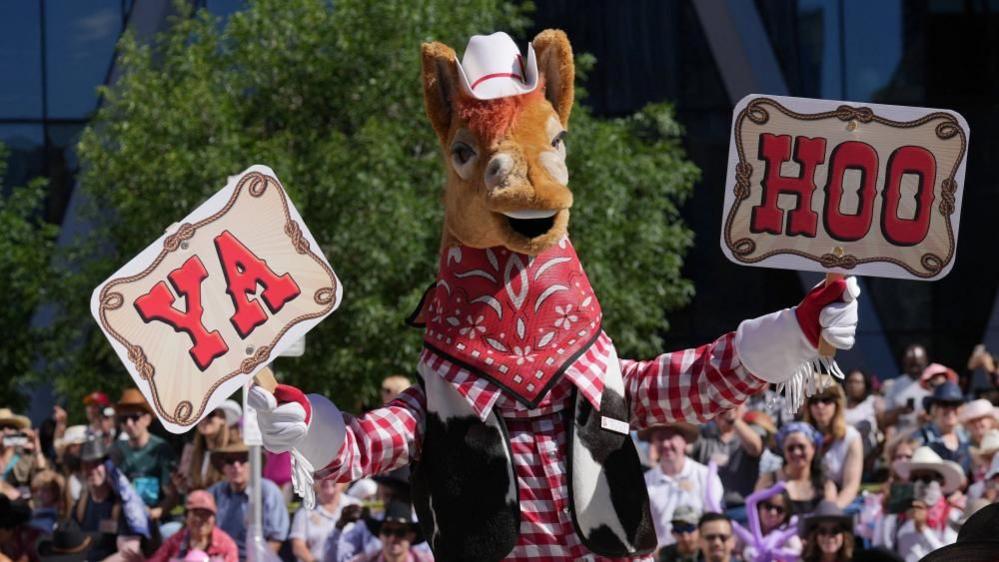 Image source, Reuters
The debate has been described as “divisive” and “emotional” by Albertans who spoke to the BBC.
“There are neighbours not trusting neighbours, and people watching which flag is flying on which house – is it an Alberta or Canadian flag? And if it’s Alberta, (they are) suspicious that they’re separatists,” Lukaszuk said, adding: “This has to end.”
The separatist push has been dismissed by many in the unity camp as coming from a “fringe minority” – polls indicate about 20% of Albertans back independence.
But in Mirror, a town of some 400 people a two-hour drive from Calgary, Scott said he could “count on both hands how many people that I’ve encountered that are dead set against independence” – a sign of the divide along urban-rural lines on the issue.
As the 10-day Stampede comes to a close this weekend, and the fairground rides go silent and cowboys head back to the ranch, both sides say this is only the beginning of their fight.
Scott said he bought his own camper van to rival Lukaszuk’s Unity Bus.
An independent Alberta is “inevitable”, he said regardless of the outcome in October.
For Lukaszuk, “loss is not an option”.
“We will do everything we possibly can to win this referendum.”
-
-
Published23 May
-
Disclaimer : This story is auto aggregated by a computer programme and has not been created or edited by DOWNTHENEWS. Publisher: BBC