
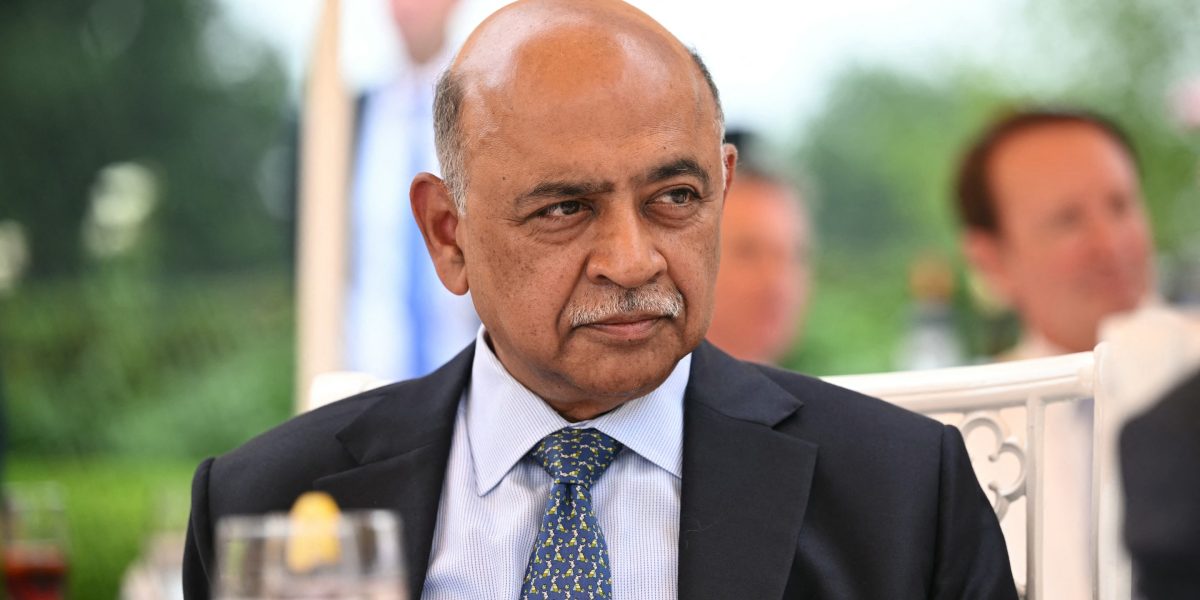
IBM shares tumbled Tuesday as CEO Arvind Krishna acknowledged in an unusual letter to investors that the company had failed to adapt quickly enough, a blunt admission that followed a surprise earnings miss and sent the stock toward its worst drop in decades.
Fortune talked to several analysts about the resulting 25% stock crash, the worst single-day decline in a company history dating back 115 years, but perhaps none was as damning as Krishna’s own words.
“These conditions [in markets] require our teams to execute perfectly, and this quarter we faltered,” he wrote. “We did not adapt and move quickly enough, and numerous large deals failed to close on the timelines we expected.”
Krishna pointed to weakness in its software and infrastructure businesses driven by a shift in client activity. The CEO attributed the shortfall in part to a late-quarter change in client behavior, with several large transactions slipping into future quarters.
Holger Mueller, VP and principal analyst at Constellation Research, said enterprises are diverting capital expenditure to “other platforms” with mainframe upgrades and purchases, IBM’s typical bread and butter, getting delayed. “That is rare, as it is critical infrastructure,” Mueller added, but it definitely “shows the AI pull” in this market.
The delay has broader implications for IBM’s business, where hardware sales often drive software revenue.
“The impact on IBM is double,” Mueller said. “On one side, it hits hardware and infrastructure, but it also affects software, as mainframe sales typically trigger direct software revenue.”
That dynamic reflects a wider reprioritization across enterprise IT spending.
Shay Boloor, chief market strategist at Futurum, said the delays reflect both shifting customer priorities and IBM’s own execution challenges, as companies redirected spending toward servers, storage, and memory ahead of expected price increases.
“Companies are prioritizing scarce hardware and delaying projects they believe can wait,” Boloor said. “That pressure is hitting consulting, transformation projects, and legacy infrastructure the hardest.”
IBM is exposed on both sides of that shift, he added, with hybrid cloud positioned to benefit from AI adoption while mainframes and project-based services face more near-term pressure.
It’s true that IT budgets are growing, said Patrick Moorhead, CEO and chief analyst at Moor Insights & Strategy, but he also sees enterprises are being squeezed by rising AI-related costs. “IT budgets are growing but price increases are growing more quickly than budgets,” Moorhead told Fortune. “Therefore other expenses need to be reduced to pay for it.”
Since taking over IBM as CEO in 2020, Krishna has worked to reposition IBM around “AI and hybrid cloud,” aiming to modernize the company and compete in a rapidly evolving market.
“The good news for IBM is that their technology is strategic and can’t be held off for long periods of time and will bounce back,” Moorhead said.
IBM declined to comment beyond its statement and is scheduled to report full results next Wednesday.
Disclaimer : This story is auto aggregated by a computer programme and has not been created or edited by DOWNTHENEWS. Publisher: fortune.com





