
TEHRAN– Iran has sharply criticized the United States, Israel, and Argentina after the three countries voted against a series of United Nations General Assembly resolutions addressing terrorism, human rights, and transnational crime, arguing that the pattern of voting reflects their increasing isolation on key multilateral issues.
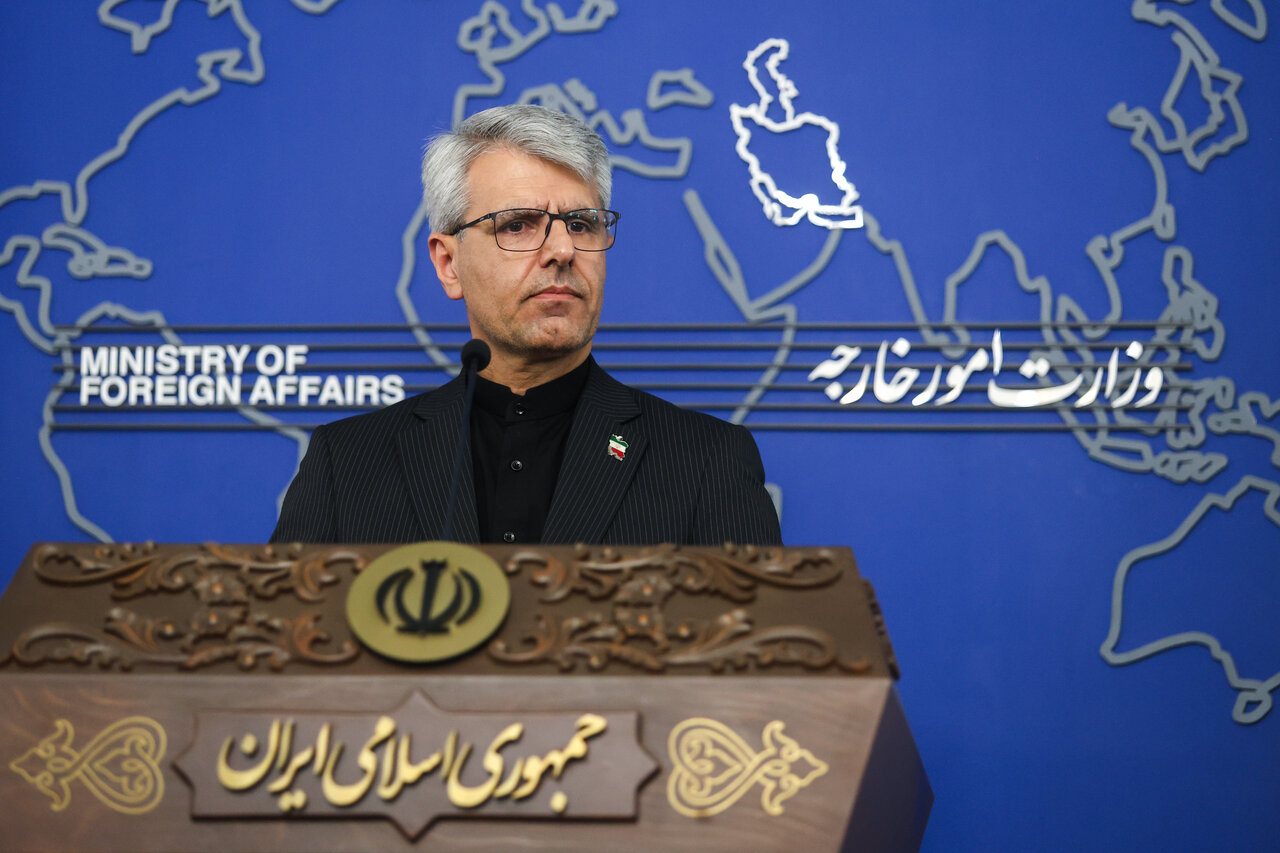
Foreign Ministry spokesman Esmaeil Baqaei said the voting record of the three countries on several major UN resolutions over the past year was ‘revealing,’ pointing to their repeated opposition to measures that received overwhelming backing from the international community.
In a post on X on Thursday, Baqaei highlighted the General Assembly’s Ninth Review of the United Nations Global Counter-Terrorism Strategy, adopted on July 1, 2026, with 140 votes in favor, 3 against, and 1 abstention. According to the official UN voting record, the United States, Israel and Argentina were the only countries to vote against the resolution. The strategy is the UN’s principal framework for strengthening international cooperation against terrorism while emphasizing respect for international law, human rights, and the rule of law.
Baqaei also pointed to three other General Assembly resolutions in which the same three countries cast the only opposing votes.
The first, adopted on March 25, 2026, declared the ‘transatlantic slave trade a crime against humanity,’ a measure backed by an overwhelming majority of UN member states.
The second, approved on December 18, 2025, sought to strengthen international cooperation against trafficking in persons, one of the world’s most pervasive forms of organized crime.
The third, also adopted on December 18, 2025, addressed the relationship between terrorism and human rights, reaffirming that counter-terrorism measures must be implemented in accordance with international human rights obligations.
“Just a hint at what is what and who is who,” Baqaei wrote, before asking: “Aren’t they revealing?”
The latest vote on the Global Counter-Terrorism Strategy followed weeks of difficult negotiations among UN member states over updates to the two-decade-old framework. Although a broad consensus emerged around preserving international cooperation against terrorism, Israel argued that the final text failed to reflect what it described as the changing global security environment following the October 2023 attacks, while maintaining that the strategy did not sufficiently address evolving terrorist threats.
The voting pattern has drawn attention from diplomats and international observers because the United States, Israel and Argentina have increasingly found themselves aligned on a range of General Assembly resolutions in recent months. International media have noted that the three governments have repeatedly opposed resolutions that attracted overwhelming global support, including measures on slavery, torture, trafficking, humanitarian issues and certain human rights initiatives, while most European and other Western countries have generally chosen to abstain rather than vote against such texts.
The alignment reflects the close diplomatic relationship among the three governments under the administrations of US President Donald Trump, Israeli Prime Minister Benjamin Netanyahu, and Argentine President Javier Milei. International political analysts have described Argentina’s foreign policy under Milei as increasingly synchronized with Washington and Tel Aviv, particularly in multilateral organizations such as the United Nations. While supporters argue that the three countries are resisting what they view as politically imbalanced or outdated UN language, critics contend that their repeated opposition to broadly supported resolutions has contributed to growing diplomatic isolation within the General Assembly.
Iran has frequently cited these voting records to argue that Washington, Israel, and Argentina are increasingly at odds with the wider international community on issues related to multilateralism, international law and the rules-based international order. At the same time, the three governments claim that their positions reflect principled objections to the wording or substance of individual resolutions rather than opposition to the underlying objectives.
Disclaimer : This story is auto aggregated by a computer programme and has not been created or edited by DOWNTHENEWS. Publisher: tehrantimes.com





