
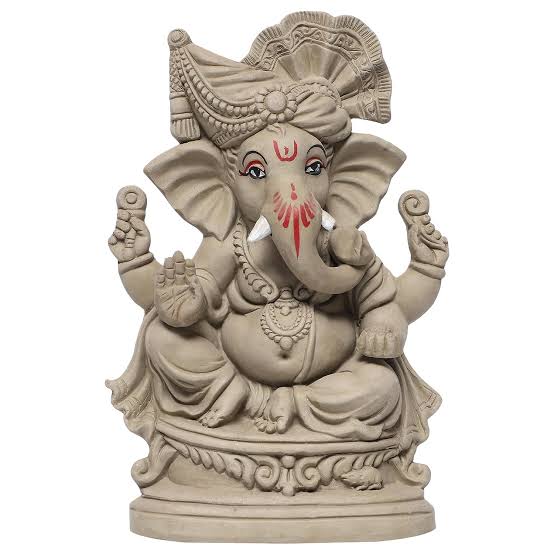
VIJAYAWADA: Two Ganesha idols believed to date back to the 4th century CE (common era) have been unearthed at Kaja in Mangalagiri mandal of Guntur district, according to archaeologist and Pleach India Foundation CEO Dr E. Sivanagi Reddy.
The idols were discovered while farmer Simhadri Venkatarama Reddy was ploughing his field. Dr Sivanagi Reddy visited the site on Thursday and examined the artefacts. He identified the idols as belonging to the Anandagotrin — named after the Ananda Gotra dynasty that ruled the region for about 100 years from 335 CE
period.
Carved from red sandstone, the miniature idols measure 5 x 3 cm and 4 x 2 cm. Both depict Lord Ganesha with two hands, holding a ‘modaka’ in the left hand and a broken tusk in the right. The idols have pot bellies, natural elephant heads without headgear and are depicted in ‘lalitasana’.
Dr Sivanagi Reddy said the idols closely resemble a limestone Ganesha image of the same period discovered at Chejarla, the erstwhile capital of the Anandagotrins. He also referred to a limestone ‘Sivalinga’ engraved with an image of ‘Ardhanarisvara’, now preserved at the Anandeswara Temple in Pedakanduru, as another relic from the same period.
According to him, the discovery suggested that the area around Kaja was once under the rule of the Anandagotrins, who succeeded the Ikshvakus and later shifted their capital from Chejarla to Kanthene, about four kilometres from Kaja.
The field also yielded potsherds of red, black and tan ware, which Dr Sivanagi Reddy said date to the Satavahana, Ikshvaku and Anandagotrin periods, indicating the archaeological significance of the site.
He urged the landowner to preserve the idols, citing their historical and cultural importance.
Disclaimer : This story is auto aggregated by a computer programme and has not been created or edited by DOWNTHENEWS. Publisher: deccanchronicle.com



