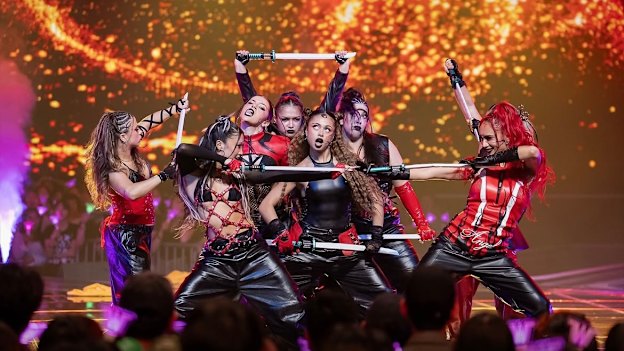
Kaea Pearce has danced alongside Jennifer Lopez at the 2020 Super Bowl and stars in Justin Bieber’s Sorry music video, which has been watched more than 3.9 billion times on YouTube.
But ask the New Zealand-born, Gold Coast-based performer about the greatest experience of her career so far, and she’ll tell you it was competing on a South Korean dance-battle reality show.
“I think it’s the new LA,” Pearce says of South Korea.
Last year, she was approached to lead the squad representing Australia on the show World of Street Woman Fighter, a dance competition against all-women teams from the US, South Korea, Japan and New Zealand.

Pearce had just one week to form the AG Squad – a crew of dancers that would be catapulted to stardom among South Korean fans.
Her team came second, beaten only by Japan’s Osaka Ojo Gang.
For Pearce, it was the best job she’d ever done.
“We were able to be the stars and show the world we aren’t just back-up dancers – we’re artists,” she said.
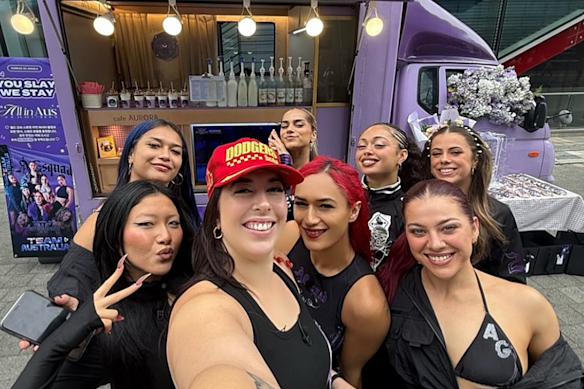
Brisbane dancer and choreographer Danica McKenzie, also in the AG Squad, was left just as awestruck after her first experience in K-pop.
She said South Korean viewers treated the AG Squad like celebrities when they toured after the show aired.
“It’s otherworldly,” she said.
“Usually [dancers] go to a concert backing up for an artist. No one is there for you. It was insane to know that in Korea as a dancer, you are an artist. You’re an idol to them.”
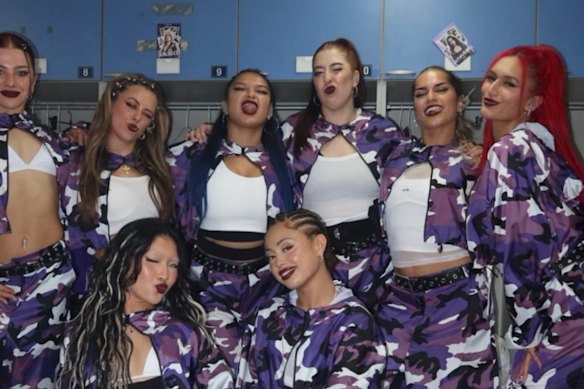
Dominique Falla, an associate professor at Griffith University and the author of The K-Pop Content Strategy, said Seoul had become one of the world’s most important centres for commercial choreography.
And she agreed that the South Korean attitude towards dancers was hugely different to that in Australia.
“[In Australia] you’re a back-up dancer, a body in a music video, and your name rarely appears anywhere,” she said.
“There’s very little pathway from skilled dancer to recognised artist.”
In South Korea, however, the pop industry places choreography at the centre of musical performance. Dancers “are presented as artists and competitors in their own right”.
“The Korean entertainment industry invests in dancers in a way the West simply doesn’t,” Falla said.
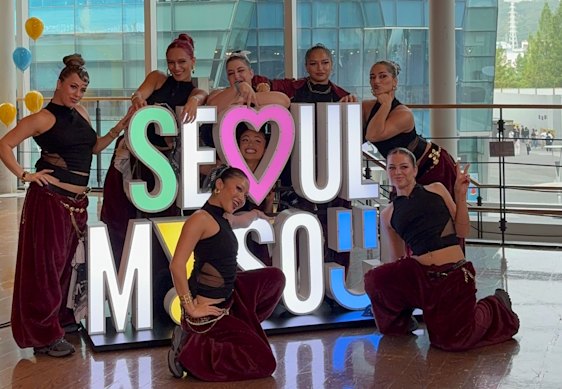
But while programs such as World of Street Woman Fighter delivered fame to their contestants, Falla warned that sometimes the work was precarious.
“Dancers and choreographers can still experience insecure freelance work, demanding schedules, limited bargaining power, and difficulties receiving appropriate credit or ownership of choreography,” Falla said.

McKenzie is a champion for Brisbane’s dance scene, teaching at Mad Dance House in the Brisbane CBD and The Home Base in Darra.
But she said she could understand why performers often flocked to Sydney and Melbourne – or further afield – to advance their careers.
“There’s minimal opportunities for performers in Brisbane, which I guess is why so many dancers are moving out of Brisbane,” McKenzie said.
“It perpetuates the cycle.”
McKenzie said local performers had a lot of talent to offer the industry.
“Maybe we’ve spent more time nailing our craft because we know we’re not being seen – we’ve spent more time behind the scenes,” she said.
She hopes to move to the US by the end of the year, and find work in Los Angeles and New York.
Like many Brisbane dancers who had left to pursue other opportunities, she said she would be back to share what she had learnt with the local community.
“I’m such a homebody. It will be a back-and-forth situation,” she said.
Start the day with a summary of the day’s most important and interesting stories, analysis and insights. Sign up for our Morning Edition newsletter.
Disclaimer : This story is auto aggregated by a computer programme and has not been created or edited by DOWNTHENEWS. Publisher: www.smh.com.au