
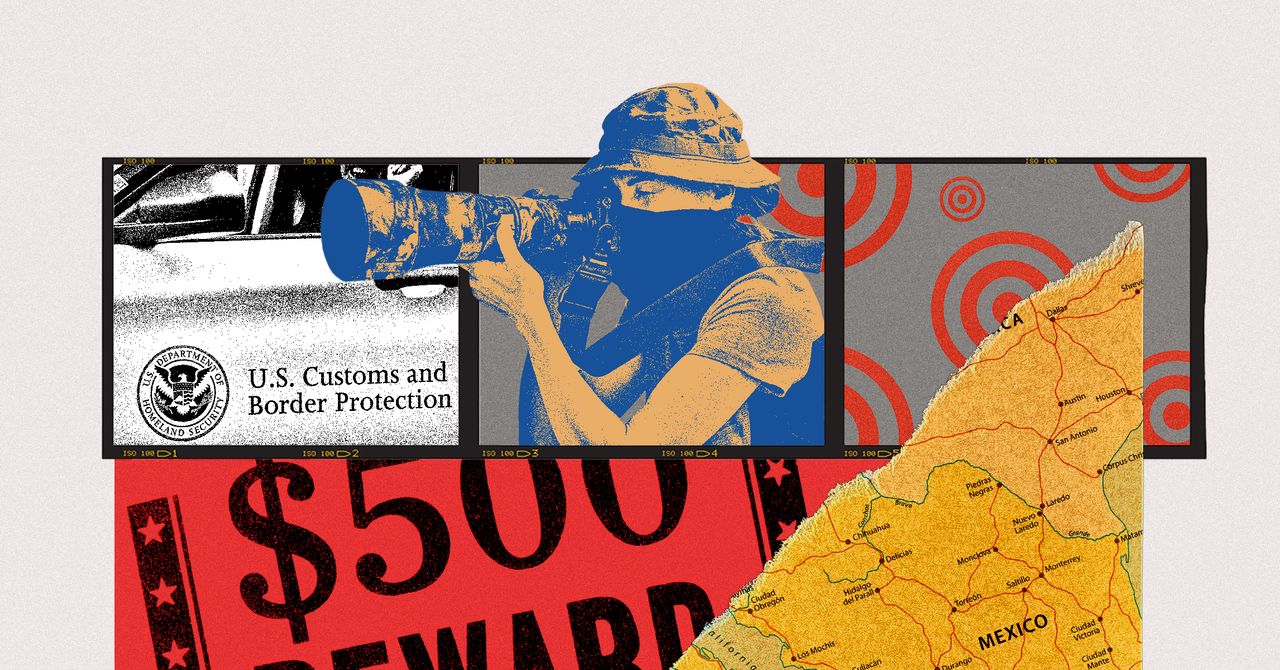
US Customs and Border Protection is seeking to hire private investigators to track down deported immigrants and others who have left the United States, and press them into paying the government money, according to records reviewed by WIRED. The work would cover Mexico, Honduras, and Guatemala, and potentially other countries.
The documents, which cap the so-called Tracing and Payment Recovery Services program at $9 million over the next two years, call for “commercial data verification and physical observation services” to confirm where each person lives. They list photographs of the home as acceptable evidence, along with records such as utility bills, employment files, court documents, or, if the person has died, a death certificate.
The US government will also accept other documentation, so long as it deems it “relevant and credible.” Contractors are also required to deliver a printed flyer, approved by the US government and printed in English and Spanish, listing outstanding fines and fees CBP claims they owe.
As of July, the Department of Homeland Security, CBP’s parent agency, says it has issued more than $84 billion in fines to immigrants it has accused of failing to depart the United States, citing an obscure provision of a 1996 immigration law that sat unused until Donald Trump’s first term. Those fines run against people who are still in the country, at $998 a day for up to five years. Some have reached up to $1.8 million.
Hasan Shafiqullah, the Legal Aid Society’s immigration supervising attorney, says he’s seen some third-party collection agencies add $500,000 in additional administrative fees on top of the US government’s fees.
Legal experts say that the fine notices evade due process and are meant to intimidate people into self-deporting. A recent report from the New York University School of Law’s Immigrant Rights Clinic found that immigrants accused of failing to depart have had their tax returns seized, their wages garnished, and their credit scores ruined after receiving fine notices.
DHS promises that it will forgive failure-to-depart fines if people self-deport using the CBP Home app. The waiver does not include a separate $5,130 fee Congress created last year for people ordered removed in absentia and later arrested by ICE, which the statute bars from waiving or reducing. Someone who left through the app on the promise of a clean slate could still carry that balance.
Alina Das, a law professor and director of NYU’s Immigrant Rights Clinic, says going after people who have left the country with outstanding fines would be a “significant escalation in tactics.”
Charles Moore, a senior attorney at Public Justice, says that the move is “part and parcel” with the Trump administration’s harsh anti-immigration efforts and that it is likely meant to deter people in the countries targeted from wanting to come to the US in the future.
The three debt collection agencies CBP already uses have tried to reach people overseas by letter and phone. As of July, according to the documents, they had not located a single person outside the US. At that time, they say, the government had removed an estimated 66,387 people carrying unpaid CBP fines and penalties.
CBP referred WIRED’s questions to DHS, which did not provide a comment before publication. Mexico’s foreign ministry, Guatemala’s ministry of foreign affairs, and Honduras’s secretariat of foreign affairs did not respond to questions about whether the United States had consulted them or whether they would cooperate with the contractors.
“It makes no sense to go after people here if they don’t have the money,” says Shafiqullah, who is suing the federal government over the fines. “Presumably they don’t have the money there, and they’re not subject to collections. What’s the point of this?”
Senators Dick Durbin and Alex Padilla wrote to acting attorney general Todd Blanche and Homeland Security secretary Markwayne Mullin in July, asking them to stop applying the fines to immigrants who are complying with the law. They asked how many penalties had gone to people with pending or lawful status, or to survivors of domestic violence and trafficking, and how many had been referred to private debt collectors. They asked for answers by July 31. Durbin’s office tells WIRED neither department responded.
“Since day one, the Trump administration has carried out a vindictive mass deportation campaign, which has included slapping arbitrary and potentially unlawful $1.8 million fines on Dreamers, survivors of domestic violence, and green card applicants,” Durbin says. “And now—after decrying ‘government waste’ and slashing essential health care programs—the Trump Administration is burning taxpayer dollars to chase down immigrants who followed their directives to leave the country.”
Contractors hired under the Tracing and Payment Recovery Services program would be paid a set fee for each person they document notifying, with tiered bonuses if they report back within seven, 14, or 28 days of CBP handing over the person’s information. No part of the payment depends on money being recovered. The government would own all data the investigators gather, with unlimited rights to reuse it and build on it.
The only payment method presented is the federal website Pay.gov, which the documents note requires a US bank account. If civil penalties are collected under the program, they would be deposited into the Immigration Enforcement Account, a fund Congress created to pay for identifying, apprehending, detaining, and removing immigrants.
Many people who have been hit with fine notices are from mixed-status families, according to the NYU report. CBP appears to anticipate this, saying payments “may be made by the individual or another party.” Family members still in the US could feel pressured to pay up, even if the person who received the notice has left the country.
The documents say contractors would use commercial data, but not where that data would come from or how the firms would obtain foreign records on deportees. Ostensibly they could draw on public records in the named countries or on commercial credit data.
The documents require contractors to disclose their skip-tracing methods, tools, and resources, but only once work is underway. CBP does not say what it expects those methods to be. Instead it asks bidders to supply their own.
CBP released the documents on Tuesday and gave companies until Friday, August 7, to bid, saying late submissions would not be considered because the need was time-sensitive. Questions from prospective bidders were due Wednesday afternoon.
CBP’s proposal extends a model the government has already built inside the United States. In December, Immigration and Customs Enforcement awarded open-ended skip-tracing contracts to 13 private companies, potentially worth a combined $1.2 billion over the next two years, according to records first reported by Scripps News.
The companies are expected to send ICE photos and documents confirming where a person lives or works, and can earn bonuses based on the number of people found. Sharon Bradford Franklin, the former chairwoman of the Privacy and Civil Liberties Oversight Board, told Scripps the arrangement makes the companies essentially ICE bounty hunters.
What CBP is after now is effectively the same structure, pointed instead at people already forced from the country.
“Going after folks who are abroad is going to undermine their purported promise to forgive these fines once someone has left the country,” says Moore. “But that doesn’t surprise me.”
Disclaimer : This story is auto aggregated by a computer programme and has not been created or edited by DOWNTHENEWS. Publisher: wired.com





