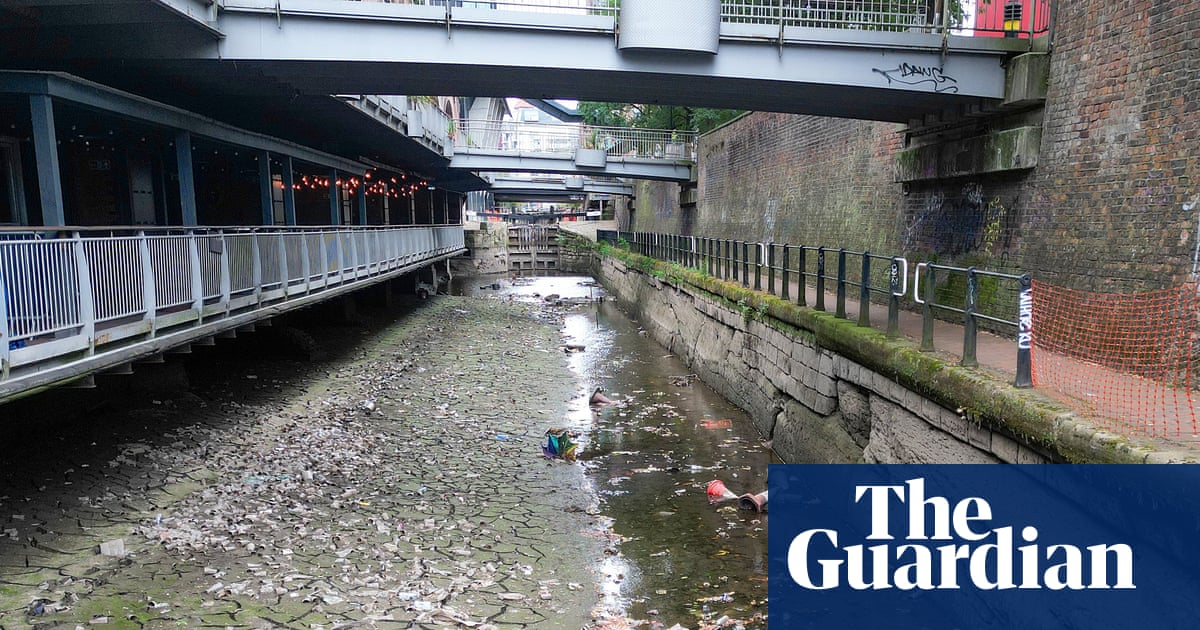
Every single English water body is polluted with toxic chemicals, new government data shows, while just 14.3% of surface waters achieved good ecological status.
Each of the country’s rivers, lakes and estuaries was assessed by the Environment Agency as part of a six-yearly evaluation of England’s water quality. The EA checked for a range of toxic chemicals, from Pfas – or “forever chemicals” – to microplastics. Waters were also checked against a range of standards covering wildlife, water quality and physical habitat.
If concentrations of the chemicals exceed the set standards, the water body fails to meet good chemical status. In the latest assessment, every surface water body in England failed on this measure.
Under water framework directive regulations, the official target date for all water bodies to reach good chemical and ecological status is December 2027, although some chemicals have deadlines in the 2030s.
The Environment Agency said this failure was driven almost entirely by the presence of mercury, Pfos – a type of Pfas with links to cancer – and PBDEs, which were formerly used as flame retardants. These chemicals are persistent, meaning they do not break down and can accumulate in the environment.
England’s water bodies are not predicted to reach good chemical status until 2063, when the EA says the persistent chemical pollutants should have degraded sufficiently for waters to again be considered unpolluted.
Ami McCarthy, Greenpeace UK’s head of politics, said the scale of the crisis was “sobering”. The government needed to take “urgent action to turn off the chemicals that are destroying our land at the source”, they said.
The UK government has been accused of failing to take action on toxic chemicals after its plan to tackle Pfas chemicals failed to match the tougher stance being taken in Europe. It has also been accused of failing to tackle mercury pollution, with Britain being one of the few countries yet to ban mercury in dental fillings. The metal is a potent neurotoxin that can harm the nervous, digestive and immune systems, as well as the lungs, kidneys, skin and eyes, even at low levels of exposure.
The Environment Agency said it was undertaking a range of activities to improve understanding of chemicals in the environment and identify potential sources affecting rivers, groundwater and drinking water catchments.
“Water companies must be made to take responsibility for their part, but pollution from agriculture is now one of the biggest drivers of environmental damage in UK rivers. It’s time for the government to work with farmers, providing proper support to rein in runaway use of fertilisers and pesticides, and boost nature-friendly practices,” McCarthy said.
Assessment against a range of standards covering wildlife, water quality and physical habitat also showed that just 14.3% of England’s surface waters achieved good ecological status, a decline from 16.3% in 2019. However, the EA said the two datasets were not directly comparable because it had updated its analytical methods.
The environment secretary, Angela Eagle, said the results “underline the need for wholesale change across the water sector”.
The chief executive of the campaign group River Action said despite successive government’s promises, England’s rivers remained among the “filthiest in Europe, poisoned by sewage from polluting, profit-driven water companies and by industrial-scale agriculture, including chicken manure runoff from intensive poultry units that rear tens of millions of birds for fast-food chains and supermarkets”.
Disclaimer : This story is auto aggregated by a computer programme and has not been created or edited by DOWNTHENEWS. Publisher: theguardian.com