Welcome to our live coverage of the latest in the ongoing Middle East crisis.
Iran said a deal with Oman to reopen the strait of Hormuz is close to being finalised, with reports suggesting Tehran would have control over ships entering the Gulf through the strategic waterway.
Both countries, which sit on opposite ends of the narrow strait, have been engaged in talks to jointly manage the key shipping route, which has been effectively closed since the start of the war in February. Iran has insisted the strait would not operate as it did before the conflict, as an open international waterway that carried about a fifth of the world’s oil and gas supply, as it seeks greater control over the flow of maritime traffic through the channel. Several media reports, citing sources familiar with the talks, suggest Oman would oversee outbound shipping through the strait.
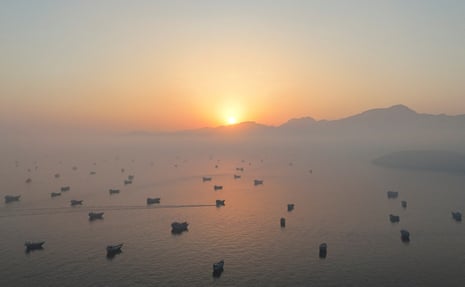
But despite reports of potentially one of the biggest concessions yet to Iran, Reuters news agency said Iranian sources rejected US President Donald Trump’s claims that a deal to reopen the strait was imminent, saying important details were still to be agreed.
“The concession has already been made regarding some form of control over Hormuz,” one of the sources said.
Iran has also said that reopening the strait would hinge on the US lifting its blockade of Iranian ports.
Trump told Fox News earlier this week that talks over the strait were “moving along nicely”, adding that the strait “is going to be open very soon”.
Here’s our full report from last night on the proposed deal between Iran and Oman:
In Yemen, meanwhile, the Iran-backed Houthis said yesterday they had attacked two Saudi oil tankers with ballistic missiles, amid the group’s maritime blockade of the kingdom.
In other developments
-
Two Israeli reserve soldiers were killed and four seriously injured in an explosion southern Lebanon, the military said this morning – the first Israeli deaths since the fragile truce between Israel and the Iran-backed militant Hezbollah in June. An Israeli military official told the Associated Press that “an explosion was detonated” when the soldiers entered a site in the village of Majdal Zoun and that the nature of the explosive was under review.
-
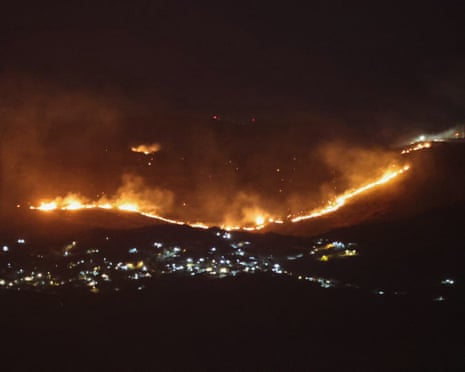
One person was killed and 12 wounded in an Israeli strike in the southern Lebanese town of Tebnine, Lebanon’s health ministry said. The Israeli military earlier told residents of the southern Lebanese village of Mansouri to evacuate – the first such order in more than a month – saying it was in response to a Hezbollah ceasefire violation.
-
The escalations came despite ongoing US-backed talks in Rome aimed at ending hostilities. Israel requested that yesterday’s talks with Lebanon end three hours early, a source told AFP, saying the Israeli delegation’s head had blamed alleged “misleading leaks” by the Lebanese side. But the talks are expected to resume today for a third and final day.
-
A Houthi military spokesperson said its latest attacks targeted the eighth and ninth Saudi oil tankers since the start of its blockade last month. Saudi authorities had no immediate comment.
-
Shipping traffic through the Hormuz and Bab-el-Mandeb straits – the key maritime chokepoints in the Gulf – reduced significantly yesterday from the previous day, shipping data showed.
-
Iran said a deal with Oman to reopen the strait of Hormuz is close to being finalised, with reports suggesting Tehran would have control over ships entering the Gulf through the strategic waterway. But despite reports of potentially one of the biggest concessions yet to Iran, Reuters said Iranian sources rejected Donald Trump’s claims that a deal to reopen the strait was imminent, saying important details were still to be agreed.
-
Iran has made a concerted diplomatic push with Gulf states, warning them explicitly that Tehran will hit their oil, power and water plants unless they convince Trump to end US strikes on Iran and seek a negotiated end to the war, Reuters reports. Sources told Reuters that the message was delivered through a flurry of high-level diplomatic contacts after Trump threatened on 28 July to strike Iran’s energy network and infrastructure. “The Iranian warning was unequivocal: if America targeted Iran’s infrastructure, they would retaliate by striking Gulf energy facilities and other regional targets,” one Gulf source said.
-
Yemeni authorities said on Thursday that they would retaliate to several Houthi rebel attacks earlier in the day, which medical sources told AFP had killed at least 38 government troops and injured 29 in the deadliest toll since the 2022 truce between both sides. The defence ministry of Yemen’s internationally recognised government said in a statement that its armed forces would respond to the missile and drone attacks “at the appropriate place and time”.
-
The Iran-backed Houthis had earlier confirmed that they were behind the attacks on military camps in Yemen that left dozens dead. Houthi military spokesman Yahya Saree said the group had deployed ballistic missiles and drones on what they described as Saudi mobilisation in the Al-Ruwyk, Al-Abr, and Al-Thaniyah areas of Yemen. The attacks, he said, were in response to “large Saudi military buildups in their final stages, aimed at escalating the aggression against the liberated provinces”. “We will continue the ‘siege for siege’ equation until the siege on our country is lifted,” Saree added.
-
Meanwhile, Donald Trump insisted that he is “extremely happy” with the work his defence secretary Pete Hegseth is doing at the Pentagon, dismissing a report that the two clashed over concerns about US munitions shortages after five months of war against Iran. It comes after the Washington Post (paywall) reported that the US president and Hegseth clashed during a cabinet meeting at Camp David last Friday over the munitions shortages, with Trump reportedly demanding answers after being under the impression the issue “had been fixed”. The shortages were part of the reason that Trump had to call off what he said would be “the biggest attack since World War II” in recent days, sources told the paper. Hegseth reportedly blamed his deputy for the shortages and for Trump not being fully informed on the matter.
-
It came after Trump hit back on Wednesday night at media reports suggesting the US was running low on weapons. The US has “massive amounts of munitions, especially of certain types,” he said in a Truth Social post, adding: “Additionally, large amounts are being manufactured and shipped to the U.S. as needed.” He continued: “Defense companies are building the largest number of plants and factories in our country’s history. The ‘leakers’ of these treasonous statements are being hunted down.”
The 7th round of US-mediated talks between Israel and Lebanon in Rome, which concluded on Thursday, were “productive” at the technical and expert levels, according to the US state department.
Spokesman Tommy Pigott said in a statement that “Lebanon and Israel are much closer to reaching an agreement on advancing and expanding the pilot zones process”, but did not give further details.
There were three days of talks in Rome, the second of which was cut short after Israel resumed heavy strikes on southern Lebanon on Wednesday, accusing Hezbollah of violating the fragile ceasefire agreement initially agreed upon on 26 June.
But as the United Nations and local authorities have noted, Israel had continued to launch periodic airstrikes, shelling, and demolitions in the areas of southern Lebanon it’s occupying, despite the truce, killing more than 350 people.
The renewed Israeli attacks came as hundreds thousands of displaced people had begun returning to their homes in southern Lebanon, only to be forced to flee again under new orders from the IDF.
Two weeks ago, the Lebanese army was allowed to deploy to one of the first “pilot zones”, after Israeli troops pulled out of the village of Zawtar al-Gharbiyeh. Since then, Israel has largely refused to withdraw its troops from the areas it occupies in Lebanon until Hezbollah disarms.
More than 4,300 people have been killed since Israel began its attacks and ground invasion of Lebanon, according to the Lebanese health ministry. Over 12,000 have been injured and more than 1.2 million displaced.
Iran has made a concerted diplomatic push with Gulf states, warning them explicitly that Tehran will hit their oil, power and water plants unless they convince Donald Trump to end US strikes on Iran and seek a negotiated end to the war, Reuters reports.
According to a senior Iranian official, the warning envisaged attacks on the energy facilities, oil fields, refineries, electricity grids, water infrastructure, transport networks and other strategic assets of Washington’s closest Arab allies.
The sources told Reuters that the message was delivered through a flurry of high-level diplomatic contacts after Trump threatened on 28 July to strike Iran’s energy network and infrastructure.
Iran’s foreign minister, Abbas Araghchi, urged Washington’s Gulf allies to use their influence with Trump to dissuade him from launching renewed strikes, the senior diplomat said, warning that any attack on Iran would prompt retaliation against US assets and critical infrastructure across the Gulf.
His message was consistent in every conversation, the diplomat said:
We’re ready to retaliate, but finding a diplomatic solution is the best way to avoid wider escalation and destruction across the region.
“The Iranian warning was unequivocal: if America targeted Iran’s infrastructure, they would retaliate by striking Gulf energy facilities and other regional targets,” one Gulf source said.
Saudi crown prince Mohammed bin Salman subsequently spoke with Trump, urging him to delay military action, return to negotiations, secure a ceasefire and pursue a diplomatic settlement, the senior diplomat and Gulf sources told Reuters.
On 2 August, the US president said he agreed to cancel the attack on Iran “subject to being able to rapidly make a deal”.
US Central Command has said it is continuing to enforce the US blockade against Iran, which has been back in place since 14 July as part of Washington’s efforts to pressure Tehran into negotiations.
In a post on X on Thursday, Centcom said US marines redirect 49 commercial vessels, disabled two and boarded two other vessels.
Yemeni authorities said on Thursday that they would retaliate to several Houthi rebel attacks earlier in the day, which medical sources told AFP had killed at least 38 government troops and injured 29 in the deadliest toll since the 2022 truce between both sides.
The defence ministry of Yemen’s internationally recognised government said in a statement that its armed forces would respond to the missile and drone attacks “at the appropriate place and time”.
As we reported earlier, the Iran-backed Houthis confirmed that they were behind the attacks on military camps in Yemen that left dozens dead.
Houthi military spokesman Yahya Saree said the group had deployed ballistic missiles and drones on what they described as Saudi mobilisation in the Al-Ruwyk, Al-Abr, and Al-Thaniyah areas of Yemen.
The attacks, he said, were in response to “large Saudi military buildups in their final stages, aimed at escalating the aggression against the liberated provinces”.
“We will continue the ‘siege for siege’ equation until the siege on our country is lifted,” Saree added.
It comes after the Houthis said on Wednesday that they had attacked two Saudi oil tankers with ballistic missiles, amid the group’s naval blockade of the kingdom.
The country’s conflict has become the latest front in the US-Iran war, with Yemen increasingly at risk of being pushed into a more intense cycle of violence and retaliation after the Houthi rebels upended a 2022 truce with the Saudi-backed government last month.
Donald Trump is insisting that he is “extremely happy” with the work his defence secretary Pete Hegseth is doing at the Pentagon, dismissing a report that the two clashed over concerns about US munitions shortages after five months of war against Iran.
Trump posted on his Truth Social platform on Thursday:
The Fake News, as usual, is spreading false and completely unfounded rumors. I am extremely happy with the job that Pete Hegseth is doing. Everything has been extraordinary, including our attack on Venezuela, where the result was accomplished in less than one day, allowing us to bring one of the worst criminals anywhere in the World, Nicolas Maduro, to Justice! Likewise, Iran, where the country has been decimated for the purpose of NOT ALLOWING IT TO EVER HAVE A NUCLEAR WEAPON, is going very well! Pete is highly respected within the Military, and has made tremendous improvements, including getting rid of DEI, and increasing recruitment to historic levels. This rumor was started by The Washington ComPost, one of the worst Media Outlets in the business, despite our telling them their story is completely FALSE. In actuality, I really believe their fake “reporting” is treasonous!
It comes after the Washington Post (paywall) reported that the US president and Hegseth clashed during a cabinet meeting at Camp David last Friday over the munitions shortages, with Trump reportedly demanding answers after being under the impression the issue “had been fixed”.
The shortages were part of the reason that Trump had to call off what he said would be “the biggest attack since World War II” in recent days, sources told the paper. Hegseth reportedly blamed his deputy, Stephen Feinberg, for the shortages and for Trump not being fully informed on the matter.
Last night, Trump had also hit back at media reports suggesting the US was running low on weapons. The US has “massive amounts of munitions, especially of certain types,” he said in a Truth Social post last night, adding: “Additionally, large amounts are being manufactured and shipped to the U.S. as needed.”
He continued: “Defense companies are building the largest number of plants and factories in our country’s history. The ‘leakers’ of these treasonous statements are being hunted down.”
-
Iran said a deal with Oman to reopen the strait of Hormuz is close to being finalised, with reports suggesting Tehran would have control over ships entering the Gulf through the strategic waterway. But despite reports of potentially one of the biggest concessions yet to Iran, Reuters news agency said Iranian sources rejected US President Donald Trump’s claims that a deal to reopen the strait was imminent, saying important details were still to be agreed.
-
The Iran-backed Houthis confirmed that they were behind the attacks on military camps in Yemen that killed dozens on Thursday. Houthi military spokesman Yahya Saree said the attacks were in response to “large Saudi military buildups in their final stages, aimed at escalating the aggression against the liberated provinces”. The Houthis said yesterday that they had attacked two Saudi oil tankers with ballistic missiles, amid the group’s maritime blockade of the kingdom.
-
Donald Trump has hit back at media reports suggesting the US was running low on weapons after five months of war with Iran. He said the US has “massive amounts of “munitions,” especially of certain types”, without giving further detail.The Washington Post reported that the US president and defence secretary, Pete Hegseth, clashed during a cabinet meeting at Camp David last Friday over the munitions shortages. It meant Trump had to pull back from launching massive strikes on Iran in recent days, sources told the newspaper.
-
Israeli prosecutors have charged a settler over the killing of Palestinian community leader Awdah Hathaleen in the occupied West Bank, according to an indictment filed with a district court. Prosecutors allege that Yinon Levi, who lives at an outpost near Hebron, was responsible for Hathaleen’s death in July last year and charged him with reckless manslaughter. This comes as senior Democrats accuse the Trump administration of giving a green light to violent Israeli settlers in the occupied West Bank.
-
Two Israeli reserve soldiers were killed and four seriously injured in an explosion southern Lebanon, the military said this morning – the first Israeli deaths since the fragile truce between Israel and the Iran-backed militant Hezbollah in June. An Israeli military official told the Associated Press that “an explosion was detonated” when the soldiers entered a site in the village of Majdal Zoun and that the nature of the explosive was under review.
-
Foreign ministers from eight Arab and Muslim nations have condemned ongoing Israeli strikes in Gaza, saying attacks on healthcare facilities, civilian infrastructure and civilians undermine efforts to advance a ceasefire. In a joint letter signed by the UAE, Qatar, Jordan, Indonesia, Pakistan, Turkey, Saudi Arabia and Egypt, the ministers said Israel’s conduct in Gaza “constitutes a clear breach of Israel’s obligations under international law and the comprehensive plan to end the Gaza conflict”.
-
An Israeli strike that killed Lebanese journalist Amal Khalil and injured her colleague Zeinab Faraj in April was a war crime, three rights organisations said on Thursday. Investigations from Human Rights Watch (HRW), Amnesty International and Legal Agenda showed that Israel deliberately and directly attacked Khalil and Faraj, with apparent knowledge that they were civilians.
In Rome, the seventh round of US-mediated negotiations between Lebanon and Israel have concluded, according to Lebanon’s state-run National News Agency.
Houthi military spokesman Yahya Saree has confirmed that the Houthis were behind Thursday’s attacks on Yemeni military camps that have killed dozens.
Saree posted on X that the Houthis deployed ballistic missiles and drones on what they described as Saudi mobilisation in the Al-Ruwyk, Al-Abr, and Al-Thaniyah areas of Yemen. The attacks were in response to “large Saudi military buildups in their final stages, aimed at escalating the aggression against the liberated provinces”.
“We will continue the ‘siege for siege’ equation until the siege on our country is lifted,” Saree said.
The US Embassy in Yemen has issued a statement regarding the Houthi attacks on Yemeni military camps that are believed to have killed at least 38 people:
“The Iran-backed Houthis’ cowardly attacks represent yet another example of their terrorism against the Yemeni people,” the embassy posted on X. “We wish the wounded a speedy recovery.”
Two former Iranian footballers have been granted Australian citizenship after being called traitors at home for refusing to sing the national anthem before a game, AFP reports.
Fatemeh Pasandideh and Atefeh Ramezanisadeh were among a group of seven from Iran’s delegation who asked for Australia’s protection after the high-profile protest during the women’s Asian Cup in March. Five of those later changed their mind and returned home, but Pasandideh and Ramezanisadeh were granted Australian citizenship at a ceremony on Wednesday.
“Yesterday was a truly special and unforgettable day for me. I feel proud and deeply grateful to become an Australian citizen,” Ramezanisadeh said.
“After everything we’ve been through and all the challenges we faced, this moment means more than words can express,” Pasandideh added.
AFP has more details on the Houthi attacks in Yemen, bringing the death count up to at least 38 killed.
An unnamed military official told AFP that the Houth attacks – the deadliest attacks between the two sides in years – targeted military camps in central Yemen and near the Saudi border.
Meanwhile, in Yemen, at least 30 government troops have been killed in Houthi attacks on military camps, Yemeni officials told Reuters.
At least 50 troops were also injured in the attacks today in the provinces of Marib and Hadhramaut, the officials added.
It marks a major escalation since a de facto truce in April 2022 halted fighting between the Iranian-backed Houthis and a Saudi-led coalition.
The Houthis said it would release a statement shortly on a “major” military operation, without elaborating further.
Foreign ministers from eight Arab and Muslim nations have condemned ongoing Israeli strikes in Gaza, saying attacks on healthcare facilities, civilian infrastructure and civilians undermine efforts to advance a ceasefire.
In a joint letter signed by the UAE, Qatar, Jordan, Indonesia, Pakistan, Turkey, Saudi Arabia and Egypt, the ministers said Israel’s conduct in Gaza “constitutes a clear breach of Israel’s obligations under international law and the comprehensive plan to end the Gaza conflict”.
It added:
The ministers further affirm that the ongoing Israeli violations in the Gaza Strip cannot be viewed in isolation from the attacks carried out by settlers in the occupied West Bank, the unlawful expansion of settlements, and the unilateral measures aimed at altering the status quo in occupied Jerusalem. Taken together, these practices constitute a systematic policy aimed at imposing a fait accompli by force, undermining the foundations of the two-state solution, and marginalising the legitimate rights of the Palestinian people, in flagrant violation of international law and the relevant UN resolutions.
Israel has launched near daily strikes in Gaza despite agreeing to a ceasefire in October. The Gaza health ministry said at least 1,254 Palestinians have been killed and 4,121 injured in Israeli attacks since then.
Donald Trump’s Board of Peace, the US-led body overseeing the Gaza ceasefire, published a 15-point “roadmap” last Friday outlining Hamas’s disarmament, an Israeli withdrawal and the transfer of power in Gaza to a Palestinian interim technocratic administration backed by specially trained police and an international stabilisation force (ISF).
Israeli prime minister Benjamin Netanyahu said yesterday that Israel was reviewing the plan but added: “We did not agree to it, it is not our draft. We sent our comments.”
We have more from the Israel Defense Forces (IDF) on the two Israeli reservist soldiers who were killed in an explosion in southern Lebanon on Wednesday.
The IDF said an explosive device detonated as they entered a building in the village of Majdal Zoun, where the soldiers were taking part in a clearance operation to dismantle Hezbollah infrastructure. They were named as Harel Birenstock, 34, and Tamir Vaknin, 33.
Four other soldiers were seriously wounded in the incident.
The IDF said it is still trying to determine when the device had been planted and how it was detonated.
The blast was described by the IDF as a “blatant violation” of the ceasefire. The Israeli military subsequently announced “targeted strikes” in southern Lebanon and ordered people of another southern village to flee their homes, in the first such warning issued in more than a month.
Disclaimer : This story is auto aggregated by a computer programme and has not been created or edited by DOWNTHENEWS. Publisher: theguardian.com