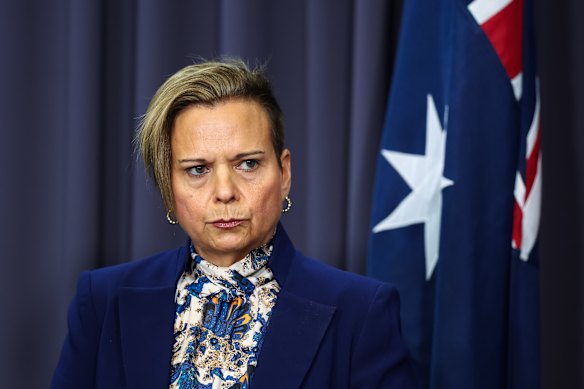

The federal government is sounding the alarm on smart glasses, as Attorney-General Michelle Rowland demands the privacy watchdog urgently intervene to protect women and children from covert filming.
Smart glasses look much like ordinary sunglasses, but carry a camera and microphone that record without the wearer touching a phone. Rowland said they “may be used more discreetly” than other technology, making it harder to know when you are being recorded.
New Australian research suggests the harm is not hypothetical.
Researchers at the University of Sydney have spent three years studying what they call “ambient capture”, where people are filmed during everyday encounters without ever realising it. They analysed 350 Instagram videos posted between 2023 and 2026, most by so-called pick-up artists, men who film themselves approaching women as proof of their success.
In videos shot from the wearer’s own perspective, where the woman appeared not to know she was being recorded, about 60 per cent of interactions were classed as potential harassment. Many women showed visible discomfort or tried to walk away. The filming continued anyway.
In about 43 per cent of the videos, the women were harmed a second time once the footage went up, named or swamped by abusive comments.
The filming was happening in gyms, workplaces, shops and on university campuses, where people expect at least some privacy.
Lead researcher Milica Stilinovic said women had little sense of how far the footage travelled once it was posted. “You’ve basically handed your GPS tracker to the world,” she said.
Joanne Gray, who leads the project, said the responsibility sat with manufacturers. “Tech companies should not be permitted to sell to the public any products that have the potential to cause widespread harms,” she said.
Privacy commissioner Carly Kind confirmed on Friday that her office was monitoring the market and had pressed one company at least twice this year on how its devices worked. She drew “a meaningful difference” between the fixed cameras in airports and shops and a camera worn by anyone walking down the street.
The law offers less protection than most people assume.
Filming a stranger in public is generally legal in Australia, and there’s nothing stopping someone recording you in the street, at the beach or in a shopping centre. State surveillance laws make it an offence to film someone where they would expect privacy, however, such as a toilet or a change room.
And a law introduced in June last year allows people to sue over a serious invasion of privacy. They have to show they had a reasonable expectation of privacy, that the filming was deliberate or reckless, and that the invasion was serious.
Tom Sulston, head of policy at Digital Rights Watch, said the device itself should be regulated.
“Companies making and selling these products can’t hide behind a hope that their users will behave correctly,” Sulston said. “We need to regulate the product itself, like we regulate prescription drugs or cars.”
A decade ago, Google Glass wearers were mocked as “glassholes”.
Sulston’s update is “specs offenders”. He wants the government to move on the second round of privacy reforms, a children’s online privacy code, and a digital duty of care.
For now, the decision about who can buy a camera for their face sits with the retailers.
Meta has sold more than 7 million pairs of its glasses, which run to several hundred dollars, and signed Kylie Jenner to promote them. Google releases its own version later this year and Apple’s is due in 2027. Kmart’s own-brand Anko pair costs $89 and has sold out.
Stilinovic said the cheap end of the market carried its own risk. “Paying a cheaper price point is also making you, the consumer, potentially more vulnerable to questionable data retention practices,” she said.
More than 21,000 people have signed a petition launched by campaigner Gina Martin, asking Kmart group managing director Aleksandra Spaseska to pull the glasses from stores and the website. Martin ran the campaign that made upskirting a specific sexual offence in England and Wales in 2019, and now works in gendered violence prevention in Australia.
She said Kmart did not need a change in the law to act, because retailers withdraw products routinely. Technology that made it easy to violate someone always arrived first, Martin wrote, and “the law limps along years behind it”.
Kmart has described the glasses as part of an “established and increasingly mainstream category” of wearable technology. The company was contacted for further comment.
Ben Egliston, a senior lecturer in digital cultures at the university, said Australia had shown it would step in. “With its social media age restrictions, Australia has demonstrated that there is both the political will and the public support to intervene when technologies cause harm,” he said.
More than 85 per cent of Australians told the privacy office their concerns had grown over the past five years. Its advice to anyone worried about being filmed by a stranger is to seek their own legal advice.
The Business Briefing newsletter delivers major stories, exclusive coverage and expert opinion. Sign up to get it every weekday morning.
 David Swan is the technology editor for The Age and The Sydney Morning Herald. He was previously technology editor for The Australian newspaper.Connect via X or email.
From our partners
Disclaimer : This story is auto aggregated by a computer programme and has not been created or edited by DOWNTHENEWS. Publisher: www.smh.com.au