Estonia rejects proposals to take prisoners from UK jails
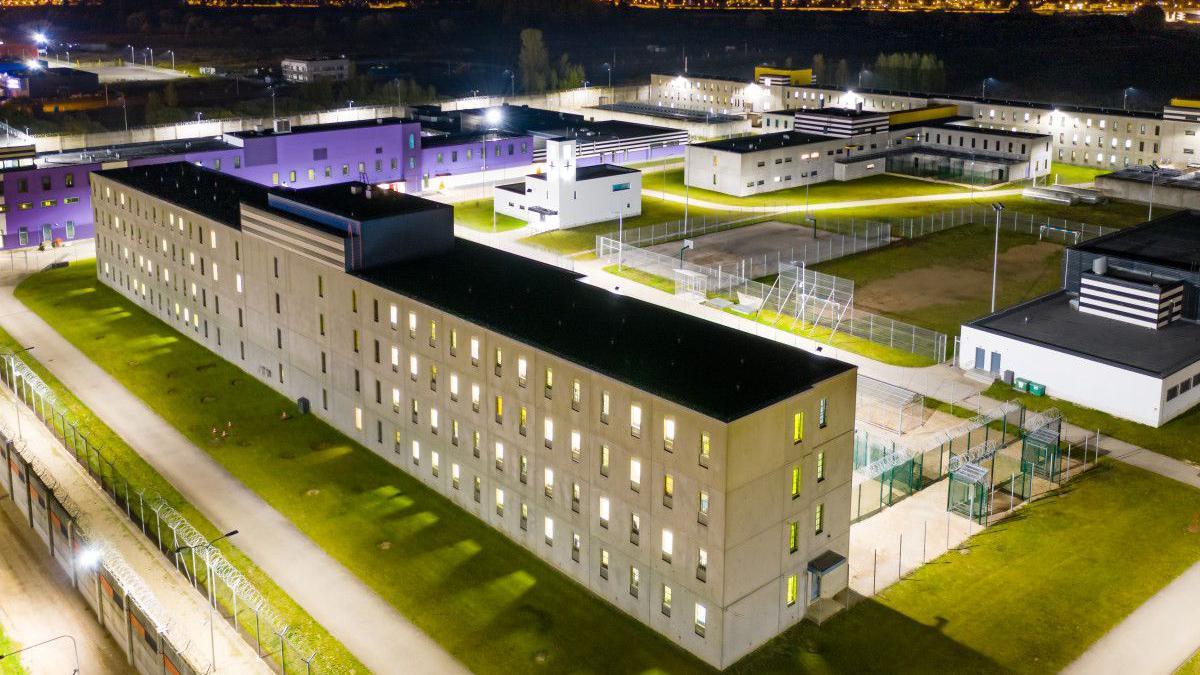 Image source, Estonian government
-
Published
The Estonian government has rejected the idea of taking prisoners from the UK to help ease the overcrowding crisis in British jails.
Justice Minister Liisa Pakosta told the BBC Estonia would not rent jail cells to other countries while it was housing criminals from Sweden in its half-empty Tartu prison under a deal signed last week.
The Conservatives and Reform UK have both suggested renting cells in foreign prisons, including in Estonia, to free up space and prevent the early releases of some offenders in England and Wales.
The Labour government also explored the idea in 2024 but talks with Estonia came to nothing.
Pakosta said Estonia had received no proposals to rent its prison space from the UK, adding that if one was to be made “our answer would be unequivocal – in Margaret Thatcher’s famous words: No. No. No.”
She added: “Such a proposal would not merely be mistaken, misguided or unacceptable; it would deserve to be rejected outright.”
Thatcher memorably repeated “no” three times in 1990 speech, as she fiercely rejected calls for deeper political and economic integration of the European Community, which later evolved into the European Union.
In 2024, the Labour government, when Sir Keir Starmer was prime minister, held talks with Estonia to discuss the Baltic state’s policy to house some prisoners from abroad.
Pakosta previously told the BBC she had met then-UK Justice Secretary Shabana Mahmood in Lithuania.
Prime Minister Andy Burnham’s government is planning to release thousands of prisoners early this October, as it scrambles to free up space in jails almost at 100% capacity.
On Monday, Downing Street did not rule out renting space in foreign prisons, when asked by reporters if the government was considering doing so.
A No 10 spokesperson said the government was focused on “creating that extra capacity within the system domestically”.
“In terms of renting prison places abroad, it’s just not a quick fix,” the spokesperson added.
“It will require primary legislation underpinned by a complex international agreement which would take several years to agree.”
A government source told the BBC that renting foreign prison space would not help with the short-term crisis in jails.
Burnham has ordered the justice secretary to come up with a plan to create more space in jails by September.
He said the plan would be based on removing more foreign national offenders from prisons, releasing some offenders on indefinite sentences, and using space in women’s jails for male inmates.
Options explored
Other parties have come up with their own ideas for dealing with overcrowding in prisons.
At a news conference on Monday, Reform UK suggested 10,000 prison spaces could be freed up if all foreign criminals were sent abroad to serve their sentences.
Reform UK leader Nigel Farage said his party was exploring options to transfer foreign criminals in the UK to prisons in other countries, including El Salvador and Kosovo.
When asked if he had other countries in mind, Farage said: “Yes there are Baltic state options as well.
“I mean, conversations could certainly be had with Lithuania, for example, or perhaps Estonia as well.”
A Reform UK spokesman said its policy was focused on El Salvador, Kosovo and “possibly others if they are open to the idea”.
In recent days, the Conservatives have also urged Burnham to revive their plan to rent prison cells overseas, a policy they introduced when the party was in government in 2023.
The proposal aimed to mirror models used by Norway and Belgium in the Netherlands, where both countries rented cells to deal with overcrowding in their prisons.
Conservative shadow home secretary Chris Philp said this was “an idea that we legislated for in government but Labour subsequently did not pursue that”.
“That was a catastrophic mistake by the Labour government that should be urgently reversed.”
The Conservatives did not respond to requests to comment on Estonia’s rejection of a prison rental deal with the UK.
In a statement, Lithuania’s Ministry of Justice said: “There have been no discussions or consultations regarding the possibility of accepting the transfer of all Lithuanian citizens imprisoned in the United Kingdom”.
A spokesperson said the Lithuanian government did not “see any scope for entering into practical arrangements of this kind”.
The Kosovo government, which has agreed to lease 300 of its jail cells to Denmark as part of a deal worth £170m (€200m), appeared more open to working with other countries on prisoner transfers.
A Kosovo government spokesperson said: “We value the willingness of partner countries to initiate and advance new co-operation initiatives that serve common interests, mutual priorities, and the strengthening of international justice mechanisms”.
But the spokesperson stressed Kosovo would focus on enacting its deal with Denmark “before entering into any new agreement of a similar nature”.
The BBC has previously been told both former Conservative and Labour ministers independently came to the view that renting prison space abroad would be expensive.
Sweden has agreed to pay up to £52m (€61m) a year to Estonia if the Baltic nation does house 600 of its offenders at the Tartu prison.
Estonia said from the 301st inmate onwards, Sweden would pay an additional £7,254 (€8,500) per prisoner, per month.
The average annual cost per prisoner in a public-sector prison in England and Wales was £60,018 in 2024/25, according to Ministry of Justice data.
-
-
Published18 hours ago
-
-
-
Published1 day ago
-
Disclaimer : This story is auto aggregated by a computer programme and has not been created or edited by DOWNTHENEWS. Publisher: BBC