
Disability campaigners call for Burnham to delay assisted dying bill
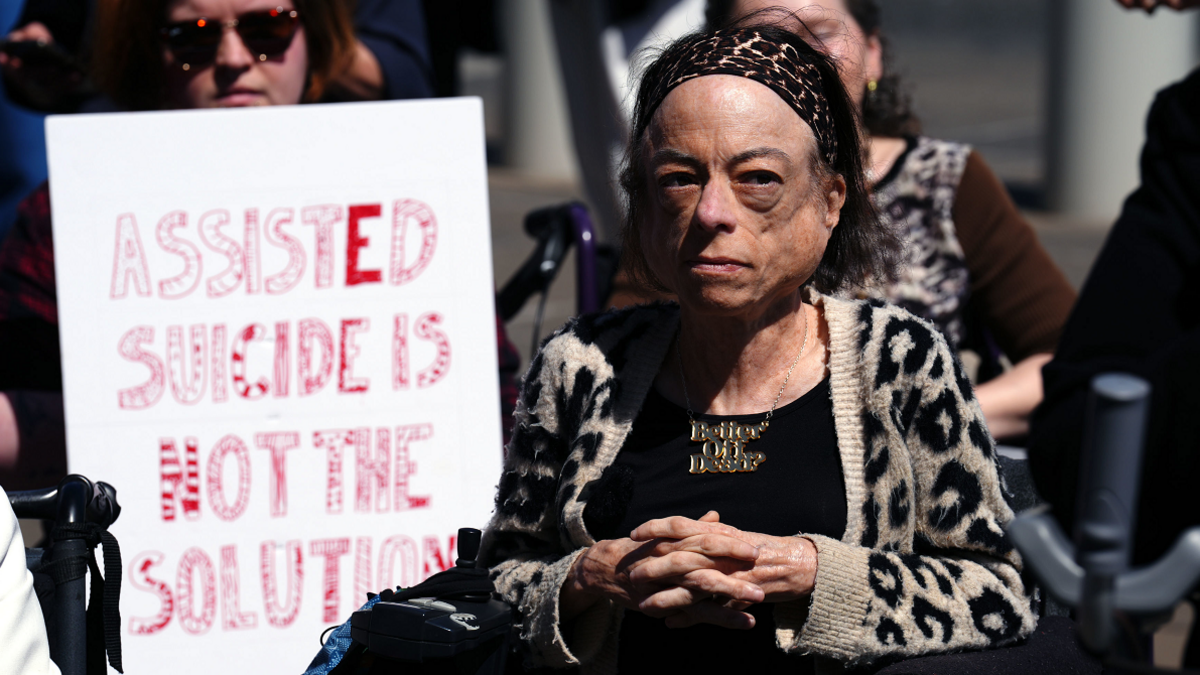 Image source, PA Media
-
Published
Disabled and terminally ill campaigners have written to Prime Minister Andy Burnham urging him to reform social and palliative care before assisted dying legislation is introduced in England and Wales.
The Assist Us To Live group says people are currently being “failed by society” and “introducing assisted dying in these circumstances will put sick and disabled people’s lives at risk”.
Burnham believes the funding of palliative and social care should be “fixed” before assisted dying is considered. The government is likely to remain officially neutral, but the PM’s remarks suggest he personally will not back the bill proposed by Labour MP Lauren Edwards.
Bill supporters argue improving care services and giving terminally ill people “autonomy” over their final weeks must go hand in hand.
The proposed law – known as the Terminally Ill Adults (End of Life) Bill – would allow people over the age of 18 who were expected to die within six months to be given help to end their own life, subject to certain safeguards.
Having a disability in and of itself does not mean you would be able to seek help to end your life.
This is the second time a backbench bill like this is going through the House of Commons.
MPs voted in favour of a bill proposed by Labour MP Kim Leadbetter in 2025, but it was not passed by the House of Lords after an unprecedented number of suggested amendments delayed its progress until it ran out of time in April this year.
Edwards reintroduced an identical bill in June in order to “finish the job” started by Leadbeater. It is due to be debated in the Commons on 11 September.
Opponents of the bill believe the legislation has substantial flaws and would pose risks to disabled people, putting pressure on them to end their lives.
The Equality and Human Rights Commission, the UK’s regulator, says legislation is “likely to have particular impacts on people with certain protected characteristics, especially older and disabled people, external“.
Last year, the commission’s chair Baroness Falkner said: “While the bill provides safeguards against a person being coerced or pressured to end their own life by another individual, we know that disabled people, older people and especially older disabled people, may feel pressured to prematurely end their lives by societal attitudes and a lack of the support and services they need.”
Edwards has said there is time to improve end-of-life care before any assisted dying service would come into effect under her proposed law, given a four-year implementation period had been agreed in the previous debates.
-
Fix palliative care before assisted dying debate, says PM
-
Published29 July
-
Comedian Rosie Jones, and actors Liz Carr and Ruth Madeley are among dozens of prominent disabled people in the arts, media and academia who have signed the open letter to MPs.
The letter says: “At the moment, sick and disabled people, including terminally ill people, are denied choice over the most basic of things: our ability to get out of bed, wash, eat, leave our houses or manage our pain.
“This creates a coercive environment where people will choose an earlier death simply because they are being failed by society.
“Put simply, introducing assisted dying in these circumstances will put sick and disabled people’s lives at risk.
“No one wants any terminally ill person to suffer unnecessarily at death. But we must protect the lives and rights of disabled and terminally ill people in life.”
The group is calling for more funding for palliative care so “no one feels pressured to end their lives simply because they are not receiving the medical help they deserve”.
It also calls for the government to abolish the social care savings threshold for working-age people and equalise staff pay between social care and the NHS.
‘Treating people like animals’
Kyla Harris, who co-created and starred in the BBC comedy series We Might Regret This about disabled life, told the BBC disabled and terminally ill people needed “structural and social support to live, not to die”.
Harris, from Canada, was 15 and “on the verge of independence” when she sustained a life-altering spinal cord injury, leaving her tetraplegic and requiring round the clock care.
Asked about the assisted dying bill, she said: “We are treating people like animals who need to be put down.
“The money you put into trying to get this bill through takes away from the social services, making palliative care more accessible for people so that they can die in their homes.”
Pamela Fisher, who is terminally ill with breast cancer, said there is an “unhelpful perception that both social care and end-of-life care need to be ‘sorted’ before we can properly consider the possibility of legalising assisted dying in the UK”.
Fisher, a Church of England lay preacher and academic from Huddersfield who supports the bill, said: “This sets an impossible standard.
“The reality is that social care and end-of-life care will always be works in progress, rather than systems that can ever be declared perfect once and for all.”
Fisher said there is a need to progress reforms to care services, adding the fact they are “imperfect cannot, in itself, be a reason to deny terminally ill people autonomy over the circumstances of their death”.
Andrew Copson, chief executive of Humanists UK which is in favour of a change in the law, said he hopes MPs will “look past renewed attempts to derail this long-overdue change”.
Disclaimer : This story is auto aggregated by a computer programme and has not been created or edited by DOWNTHENEWS. Publisher: BBC




