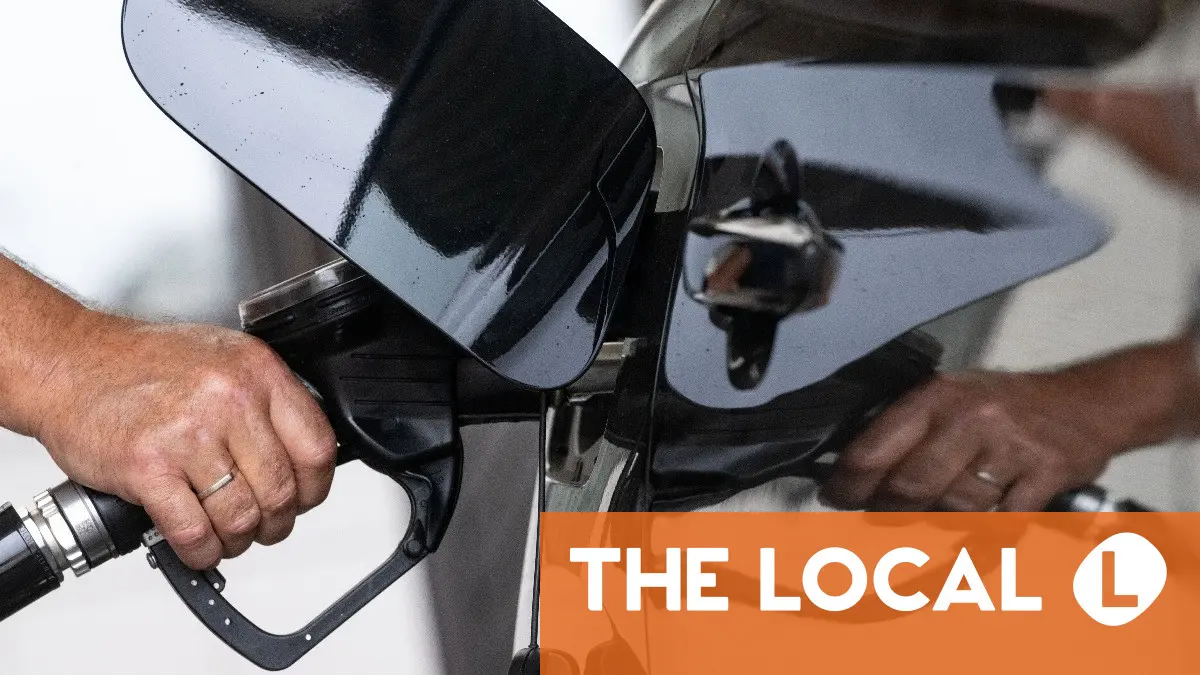
Fuel costs have surged in Germany over the last two weeks, with petrol rising by around 12 cents per litre and diesel by more than 20 cents. Now German Chancellor Friedrich Merz has pledged relief for drivers.
Drivers across Germany are having to dig deeper into their wallets as petrol and diesel prices rise amid turmoil in the Middle East.
According to the ADAC motoring association, the average price of E10 petrol reached a record €2.286 per litre at the start of this week, while diesel rose to €2.404 per litre, just a few cents below its historic peak.
On Tuesday it emerged that the government is planning relief measures in response to high fuel prices.
What does Merz say about the rising prices?
Chancellor Friedrich Merz said he believes Germany “must take action” against the rising costs.
“For many people who need their car every day, the limit has been reached,” said the CDU politician at an event organised by the German Foreign Trade Association (BGA) in Berlin.
However, a plan has not yet been finalised. Merz said he was in in “close consultation” with the rest of the government and the 16 states, adding that people in Germany can expect a proposal “very soon”.
The latest increases have been driven largely by developments in the Middle East region, including disruptions to oil exports and concerns over supplies moving through the Strait of Hormuz.
But the ADAC argues that oil prices alone do not fully explain the sharp rise at German petrol stations and has called for greater transparency across the fuel supply chain.
In response to allegations that oil companies are profiting from the crisis at the expense of consumers, Merz referred to the Federal Cartel Office.
He said the authority was “equipped with the necessary powers to monitor abuse” in order to respond to “price gouging”.
“But we also sense – at least from the consumers’ perspective – that this is not enough,” Merz added.
It comes after a tax cut on fuel was in place in Germany from May until the end of June.
READ ALSO: How to save money on fuel in Germany as prices hit all-time high
What might the government do?
The soaring costs have reignited debate among politicians and consumer groups over how to manage the price hikes.
Calls have been growing for a fuel price cap, which is already in place in other European countries.
In Luxembourg, for instance, the state calculates a maximum retail price based on market trends.
Luxembourg also introduced an additional measure in July: until the end of the year, fuel prices are being lowered by another five cents per litre through a reduction in excise duties.
In Germany, the Social Democrats (SPD) have also proposed a so-called ‘excess profits tax’.
“If oil companies exploit a crisis to make excessive profits, it is socially just to levy a tax on these crisis profits,” a paper states.
“The oil companies are currently lining their pockets at the expense of consumers,” Isabel Cademartori, an SPD transport policy spokesperson and member of the Bundestag task force, told German media.
Cademartori does attribute the rising fuel prices to high world market prices resulting from the political situation in the Middle East. “Nevertheless, we are seeing that in Germany, fluctuations in fuel prices are being passed on particularly sharply and particularly quickly,” she added.
Economy Minister Katherina Reiche (CDU) proposed providing targeted relief to certain sections of the population through direct payments. However, not everyone agrees with this – even within Reiche’s own party.
CDU politician Sebastian Steineke has called for a temporary reduction in the energy tax to “the European minimum”.
Furthermore, Steineke argued that Germany’s CO2 prices (carbon prices) should be reviewed. “We must ensure that climate protection does not lead to an excessive social burden,” he said.
The far-right Alternative for Germany (AfD) goes further, calling for a permanent reduction in taxes and duties on fuels.
“The AfD parliamentary group has tabled precisely this in the Bundestag: to reduce the energy tax on petrol, diesel and gas to the EU minimum, to abolish the CO2 tax and to reduce VAT,” Leif-Erik Holm, the AfD’s lead candidate for the state election in Mecklenburg-Western Pomerania, told the Handelsblatt.