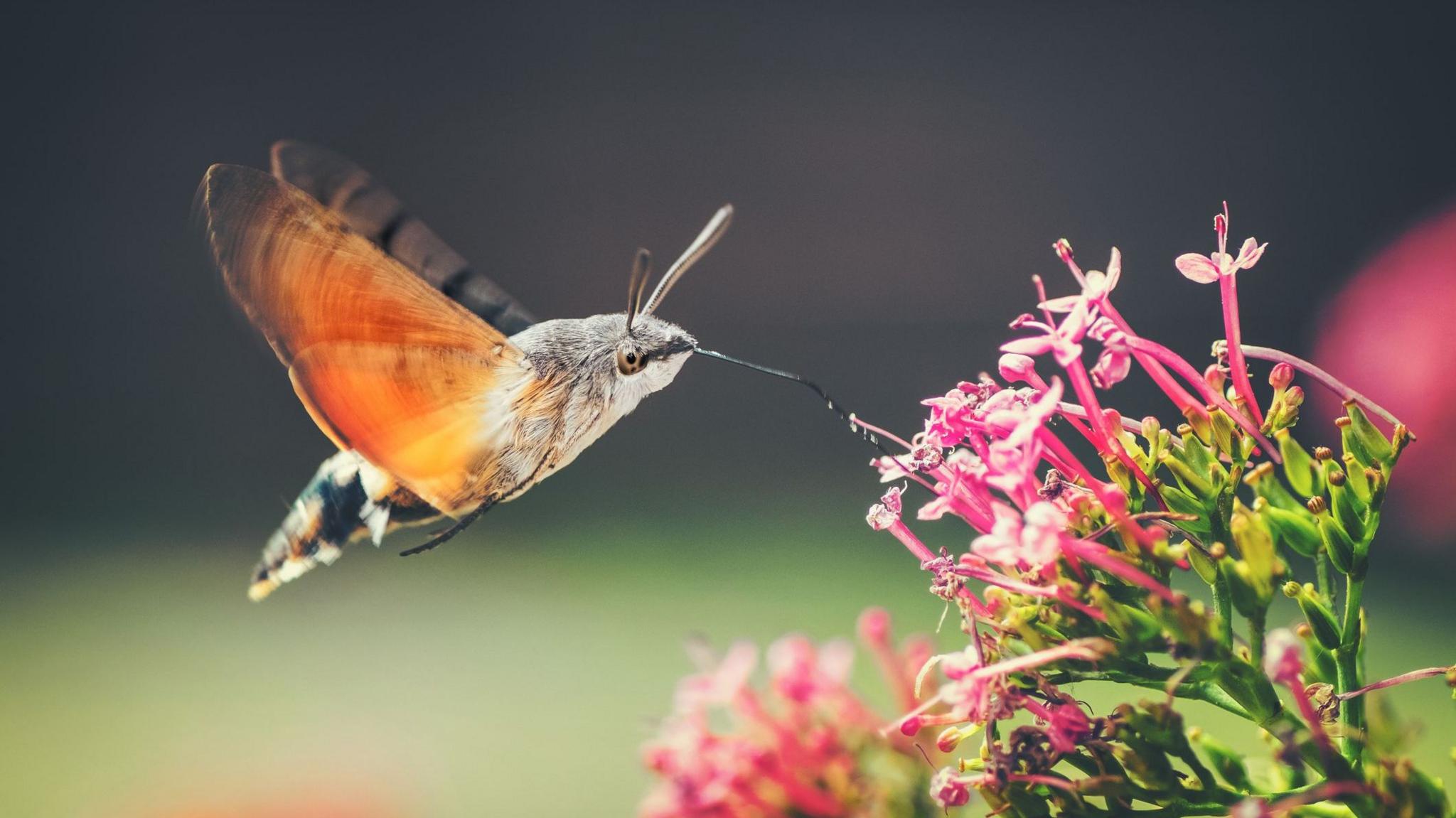
Have you seen the hummingbird hawk moth?
-
Published
As parts of the West Midlands baked in warmer temperatures this summer, species once considered unusual in the region, such as hummingbird hawk moths, ivy bees and the wasp spider have been spotted in growing numbers.
The hummingbird hawk moth, known for its furry grey body, orange hindwings and long proboscis, migrates to the UK from southern Europe and north Africa in the summer months.
James Benwell, from the Birmingham and Black Country Wildlife Trust, said 2026 was a “record year” for sightings of the species, which was often mistaken for a small bird.
The moth, which can be seen hovering over flowers, has wings that beat about 80 times per second, external, according to Benwell.
“They’ve had a really good year this year,” he said. “Normally they would come in small numbers. We’d normally hear of a few maybe. But this year, we’ve seen loads of records of them.
“They’re absolutely amazing but I somehow haven’t seen one this year, so I’m jealous of anybody else that has.”
 Image source, Getty Images/Finnbarr Webster
Ivy bees, which feed mainly on the nectar of ivy flowers, had also become more prevalent in the Midlands, Benwell said, adding they were easy to find on buildings.
The bees, first recorded in the UK in 2001, are slowly spreading north, after first being recorded in the region in Stourbridge in 2015.
“There’s nothing that distinguishes them from other bees really, they’re not that kind of attention-grabbing species, but, you know, were you to look for them, go to ivy and you’ll see them,” Benwell said.
 Image source, Getty Images/Image Broker/Kevin Sawford
Other insects that had seen an increase in their numbers locally included the clouded yellow butterfly, a European migratory species known to have “peak” years during unusually hot summers.
“Most individuals are unable to survive the British winter, but if temperatures continue to rise as a result of climate change, we may well see them becoming permanent residents,” Benwell said.
“There’s numerous species that we could point out that weren’t here 20 years ago… and now they’re quite abundant.”
 Image source, Getty Images/Sandra Standbridge
Others once more commonly associated with southern England have also spread further north.
The trust said the hornet hoverfly, with yellow markings that mimic a hornet to protect against predators, although it cannot sting, had become really common after it was first recorded in Birmingham and the Black Country in 2004.
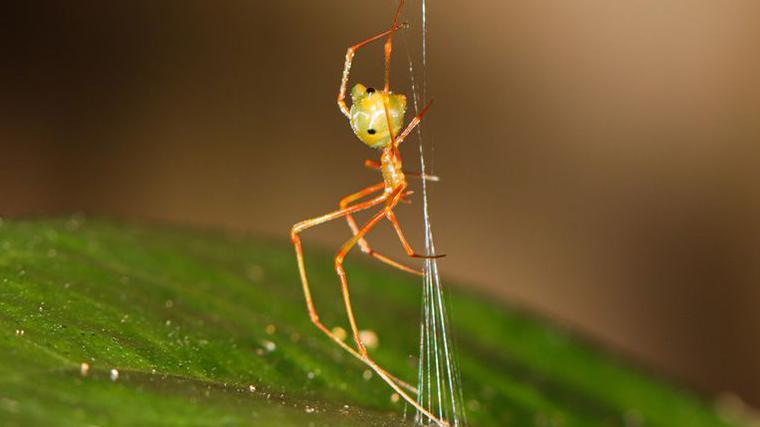
Another species, the cricket bat spider, which gets its name from its cricket bat-like markings, has also become more common in grassland since it was first spotted in the region in 2019.
The sightings come as one of the UK’s largest spider species, the wasp spider, was spotted in the Midlands as warmer temperatures pushed it more than 100 miles away from its usual habitat.
The spider has recently been recorded in Worcestershire, alongside sightings in Herefordshire and Warwickshire, said the Worcestershire Wildlife Trust.
 Image source, Wendy Carter
Rosemary Winnall, from the Wyre Forest Study Group, which maps the wildlife and ecology of the forest in Worcestershire, said the arrival of the wasp spider was to be celebrated.
She said the group was always on the lookout for new arrivals and had already recorded the willow emerald damselfly, the southern oak bush cricket and the purple emperor butterfly, as more species travelled north.
“The impressive western conifer seed bug is here as is the box bug,” she added.
Hot weather had also benefited butterflies that loved sunshine, such as the holly blue and the pearl-bordered fritillary, which the Butterfly Conservation charity, external said was once “very widespread” but had rapidly declined in recent decades.
However, despite an increase in some species appearing in the region, there were others whose numbers were dwindling.
“The once-common small tortoiseshell butterfly is now rarely seen for example, and there are far fewer records of the two-spot ladybird,” Winnall explained.
“We are encouraging folk to record the common species of today as they may be the rarities of the future.”
Get in touch
Tell us which stories we should cover in Birmingham and the Black Country
Follow BBC Birmingham on BBC Sounds, Facebook, external, X, external and Instagram, external.
-
-
Published4 days ago
-
-
-
Published7 September

-
-
-
Published8 August

-
-
-
Published23 June
-
Related internet links
Disclaimer : This story is auto aggregated by a computer programme and has not been created or edited by DOWNTHENEWS. Publisher: newsrss.bbc.co.uk