TEHRAN – After threatening for much of his second term to annex the semi-autonomous Danish territory of Greenland by force, if necessary, Donald Trump announced on Friday that the United States had reached an Arctic security pact with the leaders of Denmark and Greenland.
Key details of the agreement, which Trump boastfully described as “very important, historic, and special,” have not been made public, including the extent of the U.S. military presence in the territory and whether any formal authority over foreign policy and natural resources would be ceded to Washington.
The announcement is a gift to a president whose illegal war against Iran, followed by Tehran’s response to the attack through the closure of the Strait of Hormuz, has disrupted global energy supplies and made the already unstable Middle East more insecure.
Denmark and Greenland expressed hope that the deal would end months of uncertainty triggered by Trump’s threats, which have centered on Greenland’s strategic location for defense purposes and its mineral wealth.
The deal is expected to be signed on the sidelines of the UN General Assembly in New York next week.
“Next week could be a good week for Greenland, Denmark, and the United States,” Danish Foreign Minister Lars Løkke Rasmussen said in a statement on Saturday.
“A time of uncertainty will hopefully give way to a binding agreement that strengthens security in the Arctic and the North Atlantic, and thereby our shared security within NATO and Europe, while respecting the (Danish) Kingdom’s red lines,” he said.
Despite such optimistic remarks, one cannot be certain whether Danish and Greenlandic officials genuinely welcome the pact or have simply submitted to Trump’s threats.
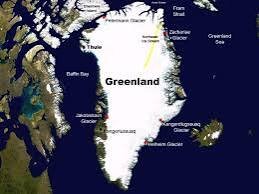
Had such an agreement been reached without Trump’s annexation threats, it could be argued that the United States was approaching the 2,166,086-square-kilometer Arctic island from a geostrategic perspective.
However, given Trump’s background as a real estate developer, it is highly unlikely that he views the island solely as a strategic shield to protect the United States from perceived adversaries, particularly Russia and China.
Trump appears to view the island, with its vast untapped mineral wealth, as an asset to be acquired rather than merely a military advantage. This is especially concerning given that he has threatened to withdraw the United States from NATO and advocated the dissolution of the European Union. He sees a strong and united Europe as a rival rather than a partner.
While Trump continues to insist on his astonishing and absurd demand that Canada become part of the United States, and has punished Canada through various measures, including tariffs, for rejecting that demand, Denmark and Greenland are making a serious strategic mistake by planning to sign such a deal with Washington.
How can Denmark and Greenland trust the United States to address security concerns in the Western world without eventually behaving like Israel and turning Greenland into another Palestine?
Given that Trump and members of Congress loyal to him have threatened and sanctioned International Criminal Court (ICC) officials over the issuance of arrest warrants for Benjamin Netanyahu on charges of war crimes and crimes against humanity in Gaza, what assurances can Denmark, Greenland, NATO, and Europe reasonably expect from Washington?
Even if the Trump administration remains committed to the still-undisclosed terms of the agreement throughout his presidential term, how can Denmark and NATO be assured that a future president, another Trump, perhaps, will not take control of the White House and seek to expropriate territories across North America, including Greenland, which lies in close proximity to Canada?
NATO may believe that granting the United States extensive security control over the island could appease Washington and persuade it to halt its threats and pressure against Europe. This is particularly relevant as Russia’s war in Ukraine, which began in February 2022, continues to pose a security challenge in Eastern Europe. However, Europe as a whole, and Denmark in particular, must learn from history.
The clearest example is Israel’s continuing expansion and annexation of Palestinian territories.
Europe may feel caught between a rock and a hard place, facing U.S. pressure and annexation threats on one side and the war in Ukraine on the other. Yet, as UN Secretary-General António Guterres reportedly told the Financial Times in August, the great powers are discovering the limits of their power. He cited Russia’s war in Ukraine, the failed U.S. war against Iran, and the emergence of new powers as concrete examples.
Although Denmark and Greenland have repeatedly insisted that Washington respect the sovereignty of the Kingdom of Denmark and acknowledge that Greenland is not for sale, the agreement may, in practice, produce the opposite outcome.
The days when the United States was regarded as a law-abiding country are long gone. Trump’s abrogation of the hard-won 2015 Iran nuclear deal, which had been endorsed by the UN Security Council, and his alignment with Israel in launching a full-scale, surprise, and illegal war against Iran in 2026 serve as reminders before the eyes of the entire world, including Europe.
Greenland’s Prime Minister Jens-Frederik Nielsen welcomed the agreement with the Trump administration.
“I am delighted on behalf of Greenland that we are nearing the conclusion of an agreement. An agreement that will benefit not only the security of us all, but also the continued development of this country,” he said in a social media post on Saturday.
“The agreement recognizes the sovereignty and territorial integrity of our Kingdom and the right of the Greenlandic people to self-determination,” he added.
Earlier in his term, Trump argued that the United States needed control of Greenland for “economic security” and described ownership and control of the territory as an “absolute necessity.” During his first term, in 2019, he characterized the potential purchase of Greenland as “essentially a large real estate deal.”
Taken as a whole, Denmark, Greenland, Europe, and NATO may be turning a page against their own interests, a decision that could prove extremely detrimental to them in the long run.
It may not be long before they come to regret their acquiescence to the unpredictable Trump administration and the potential actions of future U.S. presidents who may adopt similar ambitions.
Disclaimer : This story is auto aggregated by a computer programme and has not been created or edited by DOWNTHENEWS. Publisher: tehrantimes.com