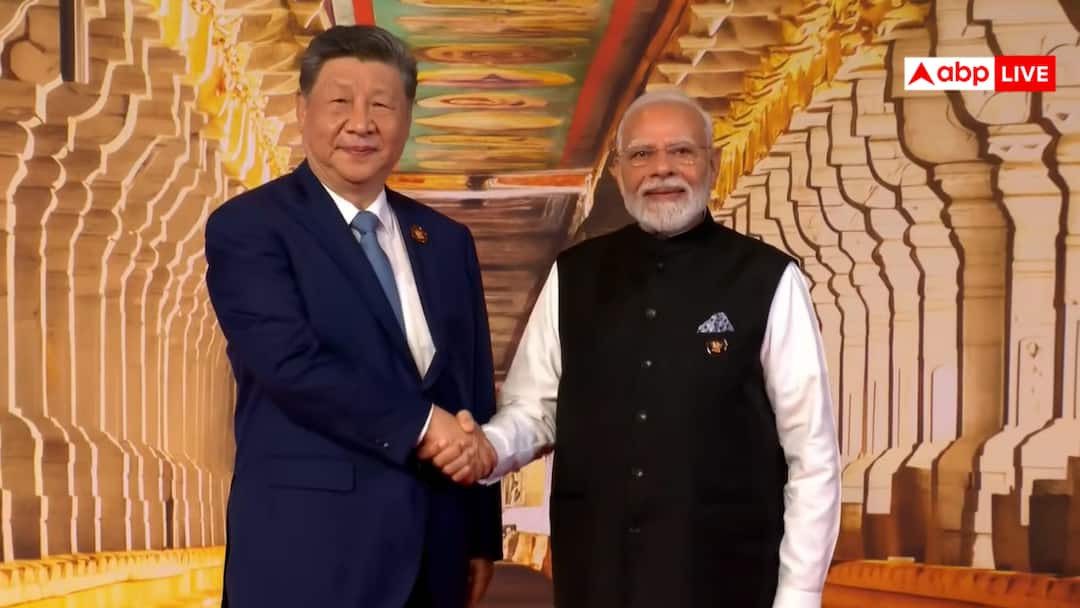
The recent visit of President Xi Jinping and his close associate, Wang Yi, a member of the Chinese Communist Party Politburo and the foreign minister, to Delhi on September 12-13 for the BRICS summit has seemingly injected a sense of optimism into the bilateral relations between India and China.
The atmosphere during the summit was marked by a notable camaraderie, with both leaders exchanging cordial remarks and promising words that suggested a willingness to improve ties.
However, despite this apparent warmth, the underlying issue of trust remains a significant concern.
Reports indicate that the Chinese People’s Liberation Army (PLA) has withdrawn a considerable number of troops from the Line of Actual Control (LAC), a commitment made nearly six years ago following the violent clashes in Galwan in June 2020.
China’s Troop Withdrawal Fails To Ease India’s Concerns
Nevertheless, this withdrawal has not been sufficient to instil confidence within the Indian security establishment, which remains cautious and has refrained from announcing any reciprocal troop reductions.
The disparity in troop deployment between the Indian and Chinese forces has further complicated the situation.
The Indian military’s presence along the LAC has been notably less than that of the Chinese, leading to a perception of vulnerability.
Consequently, the Indian Army has approached the situation with caution, recognising that the PLA’s military manoeuvres cannot be taken at face value.
The symbolic nature of the troop withdrawal from the Chinese side does little to alleviate the concerns of the Indian armed forces, which will continue to face the harsh winter conditions of Eastern Ladakh for the sixth consecutive year.
Over 60,000 Chinese Troops Still Deployed Along LAC
This region, characterised by its extreme weather and challenging terrain, has necessitated not only the deployment of advanced weapon systems by India but also the establishment of living accommodations for troops, reflecting the prolonged nature of the territorial disputes between these two significant Asian powers.
Interestingly, information regarding the PLA’s limited withdrawal from the northern borders of the India-China border was disclosed by Indian government, while the Indian Ministry of Defence has asserted that its forces remain robustly deployed to address any potential challenges posed by the Chinese military.
According to the Ministry of Defence’s report, the Indian Army has not reduced its vigilance along the LAC, emphasising that its deployment across all sectors is strong, well-prepared, and ready to respond to any emerging contingencies.
This report indicates that there has been no indication of any de-induction of Indian forces, reinforcing the notion that while diplomatic overtures may suggest a thaw in relations, the realities on the ground continue to reflect a cautious and vigilant stance by India in the face of ongoing tensions.
The MOD report recognises a degree of stabilisation along the border, attributing this development to ongoing bilateral engagements at various levels, including political, diplomatic, and military discussions.
Despite these interactions, both nations appear to be proceeding with caution, suggesting a lingering distrust between them.
Why India Remains Cautious Despite PLA Pullback
Indian foreign ministry officials have raised pertinent questions regarding the delayed compliance of Chinese forces with the five-point consensus established by Indian Foreign Minister S. Jaishankar and his Chinese counterpart Wang Yi.
This agreement was reached only a few months following the Galwan incident on June 16, 2020, which subsequently led to a foreign ministers’ meeting on September 10, 2020.
Indian authorities have consistently urged their Chinese counterparts to adhere to this consensus and facilitate disengagement and de-induction, yet these appeals have largely gone unheeded.
Consequently, it appears that, five years later, Indian and Chinese forces may still find themselves in direct confrontation, with the People’s Liberation Army (PLA) seemingly engaging in symbolic gestures aimed at projecting a commitment to peace and stability along the border, both to the Indian populace and the international community.
The MOD report provides an assessment of the reduction in the deployment of PLA forces along the Northern Borders, noting during the year 2025, there was a significant decrease in their presence.
Specifically, it mentions that ten Combined Arms Brigades were stationed in areas adjacent to the Line of Actual Control (LAC) and in traditional training zones.
However, the report also indicates that a minimum of fifteen brigade-sized forces remain positioned along the LAC, suggesting that while there has been a reduction, a substantial military presence persists.
Each of these combined brigades is estimated to comprise between four to five thousand personnel, encompassing various combat units of the army.
Therefore, it can be inferred that over 60,000 Chinese troops are still actively deployed along the LAC, maintaining a formidable military posture in the region.
The implications of this military presence are significant, as the continued deployment of such a large number of troops indicates that tensions between India and China are far from resolved.
The presence of these forces not only serves as a deterrent but also reflects the strategic calculations of both nations in the context of their historical rivalry.
The ongoing military readiness of the PLA, coupled with the symbolic gestures aimed at peace, creates a complex dynamic that could easily escalate into confrontation if not managed carefully.
As both nations navigate this intricate landscape, the need for sustained dialogue and confidence-building measures becomes increasingly critical to ensure the fragile stability.
There are approximately 10 to 11 brigade groups stationed in the Xinjiang and Tibet regions along the Line of Actual Control (LAC) in the western theater opposite India.
Recent observations in 2025 suggest that some reserve units may have been withdrawn; however, it is improbable that the People’s Liberation Army (PLA) has significantly reduced its frontline presence.
Given the more favorable terrain for transport on the Chinese side, it is likely that they can quickly mobilize back to the LAC, which contributes to India’s cautious approach in maintaining its military presence along the border.
Amidst the continuing cautious stance, to foster trust, Chinese President Xi Jinping proposed a four-point approach, while Indian Prime Minister emphasized three mutuals, highlighting the need for sensitivity to each other’s core concerns.
Xi advocated for viewing each other as partners, promoting win-win cooperation, and maintaining mutual respect in addressing differences.
He also stressed the importance of parallel development in bilateral relations and the necessity of addressing boundary issues while ensuring peace in border areas.
Furthermore, Xi called for inclusive multilateral cooperation and urged India to collaborate on global challenges, reinforcing the principles of international fairness and justice.
The lofty rhetoric emanating from China suggests a potential for cooperation, particularly in facilitating the exchange of high-tech products and critical minerals with Indian industries.
However, there has been no substantial indication from China of a willingness to cease using trade as a strategic weapon or to take meaningful steps towards reducing military tensions along the Line of Actual Control (LAC) in Eastern Ladakh, where the People’s Liberation Army (PLA) made incursions in May 2020.
The persistent military and economic pressure from China remains evident, extending from the LAC to Indian markets such as Karol Bagh and Lajpat Nagar, where Chinese goods dominate despite a visa ban on Chinese businessmen that is expected to be lifted soon.
To counteract this infiltration into both the economic and security domains, the Indian government must not only embrace the principle of self-reliance but also implement measures to prevent future territorial encroachments by China.
(Ranjit Kumar is a senior journalist and strategic affairs analyst)
Disclaimer : This story is auto aggregated by a computer programme and has not been created or edited by DOWNTHENEWS. Publisher: abplive.com