What happens when a village decides that keeping its streets clean isn’t someone else’s job?
In Babojola, a tribal village in Odisha’s Mayurbhanj district, its residents sweep the village streets three times a day. Plastic is not allowed. Waste is sorted and composted. Someone who drops litter may be fined, and that rule applies to visitors as well as residents.
There is no single annual cleanliness drive that the village waits for. For more than 15 years, Babojola’s residents have treated cleanliness as part of the village’s everyday routine.
It started with one teacher
The effort began about 15 years ago with Madhusudan Marandi, a local school teacher who wanted Babojola to become a model village.
Marandi’s idea was eventually taken up by the community as a shared responsibility. Villagers formed a club to oversee cleanliness and maintain the systems needed to keep it going. They also collected funds to install CCTV cameras, dustbins and solar panels.
Over time, practices that might otherwise have remained part of a cleanliness campaign became ordinary expectations within the village.
Smoking is prohibited. So are spitting and chewing tobacco. Visitors are expected to follow the same rules, with tourists who litter facing fines.
Three sweeps, every day
In Babojola, sweeping is not left to an occasional drive.
The villagers sweep the streets three times a day, making the upkeep of common spaces a routine rather than a periodic exercise.
The result is a system built around repeated, small actions: not throwing something on the road, clearing a public space, dealing with waste at source and expecting outsiders to follow the same rules.
A village shaped by nature
Babojola is home to around 70 families.
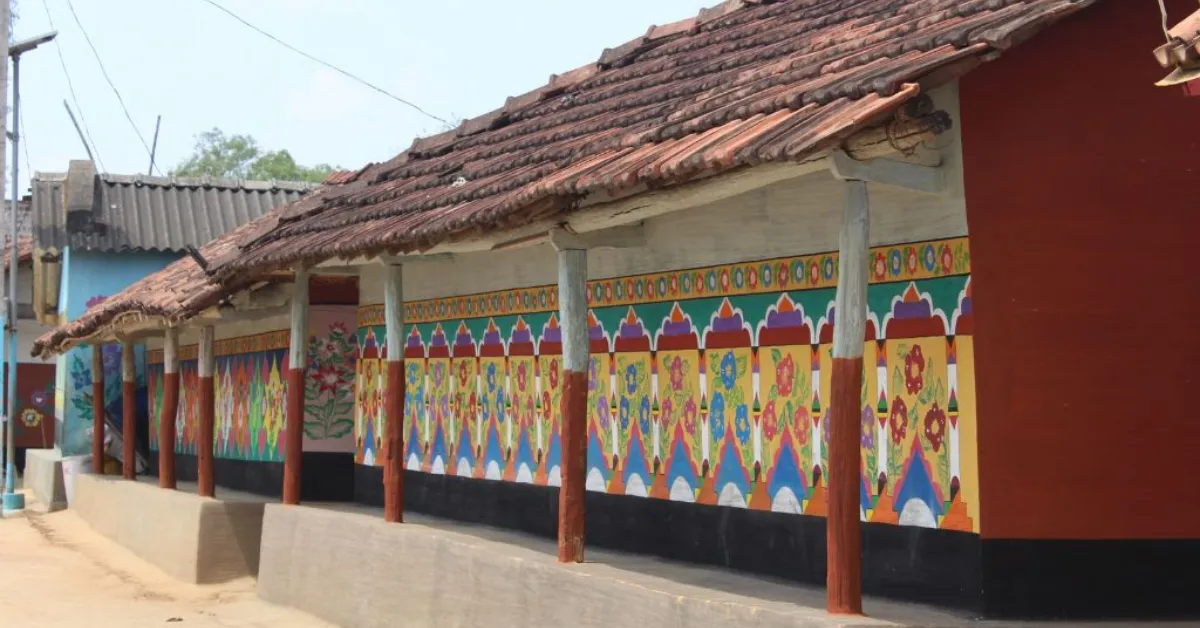
Many of the houses have thatched roofs, while their walls are decorated with patterns of flowers, leaves, animals and traditional motifs. The artwork, known locally as Bhit Potaw, is created by the women of the village.
The colours are made from materials found around them, including riverside clay, stones, tree bark and flowers.
So the village’s relationship with its surroundings is visible not only in how its streets are maintained, but also on its walls.
More than a slogan
India has spent years running cleanliness campaigns, building waste-management systems and urging citizens to change everyday behaviour. But Babojola offers a different way of looking at the question: what happens when cleanliness becomes a community norm rather than a message delivered through a campaign?
There is no complicated formula in the village’s approach. A teacher began the effort. Residents organised themselves around it. They created rules, raised money for basic infrastructure and kept repeating the practices until they became part of daily life.
The lesson from Babojola is that infrastructure and campaigns can only go so far if everyday behaviour does not follow.
Disclaimer : This story is auto aggregated by a computer programme and has not been created or edited by DOWNTHENEWS. Publisher: thebetterindia.com