Ten years after moving to Germany, Berlin-based journalist Imogen Goodman voted in the state elections on Sunday for the first time. She writes about the jitters, excitement and how it felt to be finally given a political voice.
On 23rd February, 2025, I went with my German partner to his local polling station in Berlin to vote in the federal elections. I was teary-eyed and furious.
Two and a half years earlier, in the autumn of 2022, I had contacted my local citizenship office to request an application form, mentioning my six years of residence and C1 German. They booked me in for a screening call – a full nine months later – and I finally submitted my documents near the end of the 2023.
A few months later, Berlin rolled out its new digital application for citizenship. From then on, people who applied online received their passports at a record pace – sometimes in a matter of weeks. Meanwhile, some 40,000 paper applications like mine sat in a big warehouse somewhere in Brandenburg, waiting to be scanned and put in the system.
When the federal elections took place – a year and a half after I applied for citizenship – I hadn’t received a single word from the authorities. So, on polling day, as the country looked poised to elect the immigrant-sceptic CDU, I was once again excluded from the process.
Finally able to vote
This time around – almost four years after that initial email to my local authority – everything was different. I finally received my citizenship in the September of 2025, meaning my Wahlbenachtrichtigung (voting notice) was automatically sent to me by post in time for the Berlin state elections.
READ ALSO: Election guide: Germany’s main political parties explained
With some amount of reverence, I put this letter in the drawer I use for documents I cannot under any circumstances lose. (The rest of my German bureaucratic post goes in the other drawer – the chaos drawer – which I try not to open.)
On election day, September 20th, I set off with my partner once more. This time, however, we were voting together – and we were both German.
Having been in the country for almost a decade and having reported on – but not been able to vote in – countless federal and regional elections, it felt incredible to finally have a say.
First-time jitters
Just down the street from my flat, a local primary school had been transformed into a temporary polling station. Beyond the joys of democracy, I was looking forward to having a chance to have a poke around inside.
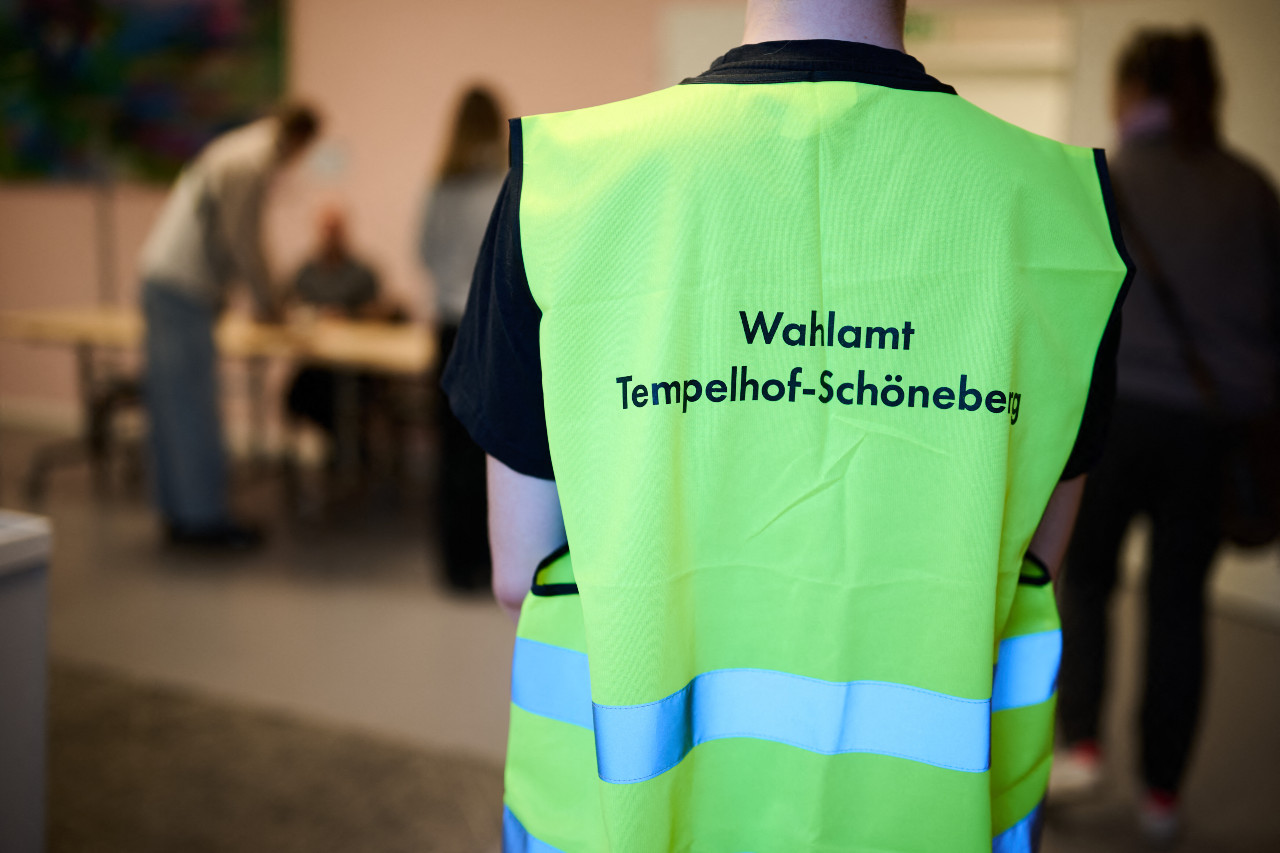
As we walked up to the school, I discovered that an elderly punk in my Kiez was manning the entrance as a Wahlhelfer (polling station volunteer). Normally identified by a massive array of piercings and the jingling and jangling of chains as he walks down the street, this time he was clad in a high-vis jacket.
A polling station volunteer in the district of Tempelhof-Schöneberg in Berlin. Photo: picture alliance/dpa | Annette Riedl
“Do you need help?” he asked. “ENGLISCH?“
“German is fine,” I said. “But I’m voting for the first time today, so I’d appreciate some help.”
As it turned out, there were three different polling stations located in the building, so the friendly neighbourhood punk gave me directions to the one I was supposed to be voting at and I shuffled along upstairs, along with a few other local voters.
It was only when I got to the right room that a creeping sense of imposter syndrome began to set in. What if I go in and walk up to the wrong people? Should I feign an air of confidence? At whom should I brandish my precious Wahlbenachrichtigung?
READ ALSO: What political parties in Berlin say about immigration and German citizenship
Double and triple checking
In the end, it was all pretty simple and underwhelming. I was ushered over to one desk, where two women looked at my election notification and gave me my voting slips.
I went into the booth to vote, and spent a good few minutes double and triple checking everything like a nervous student at the end of an exam. My eyes tracked repeatedly from the little “X” at the top of the form, which tells you how to cast your vote, to my little “X’s” next to my preferred candidate and party.
Having finally convinced myself that I had not, in fact, accidentally spoiled my ballot, I carefully folded the voting slips and emerged from my little booth. At this point, a man asked for my ID card, awkwardly mumbled my name to his colleague (it’s always a hard one for Germans) and then uncovered the opening at the top of the ballot box, allowing me to cast my vote.
In spite of paranoid over-checking, the whole thing probably took less than five minutes. And then I went back out into Berlin and we cycled off to a nearby park to enjoy a relaxed Sunday.
A consequential vote
Though I missed out on the chance to vote in the last federal election, voting in this state election still felt significant.
Berlin has been at the heart of my German story, and the city is facing enormous challenges. The most well-known of these – and the top issue for many people – is the housing crisis. Not only have rents been spiralling out of control for years, but housing shortages mean that even those who can afford the higher prices often struggle to find somewhere.
The Left Party, which came first in the election, wants to take radical measures to solve this crisis – including implementing the result of referendum in which Berliners voted to bring the properties of major private landlords like Deutsche Wohnen into public hands. However, it’s an open question if this will survive coalition negotiations.
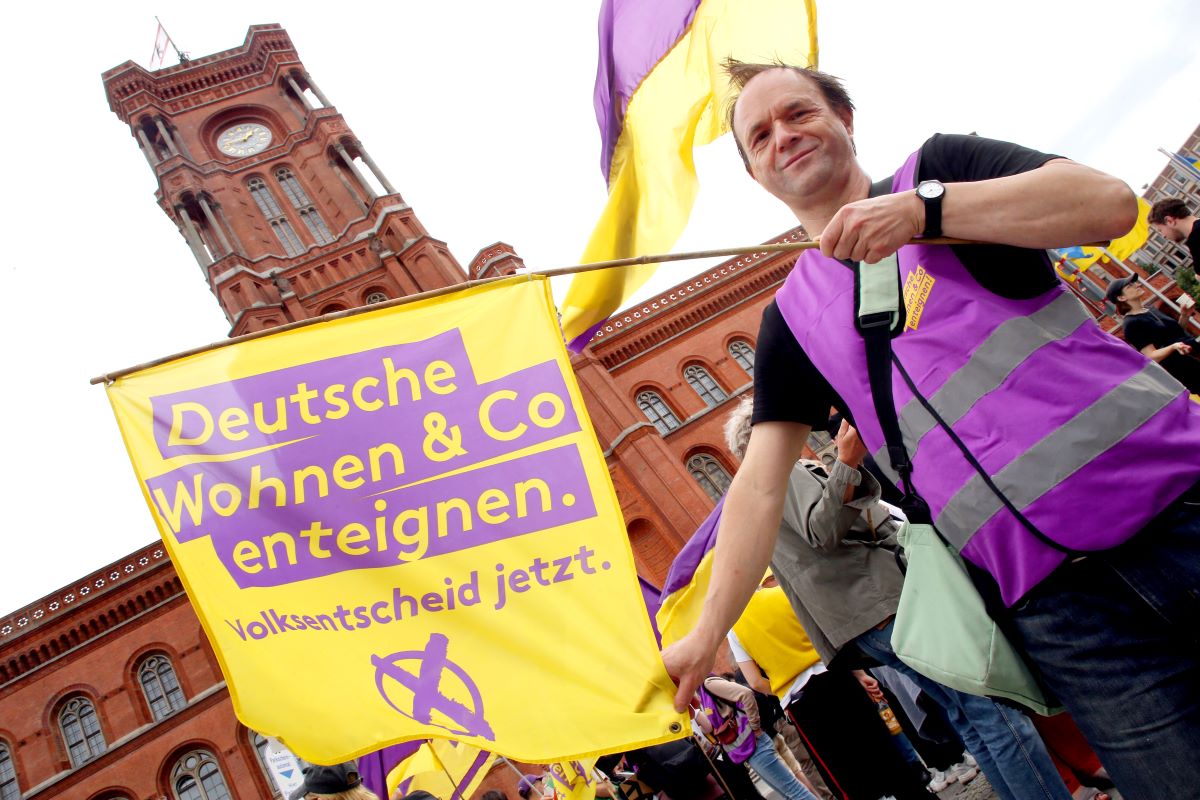
A protester holds a banner reading “Expropriate Deutsche Wohnen and Co.” in front of the Rotes Rathaus, the seat of Berlin’s state government. Photo: picture alliance/dpa | Wolfgang Kumm
At the same time, there are a number of threats to the city’s very identity. Culture and art budgets have been gutted in recent years, the expansion of the A100 motorway could see numerous famous techno clubs razed to the ground, and there are plans to build (mostly high-end) apartments on large swathes of the iconic Tempelhofer Feld.
READ ALSO: Why an unresolved housing referendum is shaping Berlin’s election campaign
Then there are the bread-and-butter issues: the build-up of rubbish on the streets, access to good transport and public services, and local authorities that can get things done in a reasonable amount of time.
One of the new Germans
With so much at stake, I felt privileged to be amount the some 95,000 “new Germans” who have gained voting rights in Berlin since the last vote in 2023. (Incidentally, the Left Party is the only parliamentary party where the number of politicians with a migration background is higher than in the general population. Elif Eralp, who looks set to be Berlin’s new mayor, is herself the daughter of immigrants.)
READ ALSO: How many new German citizens can vote in the Berlin elections?
At the same time, the number of new Germans is overshadowed by an even bigger figure – ten times higher in fact. This number – 976,000 – reflects the number of adults who still don’t hold citizenship and, once again, weren’t able to have their say. It’s a quarter of the city’s population.
At the next state elections in 2031, we can only hope to see many more first-time voters. In these challenging times, the expansion of democracy can only be a good thing.
Disclaimer : This story is auto aggregated by a computer programme and has not been created or edited by DOWNTHENEWS. Publisher: thelocal.de