The UK has agreed to provide defensive air support to Saudi Arabia to help counter Houthi fighters and restore stability in the Middle East while driving down the cost of living at home, Andy Burnham has said, ahead of his first meeting with Donald Trump.
The prime minister said he had agreed to a request for air-to-air refuelling of Saudi jets to defend energy infrastructure against the Iran-backed rebels and help keep oil flowing from the Gulf to ease global economic turmoil.
Burnham also revealed he will use his first meeting with Trump on Tuesday to urge the US president to de-escalate the conflict in Iran, warning that “dark clouds of global instability” are directly affecting people’s lives all over the world.
The ongoing turmoil in the Middle East has pushed up global energy prices, putting the UK economy under intense inflationary pressure and increasing government borrowing costs to multi-year highs just weeks before a crucial first budget for the new government.
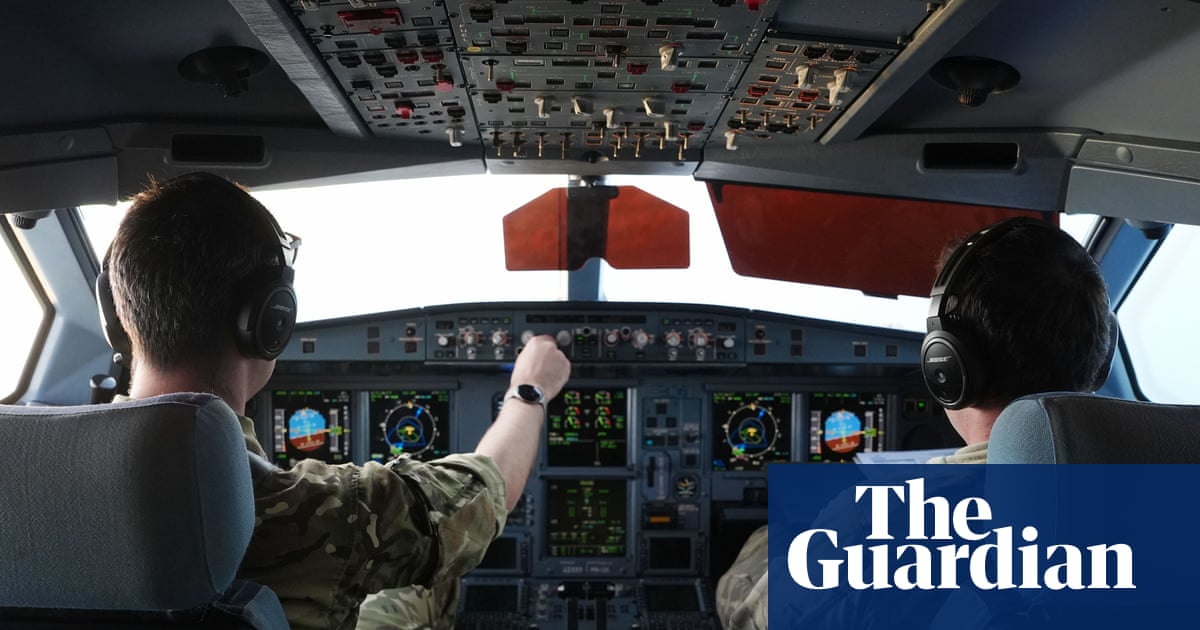
On the flight to the United Nations in New York, Burnham told reporters that an RAF Voyager would help refuel Saudi jets for several weeks, in his first military deployment since taking power, after the Houthis advanced to areas adjacent to the crucial Bab al-Mandab strait.
The key Gulf ally has used the waterway as an alternative route for oil exports bypassing disruption in the strait of Hormuz. The RAF operational support is in addition to the UK Sky Sabre air defence system already operating.
“We have received a request from Saudi Arabia for military support and … I agreed to that request for defensive air-to-air refuelling. On cost of living pressures and acting to secure the interests of Britain, the wider region … we need to keep those pathways open,” Burnham said.
The prime minister also plans to press Trump to wind down US action in Iran, which has destabilised the region, blocked key supply chains and unleashed global economic volatility, including in the UK where the government will struggle to drive down the cost of living as a result.
“Of course the message is that we want to see an end to the conflict as quickly as possible and we stand ready to play our part,” Burnham said when asked if he would raise the issue in talks with Trump.
As well as the focus on the Middle East, other major international challenges, including the war in Ukraine and artificial intelligence, are expected to dominate Burnham’s meetings at the United Nations general assembly.
The global security backdrop to the summit is bleak, with European leaders warning that Russia could launch a drone or missile attack on Nato territory within months to test the strength of the alliance.
Burnham’s speech to the UN is expected to focus on harnessing the power of AI, amid concerns at home over the safety of the rapidly advancing technology, and he will be accompanied on the trip by his AI minister, Kanishka Narayan.
Burnham’s first face-to-face meeting with Trump is a significant moment, with the US president still said to be angry over the UK’s refusal to support his military action in Iran, and ongoing tensions over levels of defence spending.
Government insiders, however, are taking some solace from Trump’s low-key response to UK sanctions on trade with Israeli settlements in the West Bank, after weeks of diplomacy with the White House over the summer.
They are also hoping to avoid a clash over energy policy, with the prime minister expected to signal to Trump that he is in favour of more drilling in the North Sea, with the Jackdaw gas field likely to get the green light within weeks.
Analysts believe the balance of risk for the bilateral relationship has shifted since Keir Starmer was in office, with the Republicans facing a difficult set of midterm elections and the US president’s personal ratings plummeting.
Trump is also likely to be more focused on his meeting with the Chinese president, Xi Jinping, and his address to the UN general assembly, which comes shortly before the talks on Tuesday.
Government sources told the Guardian that Burnham would try to pursue a “third way” in his relationship with the US president, neither as adversarial as the Canadian prime minister, Mark Carney, nor as publicly fawning as Starmer’s early approach, and relying on the strength of his personality.
Disclaimer : This story is auto aggregated by a computer programme and has not been created or edited by DOWNTHENEWS. Publisher: theguardian.com