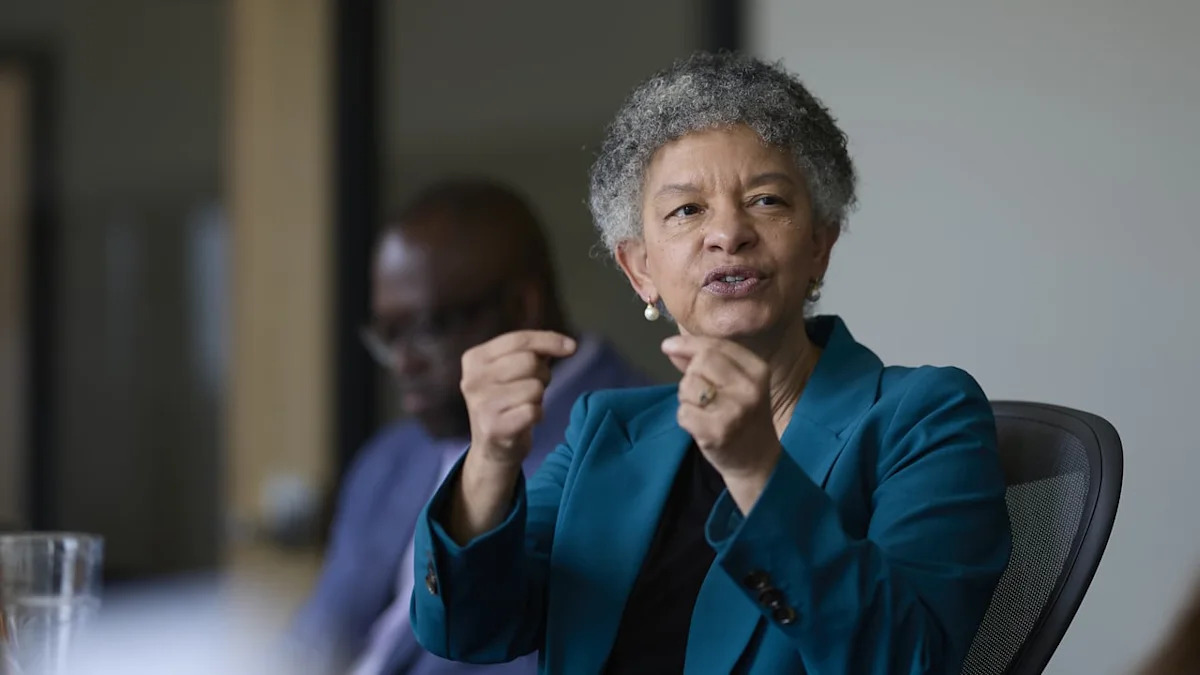
Susan Collins, president of the Federal Reserve Bank of Boston, said Monday she supported last week’s interest rate increase and expects the Fed to raise rates once more before the end of the year.
Collins told the Associated Press she was in agreement with the Fed’s quarter-point move last Wednesday, which brought its benchmark rate to roughly 3.9%, and added that she expects borrowing costs to remain on hold through 2027. The Fed raised its key interest rate for the first time in three years at that meeting.
“I did not see the inflation progress I was hoping to see,” she said. “Geopolitical developments suggest that we could continue to see additional pressures push on the energy side.” The Fed has not hit its 2% inflation target in more than five years.
Collins also cited the resumption of fighting in the Middle East in August among her reasons for backing the hike. Improved hiring figures factored into her thinking as well; she said robust job growth can be a sign that the economy has enough momentum to absorb the pressure of higher rates.
Collins added that companies operating across her district — spanning Massachusetts, Connecticut, Maine, Rhode Island, and Vermont — are reporting cost pressures and signaling they may look to consumers to absorb them, a dynamic she said could keep inflation elevated.
Neither Collins nor Austan Goolsbee, president of the Federal Reserve Bank of Chicago, is a voting member of the Fed’s rate-setting committee this year, although both attend the meetings at which those decisions are made. Goolsbee’s voting rotation returns next year; Collins’s returns in 2028.
Goolsbee, who also spoke Monday, struck a more cautious tone, saying the Fed may need to cause economic pain to bring inflation down. “The only way to bring inflation down is to raise rates and narrow the gap between supply and demand,” he said in prepared remarks. “It’s going to be painful,” he told reporters.
Those comments placed Goolsbee in direct tension with Fed Chairman Kevin Warsh, who pushed back on that view at last Wednesday’s post-meeting press conference, arguing that the central bank can bring inflation to heel without inflicting damage on the job market.
Goolsbee further indicated that the Fed might ultimately need to go beyond the single additional hike that policymakers collectively projected last week, depending on what incoming data reveal about inflation’s origins. “If we get evidence that convinces us that it’s coming from demand, then it likely would not be enough,” he told reporters, referring to a single additional increase.
Disclaimer : This story is auto aggregated by a computer programme and has not been created or edited by DOWNTHENEWS. Publisher: finance.yahoo.com